Your digging level
Description
Horo music is the instrumental and vocal dance music that accompanies the Bulgarian circle dance known as horo (хоро). It is characterized by lively tempi, asymmetric meters, and tightly interlocking rhythms designed to keep large groups stepping in coordinated patterns.
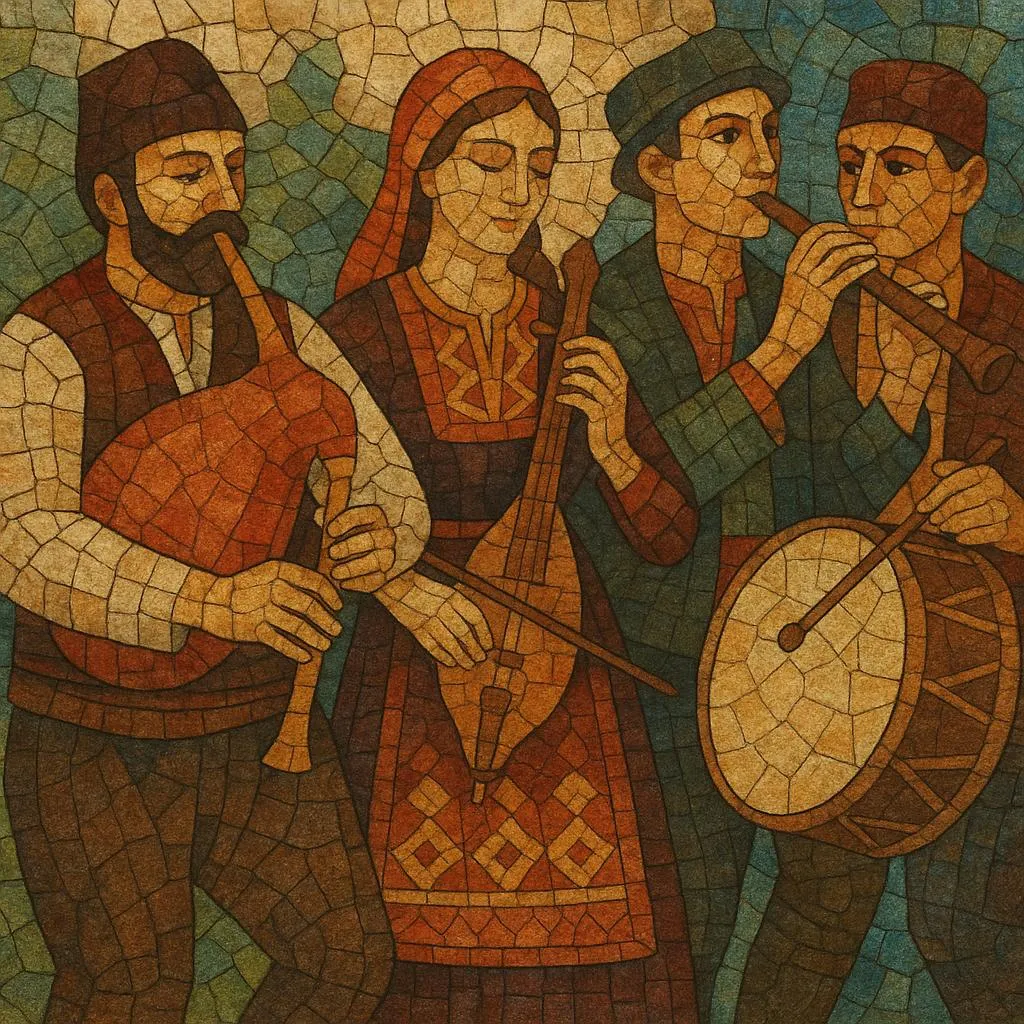
Traditional ensembles center on Bulgarian folk instruments such as the gaida (bagpipe), kaval (end-blown flute), gadulka (bowed lute), tambura (long‑necked lute), and tupan (large double‑headed drum). In the 20th century, clarinet, saxophone, accordion, and later brass band formats also became common, especially in urban and wedding contexts.
Melodically, horo music draws on regional folk modes and ornaments, with drones, trills, and rapid grace notes. Structurally, it often features short, repeated strains that gradually intensify, keeping a steady groove for communal dancing.
History
Horo music emerged from Bulgaria’s village and town dances, where communal circle and chain dances required clear rhythmic cues and repetitive strains. Its foundations lie in regional Bulgarian folk traditions (Rhodope, Thrace, Shopluk, Dobrudzha, the Pirin region), each contributing distinct melodic turns, ornamentation, and favored meters (e.g., pravo horo in duple time, rachenitsa in 7/8, daichovo in 9/8, kopanitsa in 11/16).
The classic rural ensemble featured the gaida (providing a drone and melody), gadulka (bowed melody and double stops), kaval (airy melodic lines), tambura (rhythmic harmony), and the tupan (driving the dance with accented patterns). These combinations supported outdoor festivities, weddings, and seasonal celebrations.
In the mid‑20th century, state folk ensembles and radio orchestras (e.g., the Philip Kutev ensemble and Bulgarian State Radio Folk Orchestra) codified and stylized regional materials for stage performance and broadcast. Arrangers expanded textures, formalized suites of horo dances, and promoted a national sound.
Parallel to the official folklore movement, an electrifying “wedding music” (svatbarska muzika) scene thrived from the 1970s–1990s. Virtuoso clarinetists, saxophonists, and accordionists (notably Ivo Papazov and peers) pushed harmony and improvisation, fusing traditional horo grooves with jazz phrasing, Romani performance practices, and lightning‑fast ornamentation.
Since the 1990s, horo music has circulated globally via recordings, tours, and dance workshops, inspiring brass bands, folk‑rock, electro‑Balkan ("Balkan beats"), and conservatory‑trained soloists. Modern ensembles mix traditional and modern instruments, while community dance groups keep local repertoires alive. Today, horo music remains both a living social tradition and a fertile source for cross‑genre innovation.