Your digging level
Description
Hispanic American folk music is the umbrella for traditional and community-rooted musical practices developed by Spanish-speaking and mixed-heritage (mestizo, Afro‑Latino, Indigenous) communities in the United States. It draws on borderlands traditions of the Southwest (Texas, New Mexico, California, Arizona), Caribbean diasporas (Puerto Rican and Cuban communities in New York and elsewhere), and later immigrant and transborder flows from Mexico and Central America.
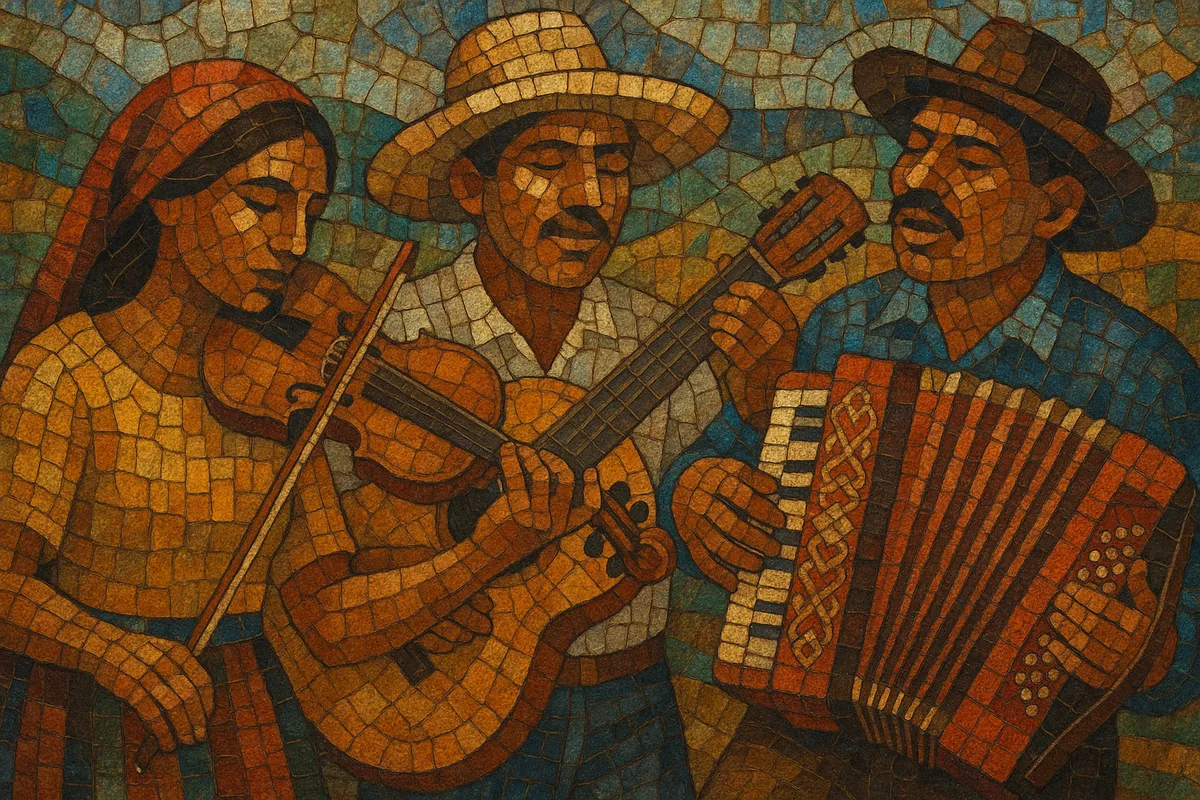
Stylistically, it blends narrative ballads (corridos), sacred hymnody (alabados), rural song forms (décimas, coplas), and social-dance repertoires (vals, polka, schottische, huapango). Core timbres include guitar families (requinto, bajo sexto, jarana), violin, harp, accordion, and voices in close parallel thirds. Themes often address migration, labor, love, devotion, identity, and social justice; lyrics frequently move fluidly between Spanish and English (and regionally inflected Spanglish), reflecting lived bilingual realities.
History
Hispanic American folk music cohered in the borderlands during the 1800s as Spanish/Mexican settler repertoires intertwined with Indigenous and Afro‑Latin practices in regions that later became the southwestern United States. After 1848, communities in Texas, New Mexico, Arizona, and California retained and adapted song forms such as alabados (devotional hymns), romances, décimas, and early corridos, while European social-dance rhythms (polka, waltz, schottische) filtered in through immigrant dance bands and military ensembles.
By the 1920s–30s, San Antonio and the Rio Grande Valley became recording hubs. Labels documented corridos, duet singing, and early conjunto, while New Mexico ensembles preserved Spanish colonial repertoire. Border-blaster radio and local stations helped spread Tejano and Mexican-American folk across the Southwest and into migrant circuits. In parallel, Puerto Rican jíbaro traditions (seis, décima) took root in New York’s barrios, nurturing a Caribbean strand of Hispanic American folk.
The Chicano Movement catalyzed a folk-based song culture of identity and protest, renewing the corrido as social chronicle and elevating bilingual singer‑songwriters. Community groups, universities, and Smithsonian/Folkways documentation expanded visibility for New Mexican Hispano repertories and mariachi traditions maintained by U.S.-based ensembles.
Artists bridged tradition and popular forms, carrying folk idioms into roots-rock and Americana contexts while conjunto, mariachi, and Northern New Mexican styles thrived at festivals, fiestas, and family/community events. Educational programs, arts centers, and folklife institutions supported intergenerational transmission.
A new wave of U.S.-based practitioners has revived fandango/son jarocho practices, reanimated décima traditions, and sustained corrido storytelling, while streaming-era "regional mexicano" (including sierreño and corrido tumbado) reflects ongoing cross‑border circulation. Community-focused archives and youth ensembles continue to safeguard sacred hymnody, dance tunes, and oral-poetic forms.