Your digging level

For this genre
0/8
🏆
Sign in, then listen to this genre to level up

Description

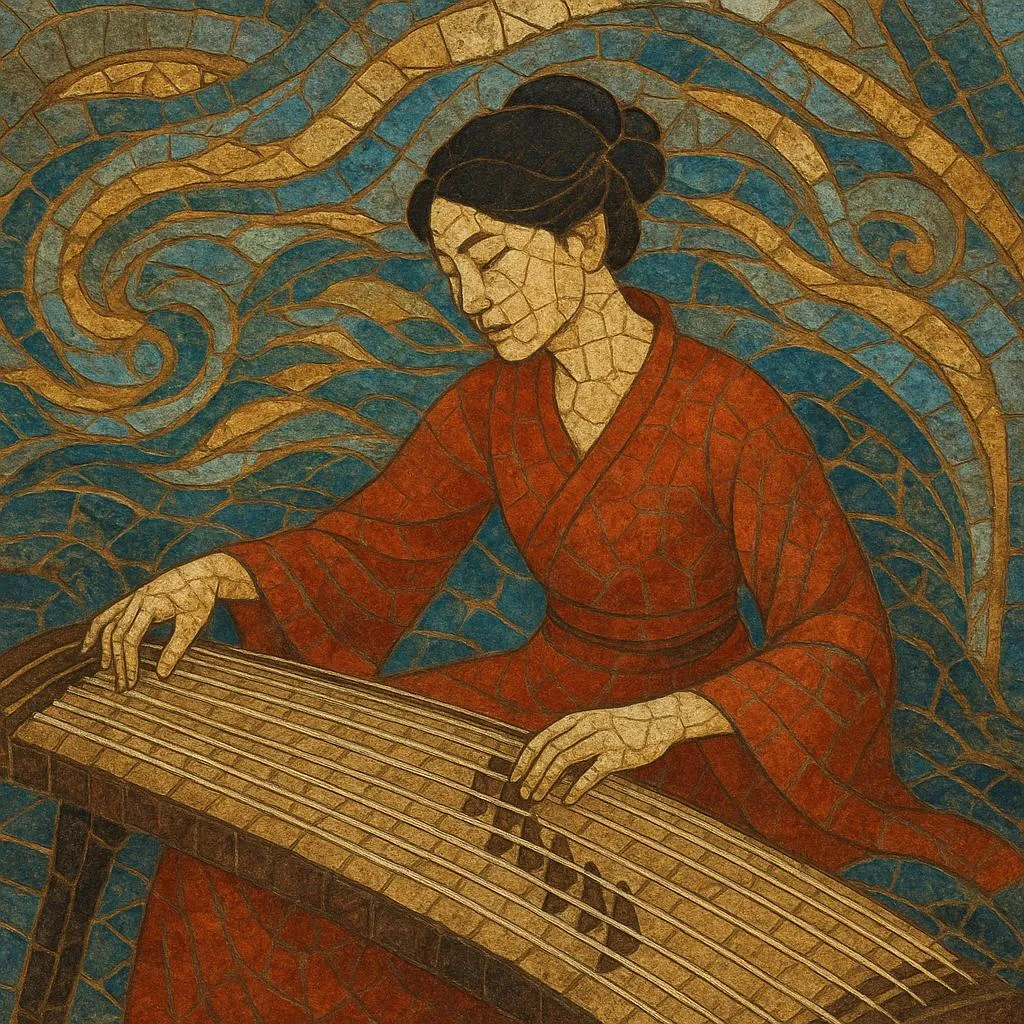
Guzheng is a genre centered on the Chinese plucked zither (zheng), a long wooden box with movable bridges and 16–26 strings (21 is standard today). The instrument’s sound is characterized by bell‑like clarity, fluid glissandi, shimmering tremolos, and expressive pitch bends achieved by pressing the strings to the left of the bridges.

Modern guzheng repertoire draws on older regional styles (Henan/Yu, Shandong, Chaozhou/Teochew, Hakka/Ke, Zhejiang) and the conservatory tradition that codified technique and composition in the mid‑20th century. Core melodic language is based on Chinese pentatonic modes (gong, shang, jue, zhi, yu), ornamented with slides (hua yin), grace‑note turns, harmonics (fan yin), and left‑hand vibrato (rou yin). Timbres range from delicate, watery arpeggios to percussive rasgueado‑like strokes and thunderous, multi‑string strums.

Today the guzheng functions both as a solo concert instrument and within Chinese orchestras and cross‑genre fusions (world, ambient, pop, electronic), while retaining its intimate literati aesthetics of “sound painting” and narrative expression.


Sources: Spotify, Wikipedia, Discogs, RYM, MB, user feedback and other online sources

History

Origins and regional schools

The zheng has antecedents as far back as the Warring States period, but the modern guzheng “genre” coalesced through regional folk and court practices that favored narrative, dance, and storytelling accompaniment. Distinct schools—Henan (robust, percussive), Shandong (lyrical, flowing), Chaozhou/Teochew and Hakka (highly ornamented, modal flexibility), and Zhejiang (refined, elegant)—shaped idiomatic fingerings, tunings, and repertory.

Conservatory standardization (mid‑20th century)

From the 1950s, Chinese conservatories standardized a 21‑string instrument, notated technique, and curated a concert repertoire. Composer‑performers expanded virtuosic possibilities, introduced programmatic forms, and adapted qupai (fixed tunes) and opera melodies for solo stage performance. This period crystallized the guzheng as a modern concert genre while preserving regional color.

Expansion and orchestral role (late 20th century)

The guzheng became a core section voice in the Chinese orchestra, assuming harp/piano‑like roles and also soloist prominence. Luthiers experimented with new materials and string types (nylon‑steel composites), broadening dynamic range and sustain for concert halls and recording studios.

Globalization and crossover (1990s–present)

International tours, diaspora musicians, and recording technologies brought guzheng beyond East Asia. Artists integrated the instrument into world fusion, ambient/new age, film/TV scoring, and pop/rock/electronic productions. Extended techniques (prepared bridges, harmonics clusters, percussive tapping) and live processing (delay, reverb, looping) further diversified its sonic identity while its classical and folk lineage remains foundational.

How to make a track in this genre

Setup, tuning, and modes
•   Use a standard 21‑string guzheng with movable bridges. Common concert tunings center on D or G pentatonic (gong mode), but explore shang, jue, zhi, and yu to shift color. •   Plan modal modulations by relocating a few bridges (or reassigning scale degrees) and using left‑hand bends to access non‑diatonic pitches.
Rhythm, form, and phrasing
•   Favor sectional forms with contrasting tempi and textures (slow rubato prelude → rhythmic dance). Traditional phrasing often follows four‑ or eight‑beat cycles with ornamental pickups. •   Use additive variation on qupai (fixed melodies): restate themes with new ornaments, octave displacements, and tremolo textures.
Core techniques and texture
•   Right hand: tremolo (yao zhi) for sustained shimmer; rolled chords (fu sao); rasgueado‑like multi‑finger strums for climaxes. •   Left hand: slides (hua yin), expressive bends/vibrato (rou yin), stopped harmonics (fan yin), and portamento between structural tones. •   Combine broken‑chord arpeggiation with sustained tremolo to create a “waterfall” texture; alternate sparse, calligraphic lines with dense, cascading figures for architectural contrast.
Harmony and accompaniment
•   Harmony is primarily modal and parallel. Create vertical color via open fifths, added seconds/fourths, and bichordal pedal points. •   For ensemble writing, treat guzheng as a hybrid of harp and koto: assign ostinati, counter‑melodies, or antiphonal answers to winds/strings.
Orchestration and studio tips
•   In Chinese orchestra, double dizi/erhu lines an octave apart or provide rippling pads under solo winds. In fusion, pair guzheng with bass/drums on pentatonic riffs; let ambient guitars/synths sustain while guzheng supplies motion. •   Record with close condenser mics near the right‑hand plucking area and a room mic for resonance; light compression and plate reverb enhance the signature sheen. Subtle delay accentuates glissandi; avoid heavy saturation to preserve transient clarity.

Top tracks

Locked
Share your favorite track to unlock other users’ top tracks

Upcoming concerts

in this genre
Influenced by
Has influenced

Download our mobile app

Get the Melodigging app and start digging for new genres on the go
© 2026 Melodigging
Melodding was created as a tribute to Every Noise at Once, which inspired us to help curious minds keep digging into music's ever-evolving genres.
Buy me a coffee for Melodigging