Your digging level
Description
Greenlandic music refers to the musical traditions and contemporary styles created by the Inuit (Kalaallit and other minority Inuit groups) who live in Greenland, the vast Arctic island between the Atlantic and Arctic Oceans.
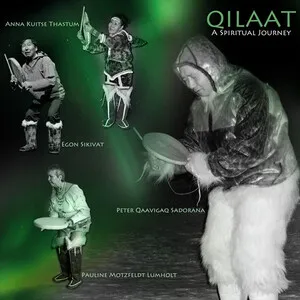
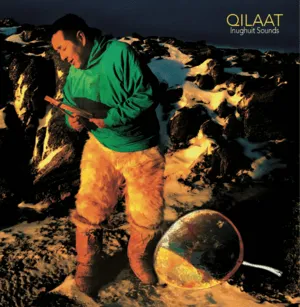
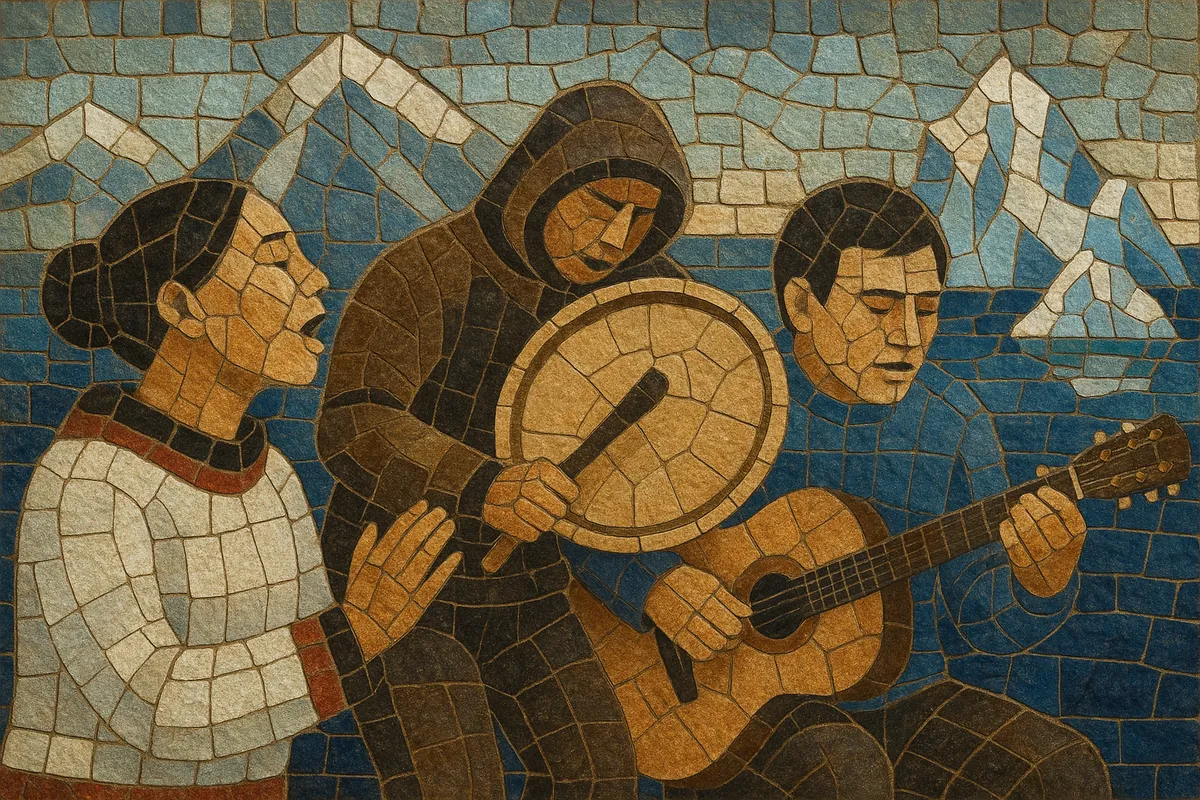
At its core are ancient communal drum‑dances with frame drum (qilaat), strophic chant, call‑and‑response, and text that ties daily life to nature, hunting, weather, and kinship. From the 18th century onward, contact with Danish missionaries and sailors layered Lutheran hymnody, European melodies, and later guitar‑based popular music onto older practices. Today the spectrum runs from traditional drum‑dance and mask‑dance to rock, pop, folk, hip‑hop, and indie—often sung in Kalaallisut (Greenlandic) and marked by spacious, reflective Arctic atmospheres.
History
The oldest strata of Greenlandic music are Inuit communal genres centered on the frame drum (qilaat) and strophic vocal chant. Songs were functional and social—used in storytelling, celebration, reconciliation rituals, and play—featuring call‑and‑response, flexible rhythm guided by the drum, and lyrics that encode ecological knowledge and community values.
With Danish‑Norwegian missionary presence in the 1700s, Lutheran hymnody and European melody/harmony entered daily life. Hymns in Greenlandic translation became ubiquitous, and European dance forms and sailor songs (including whaling and shanty repertoires) circulated in coastal settlements. This created a layered sound world in which indigenous chant coexisted with harmonized congregational singing and imported instruments.
Recording technologies and radio slowly documented and diffused Greenlandic performances in the 20th century. A pivotal cultural revival arrived in the 1970s: the rock band Sumé fused electric guitars and rock rhythms with Greenlandic lyrics and political self‑determination themes, igniting a modern identity movement and establishing a template for popular music in Kalaallisut.
The 1990s brought hip‑hop (notably Nuuk Posse), singer‑songwriters, and rock/indie bands, while artists such as Rasmus Lyberth carried a folk‑rooted, poetic tradition onto bigger stages. In the 2000s, acts like Julie Berthelsen and Nive Nielsen gained visibility across the Nordic world, and groups such as Nanook and Small Time Giants cemented a Greenlandic indie/rock profile.
Today, Greenlandic music spans traditional drum‑dance revivals, choral hymnody, folk‑rock, indie pop, and rap—often characterized by spacious production, modal melody, and lyrical focus on environment, language, and community. Artists frequently blend Arctic sonic imagery (wind, ice, sea) with modern studio techniques, keeping the indigenous backbone audible within global genres.

%2C%20Cover%20art.webp)