Your digging level
Description
Gotlandsk musik is the traditional and contemporary folk music associated with the Swedish island of Gotland.
It is typically dance-oriented (especially polska-family tunes and local couple dances), with strong melodic profiles shaped for solo or small-ensemble playing.
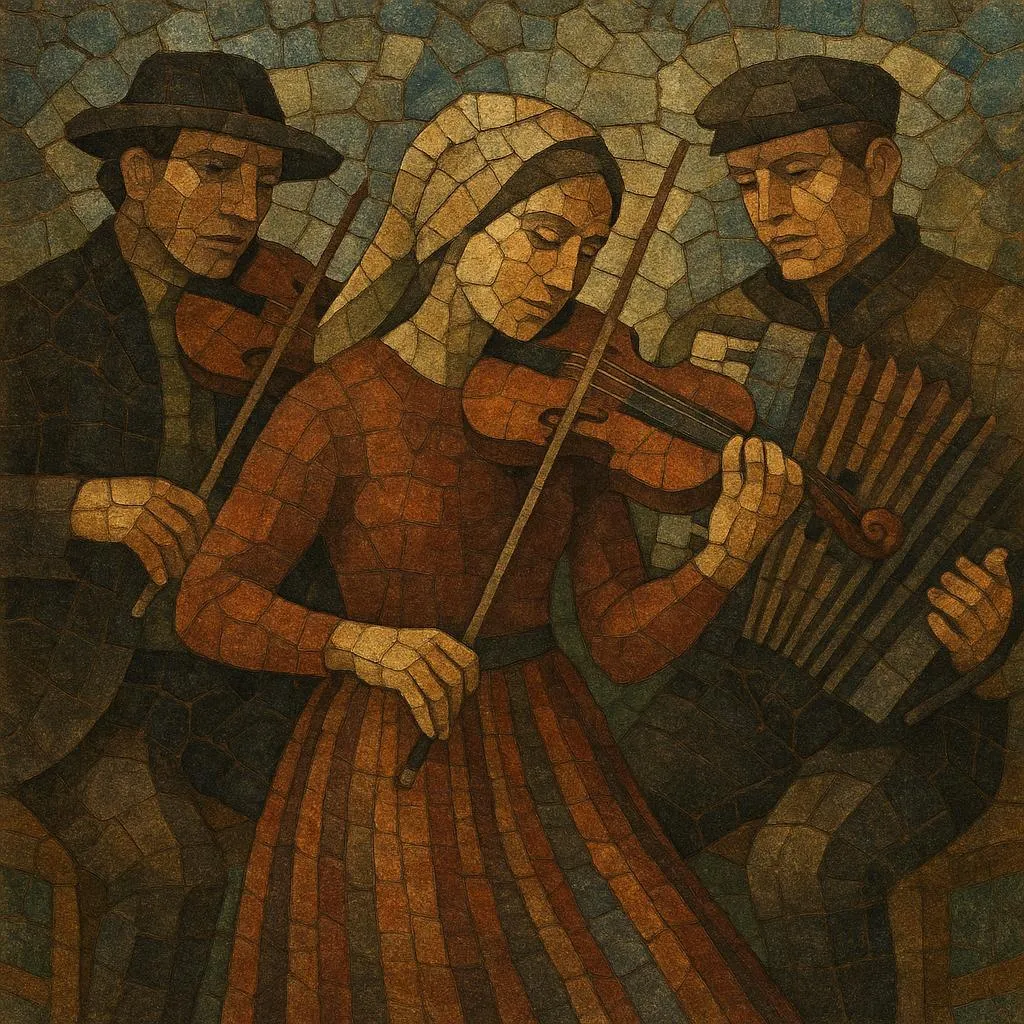
The style often highlights the sound of fiddle-led ensembles, clear phrase structures suitable for social dancing, and a repertory that mixes older local tunes with newer folk compositions and arrangements rooted in Gotland’s regional identity.
In modern practice, “gotlandsk musik” can refer both to historically collected Gotland folk tunes and to newer folk/roots songs that draw on Gotlandic dialect, themes, and performance aesthetics.
History
Gotland’s folk music developed within the island’s rural communities as functional music for social dancing, celebrations, and seasonal gatherings. Like much Scandinavian folk tradition, it was transmitted primarily by ear and shaped by local dance practices.
During the late 19th and early 20th centuries, Swedish folk-music collecting movements increasingly documented regional repertoires. This helped preserve local tune families, stabilize variants, and connect Gotland material to broader Swedish folk revival institutions.
From the mid-to-late 20th century onward, Scandinavian folk revivals encouraged professional and semi-professional ensembles to perform regional repertoires on stage. Gotland material became a recognizable “regional color” within Swedish folk scenes, often arranged for fiddle-centric bands and occasionally blended with modern songwriting.
Today, gotlandsk musik exists both as a living dance repertoire (kept active in folk-dance contexts) and as a concert/recording style where performers may emphasize atmosphere, local storytelling, and modern production while retaining danceable rhythmic DNA.