Your digging level
Description
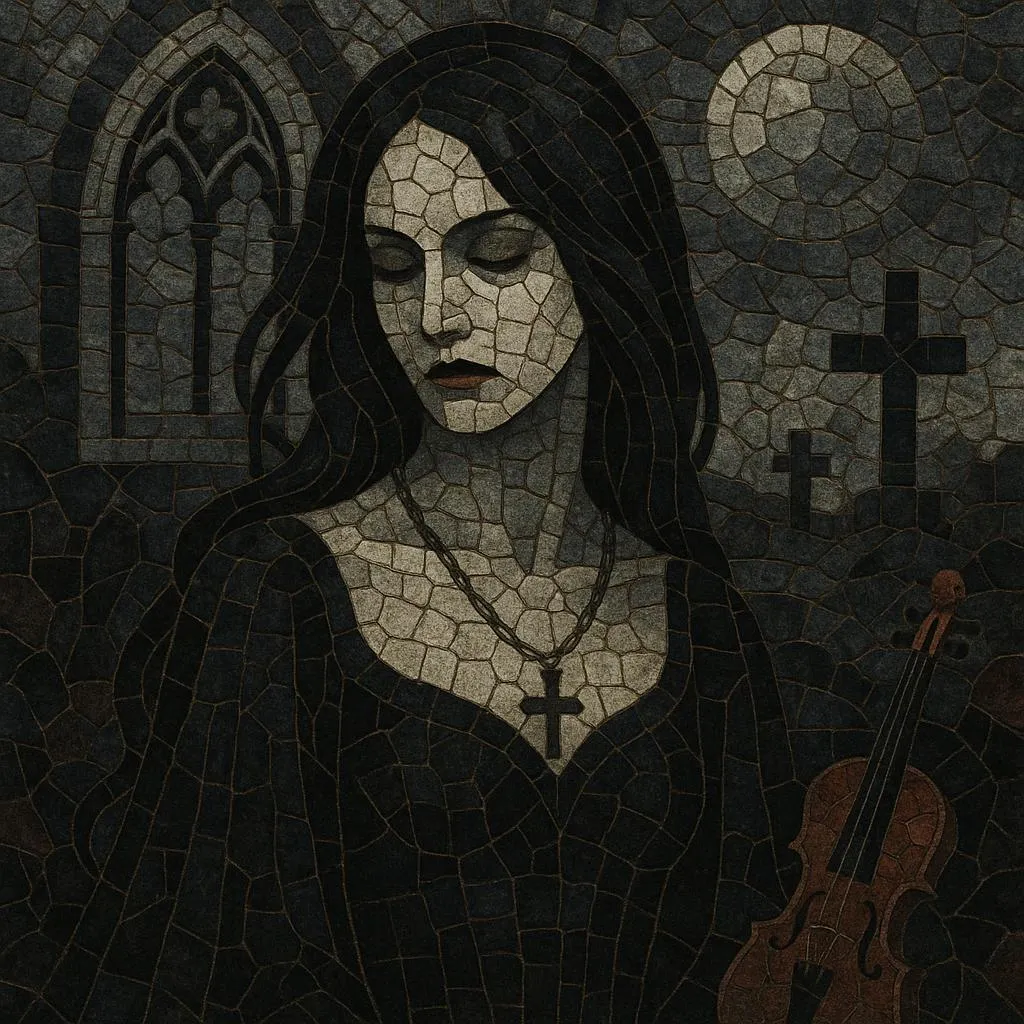
Gothic doom metal is a fusion of the glacial weight and mournful pacing of doom metal with the somber romanticism, baritone croons, and nocturnal atmospheres of gothic music. It often grows out of death‑doom’s heaviness and growled vocals, but softens the edges with clean baritone singing, ethereal female voices, and orchestral or choral textures.
Hallmarks include slow to mid‑slow tempos, down‑tuned guitars, minor‑mode harmony with bleak pedal‑point drones, and arrangements that contrast crushing rhythm guitars with piano, violin, church organ, or synth strings. Lyrically, themes revolve around melancholy, loss, faith and doubt, gothic poetry, and tragic romance, creating a mood that is both cathartic and elegiac.


History
Gothic doom metal coalesced in the early 1990s in the United Kingdom, when the so‑called “Peaceville Three” — Paradise Lost, My Dying Bride, and Anathema — began slowing death metal to doom tempos and infusing it with gothic rock/dark‑wave melancholy. Albums like Paradise Lost’s "Gothic" (1991) and My Dying Bride’s "Turn Loose the Swans" (1993) established the template: death‑doom weight, violin and keyboards, and a lyrical focus on sorrow, faith, and romance.
The sound spread across Scandinavia and continental Europe. Sweden’s Tiamat and Katatonia folded in atmospheric keys and baritone vocals, while Norway’s Theatre of Tragedy and Tristania popularized the “beauty‑and‑the‑beast” vocal contrast (harsh male + operatic female), adding choirs and church organ. These bands codified a smoother, more overtly gothic strain that sat between pure doom and the emergent broader gothic metal movement.
In the 2000s, groups such as Draconian, Swallow the Sun, Novembers Doom, and Saturnus renewed the style with lusher production, deep melodic lead work, and modern sound design, while some originators (e.g., Anathema, Katatonia) evolved toward atmospheric or alternative directions. The style also cross‑pollinated with symphonic metal (larger choirs and strings), doomgaze (shoegaze textures over doom tempos), and post‑metal ambience, but its core remains a chiaroscuro of crushing riffs and desolate, romantic atmosphere.