Your digging level

For this genre
0/8
🏆
Sign in, then listen to this genre to level up

Description

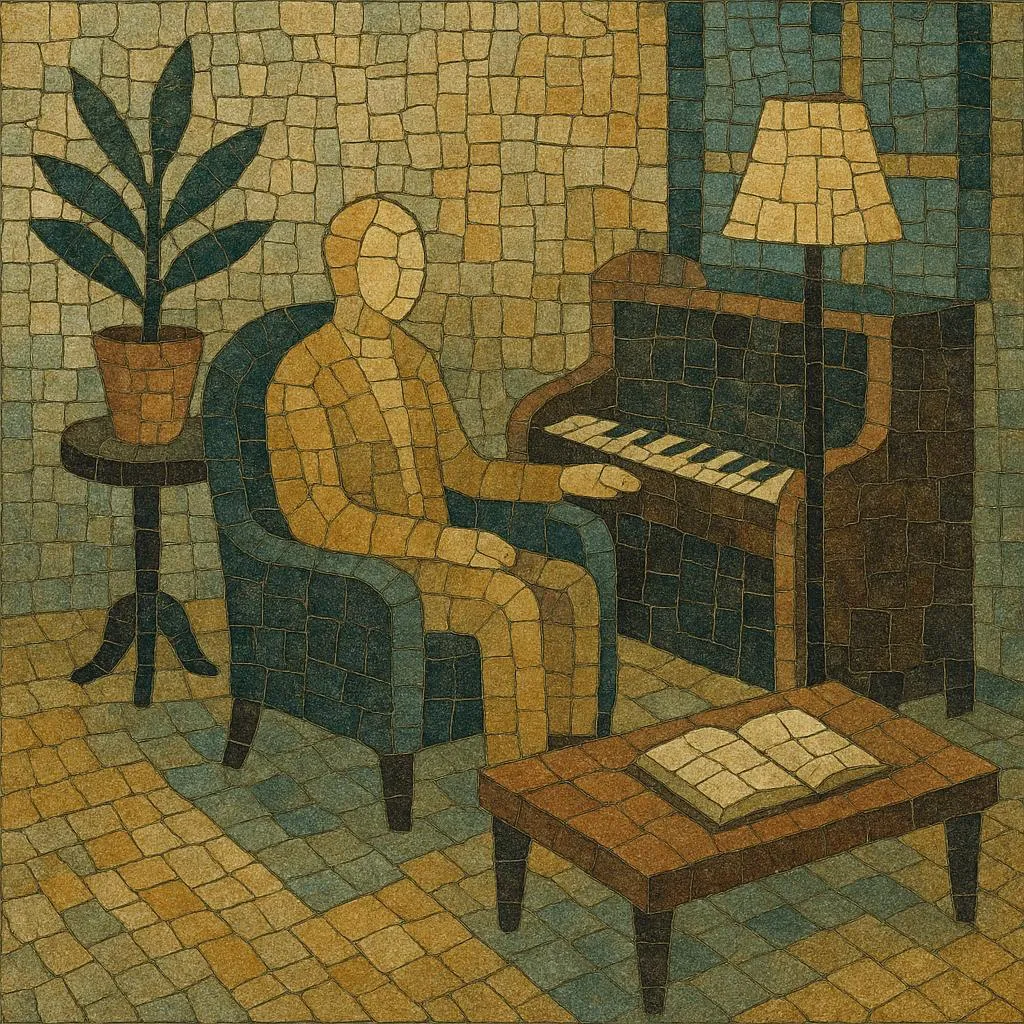
Furniture music (musique d’ameublement) is an early concept of intentionally unobtrusive background music, devised to blend into everyday environments rather than invite concentrated listening.

Coined by French composer Erik Satie in 1917, it was conceived for live performers situated in lobbies, intermissions, and social spaces, functioning like sonic “furnishings.” Its materials are simple, loopable, and repetitive, encouraging the audience to carry on talking, walking, or reading while the music quietly colors the room.

Although modest in scale, the idea anticipated later practices of ambient and environmental music and influenced how the 20th century came to separate music for attention from music for atmosphere.


Sources: Spotify, Wikipedia, Discogs, Rate Your Music, MusicBrainz, and other online sources

History

Origins (1917)

Satie introduced the term “musique d’ameublement” in 1917 to describe short, looping pieces meant to function as sonic décor. He asked that such music be performed live in everyday settings and, crucially, be ignored—much like wallpaper or furnishings—so that it served social activity rather than interrupted it.

A Concept More Than a Repertoire

Only a handful of Satie’s miniatures explicitly bear the label, but the idea traveled widely. The point was not a fixed instrumentation or harmonic language, but a new social role for music: continuous, repetitive textures that soften a space and discourage applause or focused listening.

Echoes Through the 20th Century

The notion resurfaced in mid‑century commercial background music and, later, in experimental and ambient traditions. Composers and artists exploring repetition, environment, and listening behaviors—whether in galleries, theaters, offices, or domestic spaces—developed lines Satie sketched: music as atmosphere, not event.

How to make a track in this genre

Aims and Aesthetic
•   Write music to be overheard, not listened to: it should color a space without drawing attention. •   Favor brevity and loops so material can repeat seamlessly for long durations.
Materials and Texture
•   Use simple, consonant harmonies or gentle modal patterns; avoid dramatic modulations and cadential “ta‑da” moments. •   Keep rhythms even and regular (walking‑tempo pulses, lightly syncopated ostinati). Repetition is a feature. •   Dynamics should be soft to moderate, with minimal contrast.
Instrumentation and Setting
•   Small ensembles work well (winds/strings/keyboard) or any forces already present in the venue. •   Choose timbres that blend (muted brass, soft strings, reeds, or warm keyboards). Avoid piercing registers.
Performance Practice
•   Notate or plan loop lengths and cue performers to recycle modules without breaks. •   Place performers off to the side; discourage applause and emphasize continuity over display. •   If desired, add signage/program notes instructing audiences to continue their activity while music plays.
Compositional Checks
•   Ask: does this texture support conversation? Does any gesture “pull focus”? If so, reduce contrast, simplify, or lower dynamics.

Top tracks

Locked
Share your favorite track to unlock other users’ top tracks
Influenced by
Has influenced
Challenges
Digger Battle
Let's see who can find the best track in this genre

Download our mobile app

Get the Melodigging app and start digging for new genres on the go
© 2026 Melodigging
Melodding was created as a tribute to Every Noise at Once, which inspired us to help curious minds keep digging into music's ever-evolving genres.
Buy me a coffee for Melodigging