Your digging level
Description
Folklore veracruzano refers to the traditional music, song, and dance practices of the Mexican state of Veracruz, with the son jarocho tradition at its core. It is marked by the distinctive blend of Spanish (fandango, poetic décima), Afro‑diasporic (syncopation, call‑and‑response, percussive dance), and Indigenous elements that took shape in the colonial Gulf coast.
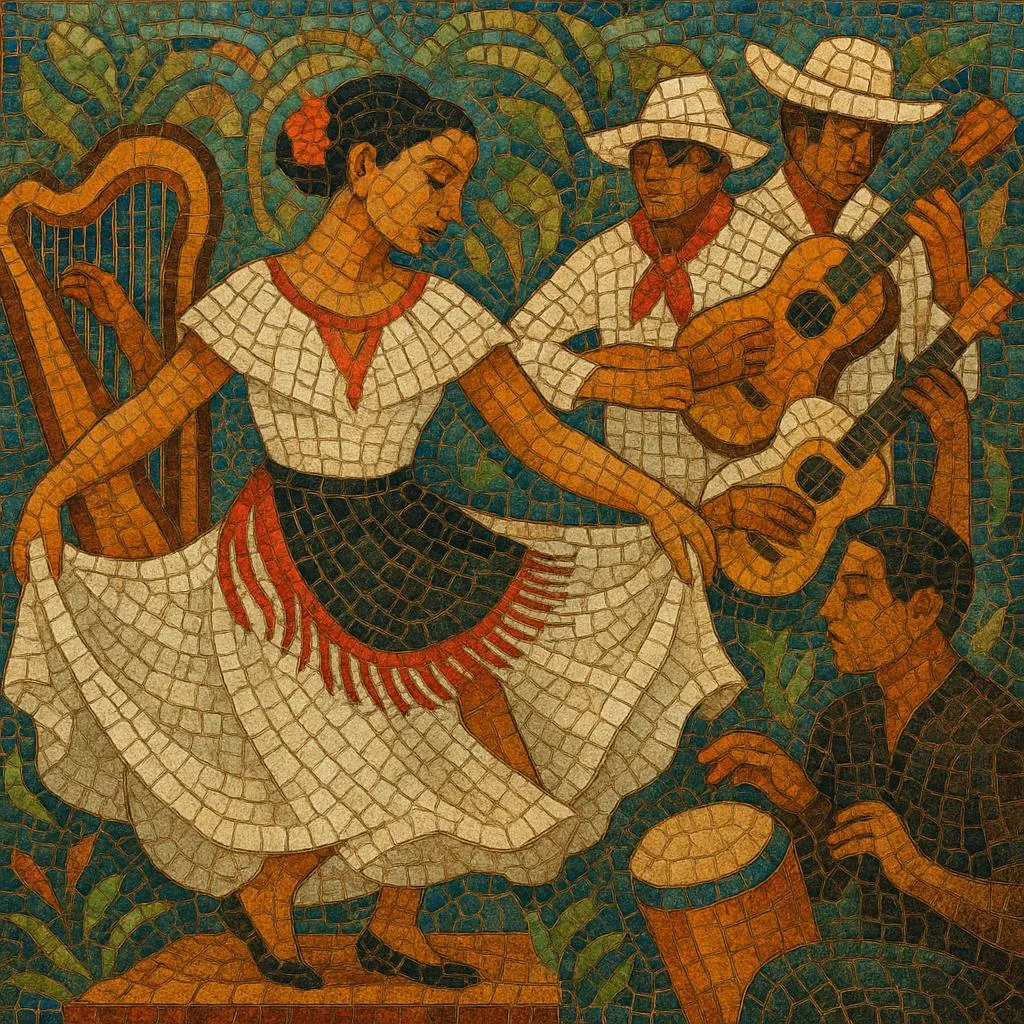
Typical ensembles feature the arpa jarocha (Veracruz harp), jarana jarocha (small strummed guitar), requinto jarocho (lead guitar), pandero and other hand percussion, the quijada (donkey jawbone), and a wooden platform (tarima) used for zapateado—percussive footwork that is both dance and rhythm section. Songs are often built on sesquialtera (the interplay of 6/8 and 3/4), lively strumming patterns, and strophic, improvised verses in décima form, performed at community gatherings known as fandangos.
History
Folklore veracruzano crystallized along the Sotavento lowlands of the Gulf coast during the colonial era, where Spanish settlers brought dances like the fandango and verse forms such as the décima espinela. Enslaved and free Afro‑descendant communities contributed polyrhythmic sensibilities, call‑and‑response singing, and percussive dance, while Indigenous groups shaped local melodic turns and performance contexts. By the 18th–19th centuries, these streams converged into a recognizable son jarocho practice centered on string ensembles, zapateado, and communal festivities.
As port cities like Veracruz connected the region to the Caribbean, musical exchange intensified (e.g., with danzón and other Afro‑Caribbean currents). The rise of radio and early recording in the 1930s–1950s disseminated Veracruz repertoires nationally, helping codify instrumental roles (arpa, jarana, requinto) and dance vocabularies. Touring ensembles popularized signature sones and the public image of the jarocho musician.
Urbanization and mass media drew attention toward other national genres for a time, but a grassroots revival led by musicians, researchers, and community organizers in the 1970s–1990s re‑centered the fandango as a living, participatory practice. Workshops, documentation projects, and intergenerational teaching restored improvisation, décima composition, and regional variants. University‑based groups and community luthiers strengthened instrument making and local schools of performance.
In the 2000s–present, folklore veracruzano thrives in local fiestas and international stages. Cross‑border communities have established fandango networks, youth jarana programs, and collaborative projects that keep improvisation and communal dance central while encouraging respectful fusion with contemporary styles. Despite new contexts, the repertoire remains rooted in poetic dueling, sesquialtera grooves, and the shared rhythm of the tarima.