Your digging level

For this genre
0/8
🏆
Sign in, then listen to this genre to level up

Description

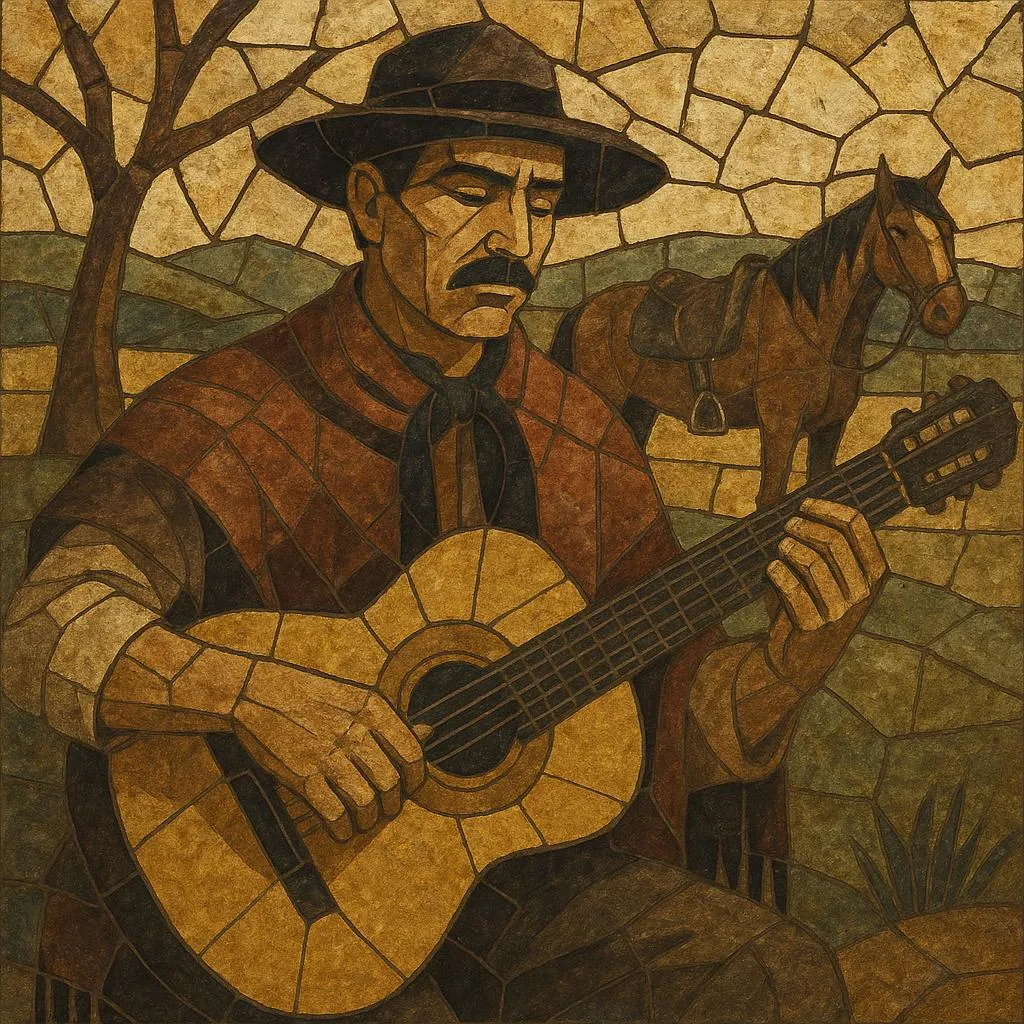
Folklore surero is the rural song tradition of Argentina’s southern pampas (sur means “south”), centered in Buenos Aires Province and neighboring lowlands. It foregrounds the voice and the criolla (Spanish) guitar, with sober, plain‑spoken melodies and verses about gaucho life, the open plain, horses, work, and the codes of honor and hospitality.

Musically it draws on pampean song forms such as the milonga surera, cifra, estilo, huella, and décima-based payada (improvised verse duels). Rhythms often alternate or superimpose 6/8 and 3/4 (the classic rioplatense hemiola), with guitar bordoneos (bass runs) and rasgueos (strums) articulating the pulse. The tone is intimate and narrative rather than virtuosic; the delivery tends toward low tessitura, conversational phrasing, and clear storytelling.

Although related to other Río de la Plata traditions, folklore surero preserves a particularly "campero" (rural) aesthetic—dry timbres, sparse textures, and lyrics steeped in the landscape and ethos of the pampas.


Sources: Spotify, Wikipedia, Discogs, RYM, MB, user feedback and other online sources

History

Roots in the Pampas (19th century)

Folklore surero emerges from the gaucho culture of the southern Argentine pampas during the 1800s. itinerant singers, payadores, and rural workers cultivated sung poetry accompanied by guitar, shaped by Spanish romances and coplas, African-derived habanera patterns, and local décima (Espinel) poetics. Song types such as milonga surera, cifra, estilo, and huella provided flexible vehicles for narration, courtship, and social commentary.

Payadores and the birth of a canon

By the late 19th and early 20th centuries, legendary payadores codified the art of improvised sung duels and fixed a repertoire of melodies and guitar patterns. The practice preserved a distinctly pampean diction and imagery—wind-swept plains, mate, poncho, and horse—while honing the craft of décima composition, call‑and‑response between voice and guitar, and dramatic rhetorical pacing.

Radio, records, and urban circulation (1930s–1960s)

With the rise of radio and shellac/LP recording in Buenos Aires, surero styles reached urban audiences. Guitar composers refined idiomatic accompaniments (bordoneo bass, syncopated rasgueos), while singers brought the rural ethos to concert halls and national festivals. The milonga surera’s 6/8–3/4 cross‑rhythm, along with cifra and estilo forms, became hallmarks of the pampean sound and influenced neighboring Río de la Plata song currents.

Consolidation and continuity (late 20th century to present)

Throughout the later 20th century and into the 21st, artists and guitarists have continued to record, teach, and perform the surero repertoire at peñas, regional fiestas, and national festivals. The tradition remains a living practice—intimate in texture, narrative in focus, and emblematic of the southern pampas—while informing broader Argentine folk and popular songcraft.

How to make a track in this genre

Core instrumentation
•   Solo voice and one or two criolla (nylon‑string) guitars are the norm. Keep textures sparse and intimate. A second guitar can add counter‑bordoneos or soft chordal support. Percussion is minimal or absent; if used, employ bombo legüero sparingly.
Rhythm and meter
•   Favor milonga surera and related pampean meters. Work with the 6/8–3/4 hemiola: alternate perceptions of two dotted quarter pulses (6/8) and three quarter pulses (3/4). •   Typical guitar groove: steady bass (thumb) on beats 1–4 (in 6/8) with syncopated treble rasgueos; or in cifra/estilo, freer rubato with guitar responding to vocal phrases.
Harmony and melody
•   Use simple diatonic progressions (I–V–I, I–IV–V) with occasional modal color (Aeolian or Dorian inflections). Cadences are often understated, letting the narrative resolve carry weight. •   Melodies sit in a comfortable, low to mid vocal range, with speech-like contours and unhurried phrasing.
Guitar language
•   Employ bordoneo: walking or arpeggiated bass lines connecting tonic–dominant over alternating roots. •   Rasgueos are dry and economic—avoid dense strums. Insert subtle golpes (taps) for drama. •   In cifra, interleave short guitar interludes between sung lines; the instrument “answers” the voice.
Text and delivery
•   Write in décimas (10-line stanzas) or quatrains inspired by copla/romance forms. Themes: rural labor, landscape, memory, camaraderie, codes of honor, and bittersweet reflections. •   Favor direct, colloquial language (rioplatense voseo acceptable), vivid but unadorned imagery, and moral or philosophical turns at stanza ends.
Form and arrangement
•   Common structures: strophic song (AAA…) or stanza‑interlude alternation (voice–guitar). Keep introductions brief, codas reflective. •   Record with minimal processing; prioritize room tone, proximity, and the guitar’s woody attack.
Practice tips
•   Study canonical grooves for milonga surera, cifra, estilo, and huella; internalize the hemiola so you can float vocally over a steady guitar. •   Draft lyrics as spoken monologue first, then fit to melody; let breath and narrative dictate tempo rubato in non‑dance forms.

Top tracks

Locked
Share your favorite track to unlock other users’ top tracks

Upcoming concerts

in this genre
Influenced by
Has influenced

Download our mobile app

Get the Melodigging app and start digging for new genres on the go
© 2026 Melodigging
Melodding was created as a tribute to Every Noise at Once, which inspired us to help curious minds keep digging into music's ever-evolving genres.
Buy me a coffee for Melodigging