Your digging level
Description
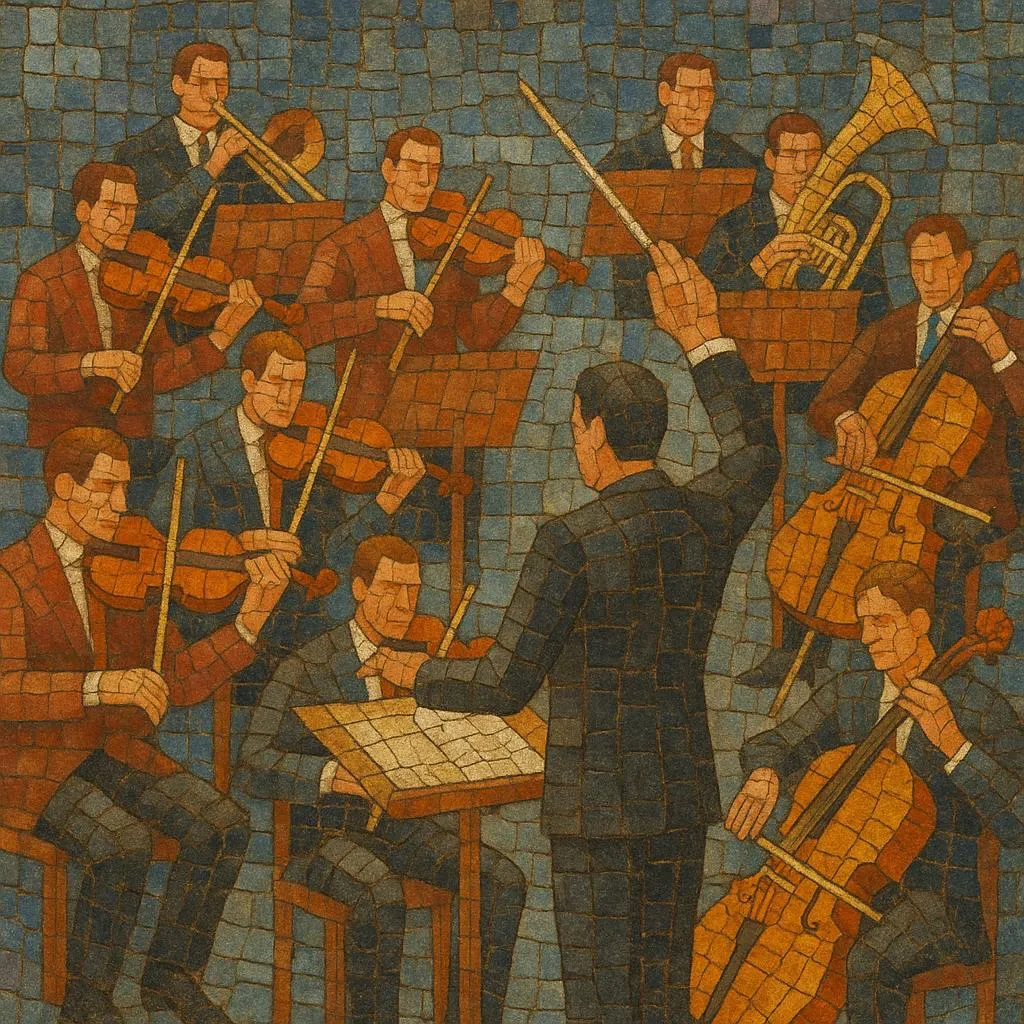
Fictitious orchestra refers to classical recordings marketed under invented or opaque ensemble names—often with pseudonymous conductors—intended for budget releases, compilation albums, library catalogs, or re-licensing. The musical content typically consists of public‑domain orchestral repertoire recorded by ad‑hoc studio ensembles or repackaged radio/archive tapes credited to non‑existent orchestras.
Aesthetic markers include straightforward, no‑frills interpretations, standard tempos, and “clean” balances designed to suit background listening, mass distribution, or royalty‑free applications. While the performances can be competent, the practice is defined less by a distinct musical language than by production, marketing, and metadata strategies that obscure true provenance.
History
Following World War II, Europe saw a surge of low‑cost classical LPs. Small labels, radio orchestras, and session players produced competent recordings of baroque, classical, and romantic staples. To streamline licensing and marketability across territories, companies increasingly used generic or invented orchestra names. The goal was simple: recognizable repertoire at rock‑bottom prices, with credits flexible enough for rebranding.
With the CD era, vast archives of broadcast and studio takes were remastered and repackaged. Some producers issued recordings under pseudonymous conductors and ensembles to avoid contractual snags or to facilitate bulk licensing. Compilations proliferated in supermarkets, bookshops, and mail‑order clubs; metadata often prioritized catchy ensemble names over precise provenance.
As digital platforms expanded, the fictitious‑orchestra model dovetailed with keyword‑driven cataloging (“the famous piece you know”) and background‑music playlists. This brought convenience but also confusion: identical performances might circulate under multiple credits, complicating discographic research and royalty tracking. At the same time, the aesthetic—neutral, unfussy orchestral sound—suited production music, broadcast use, and algorithmic playlists.
Supporters argue these recordings broadened access to classical music and preserved otherwise obscure performances. Critics cite opacity, misattribution, and the erosion of artist recognition. Regardless, “fictitious orchestra” has become a recognized category describing a distribution and crediting practice with a characteristic production sound.