Description
Electronic body music (EBM) is a rhythm-centered electronic dance genre built for physical impact. Its characteristic sound combines a hard, regular beat with clipped, repetitive synthesizer bass lines, often moving in sixteenth notes. Vocals are frequently shouted or chanted as rhythmic commands rather than sung as elaborate melodies.
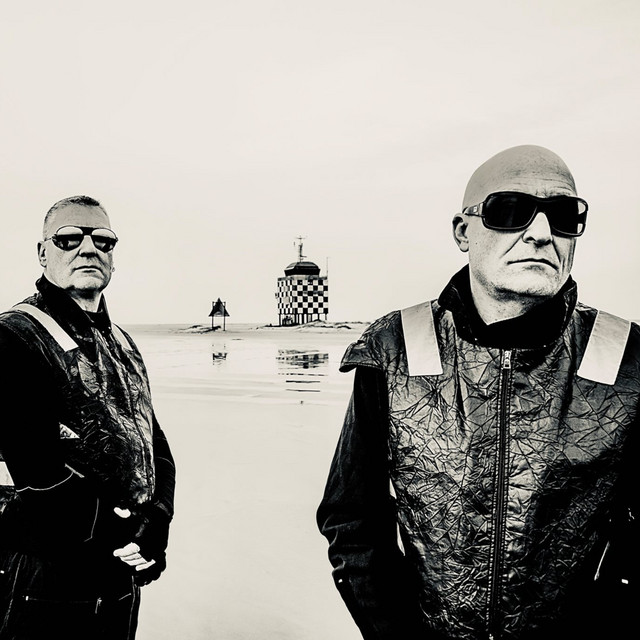
Tracks tend to develop through persistent loops and incremental changes instead of conventional verse-and-chorus songwriting. The associated visual style draws on industrial workwear, military clothing and leather subculture. Its use of totalitarian imagery has been controversial; Gabi Delgado described the approach as “playing with the taboo,” rather than offering a settled explanation of what the imagery means.
Based on: Aesthetics Wiki
History
Origins
EBM took shape in the early 1980s in the post-industrial scenes of Germany and Belgium. Its musical origins are traced to Düsseldorf, where DAF brought punk’s physical energy to synthesizers and sequencers. The group’s 1981 album Alles ist gut helped establish a model of forceful dance rhythm and repeating electronic bass.
A name and an international scene
In 1984, Brussels-based Front 242 used the name “Electronic Body Music” for their EP No Comment. Belgian acts developed a comparatively cold, clean production style, and during the second half of the decade EBM spread internationally and through European underground clubs.
Offshoots and revival
New Beat developed in Belgium as a slower offshoot, while elements of EBM also fed into European techno. In North America, musicians combined EBM bass lines with harder rock and metal elements. By the late 1990s, a revival in eastern Germany and Sweden favored the stripped-back sound of earlier EBM, while the more melodic futurepop took the music in another direction.
Build the rhythm
Begin with a firm, regular electronic beat and make the bass line the main source of momentum. Program a short, staccato synthesizer pattern with sixteenth-note movement; a step sequencer is a useful way to keep it insistent. Use repetition to create a bodily, dance-oriented groove rather than filling every space with melody.
Shape the sounds and voice
Try subtractive synthesis for a compact, forceful bass tone, adjusting its filter and envelope until each note has a clear attack. Keep percussion precise and let the bass and kick remain prominent. If using a voice, experiment with short shouted or chanted phrases that lock into the rhythm rather than carrying a long melodic line.
Arrange through variation
Build the track from evolving loops. Introduce and remove percussion, change the filter or alter a few notes to create movement without relying on a conventional chorus. For a more stripped-back approach, keep the arrangement dry and spare; for a related, more melodic direction, you could add a prominent synthesizer lead and a clearer verse-and-chorus structure.




Best playlists


Influenced by



Has influenced