Your digging level
Description
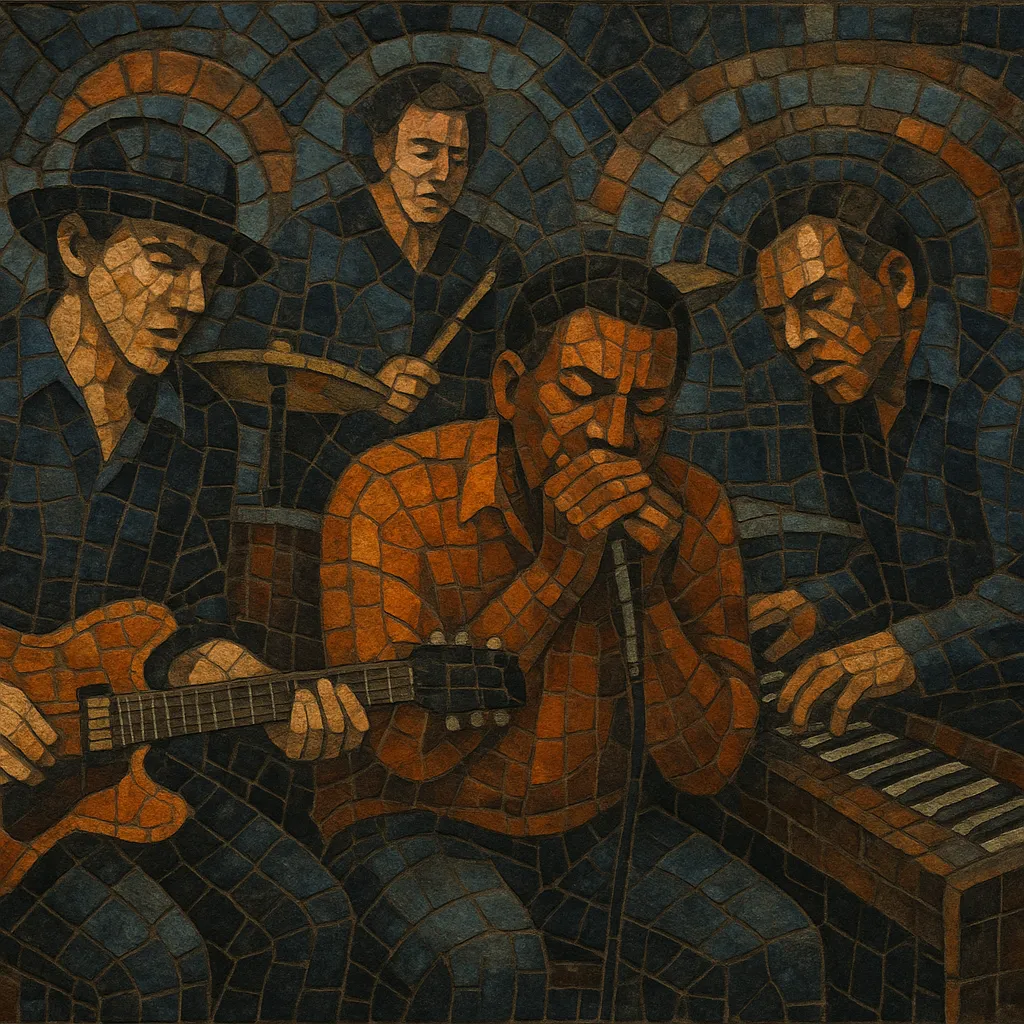
Dutch blues is the Netherlands’ take on electric, band-driven blues, fusing Chicago grit and the British blues boom with a distinctly local, earthy sensibility. It favors smoky club sonics: cranked tube guitars with light overdrive, wailing harmonica, Hammond organ swirls, and the occasional boogie‑woogie piano over a sturdy shuffle backbeat.
Bands often switch between English (to connect with the broader blues lineage) and Dutch (to root stories in local places and lives). The result sits between raw rhythm & blues and blues rock, with unvarnished vocals, call‑and‑response phrasing, and a live‑in‑the‑room feel that helped it thrive in the Netherlands’ vibrant club and festival circuits.
History
Post‑war Dutch musicians absorbed American blues and rhythm & blues via imported records, radio, and touring bands. The British invasion then catalyzed a local shift from skiffle and beat toward harder, blues‑based sounds. By the mid‑1960s, Dutch groups began shaping a homegrown scene that balanced Chicago and British blues vocabularies with garage‑band urgency.
Cuby & the Blizzards, Bintangs, Q65, and Livin' Blues spearheaded the first wave. Their sound centered on shuffles, slow blues, and gritty vocals, amplified by harmonica, Hammond organ, and biting guitar leads. Dutch bands frequently shared bills with visiting British and American blues artists, which deepened stylistic ties and accelerated the scene’s growth across clubs and regional halls.
Through the 1970s, acts like Barrelhouse, Oscar Benton, and boogie‑woogie pianist Rob Hoeke broadened the palette—folding in soul inflections, piano‑driven grooves, and singer‑forward arrangements. The club circuit matured, blues societies formed, and specialist record shops and independent labels helped sustain touring and recording activity.
A new generation (e.g., Julian Sas) refreshed the idiom with muscular blues rock while honoring classic forms. Dutch blues found durable homes at festivals and in regional venues—Moulin Blues (Ospel), Ribs & Blues (Raalte), and, later, the Holland International Blues Festival—keeping the tradition visible and vital. Archival projects and museums (such as the C+B Museum in Grolloo) have further cemented the music’s heritage and handed it to younger players.