Your digging level
Description
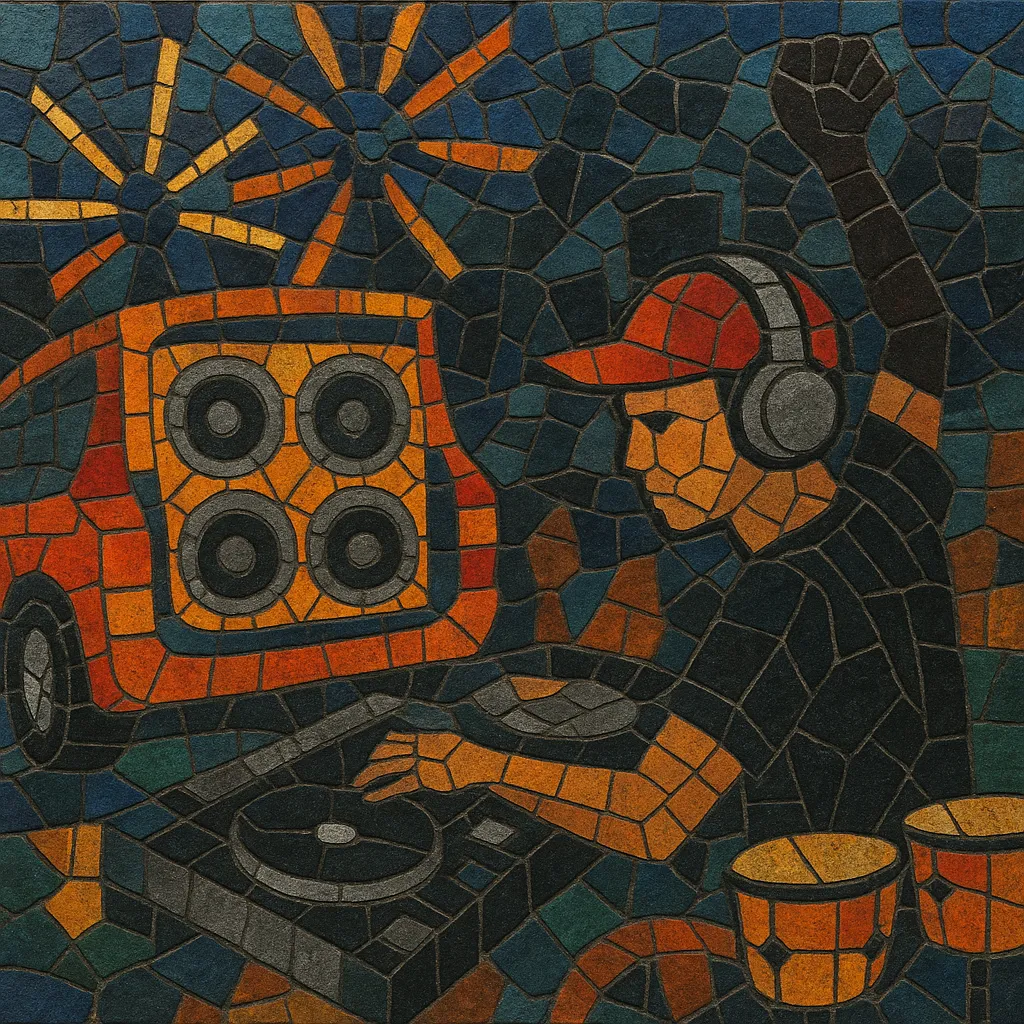
Dek bass is a South Asian sound‑system style built for extreme volume and visceral low end. Tracks center on long, sustained sub‑bass tones, triplet or rolling percussion drawn from regional drumming traditions, and shrill, high‑pitched effects (sirens, whistles, sped‑up vocal bits) that cut through the air at outdoor events.
The name is commonly linked to the use of cassette decks ("dek/deck") and locally engineered speaker stacks in village "box competitions"—sound‑clash‑like battles where crews try to outdo each other in power, clarity, and crowd reaction. Music is functional first: arrangements are simple, with extended builds and punishing drops designed to stress‑test cones, shake bodies, and hype the gathering.
History
Dek bass emerges in rural West Bengal, India, where DIY sound systems—towering wooden stacks and repurposed amps—anchor weddings, melas, and street processions. Crews begin crafting bass‑maximalist edits from film dialogues and folk refrains, pairing them with dhol/tasha‑style rhythms and weaponized sub‑tones for village “box competitions.”
Rather than labels, the scene spreads via memory cards, cassettes, YouTube, and WhatsApp producer groups. Practical needs shape the sound: ultra‑dry kick–sub pairings for clarity outdoors, long sub sweeps for system checks, and chant‑like tags to brand each crew. Local MC hype and found sounds (sirens, horns) become signatures.
Field recordings and online clips draw global ears. Documentarians and diaspora artists spotlight the culture, while visitors stage crossover events that fuse UK bass currents with dek bass system practices. Even as interest grows, the core remains community‑run battles and celebrations where function and force rule the music.
Start with a sine or triangle‑based sub that sustains and glides; aim the fundamental around 40–55 Hz with occasional sweeps below for impact. Use minimal harmonics, heavy limiting, and layered saturation so the bass stays loud yet legible on huge rigs.
•Add piercing treble elements—sirens, whistles, chopped dialogue, or short synth bleeps—high‑passed to sit above the din in open air. Automate resonance sweeps and delays for dramatic, competitive drops.
Build drums from South Asian patterns: dhol/tasha triplets, rolling toms, and emphatic claps. Keep kicks short and dry so they don’t mask the sub. Typical tempos range 120–150 BPM; choose a steady driving pulse with simple, danceable phrasing.
•Use call‑and‑response hits and pauses to cue the crowd and give operators space to showcase the system (e.g., 8–16 bars of near‑solo sub before a full drop).
Write functionally: brisk intro with ID tags, a long tension build, then a maximal drop. Include sections with isolated sub for “soundcheck” theatrics and quick edits for MC hyping.
•Keep harmony sparse; focus on modal riffs or single‑note motifs that support bass pressure. Sampled film lines or folk refrains can provide cultural anchors and memorable hooks.
Mix for headroom: clamp peaks with brickwall limiting, mono the low end, and carve 200–400 Hz to avoid mud outdoors. Test on small speakers and subs; the track should feel empty on phones but gigantic on a rig.
•Leave space between elements. Dek bass wins by clarity at punishing SPL, not by dense layering.