Your digging level

For this genre
0/8
🏆
Sign in, then listen to this genre to level up

Description

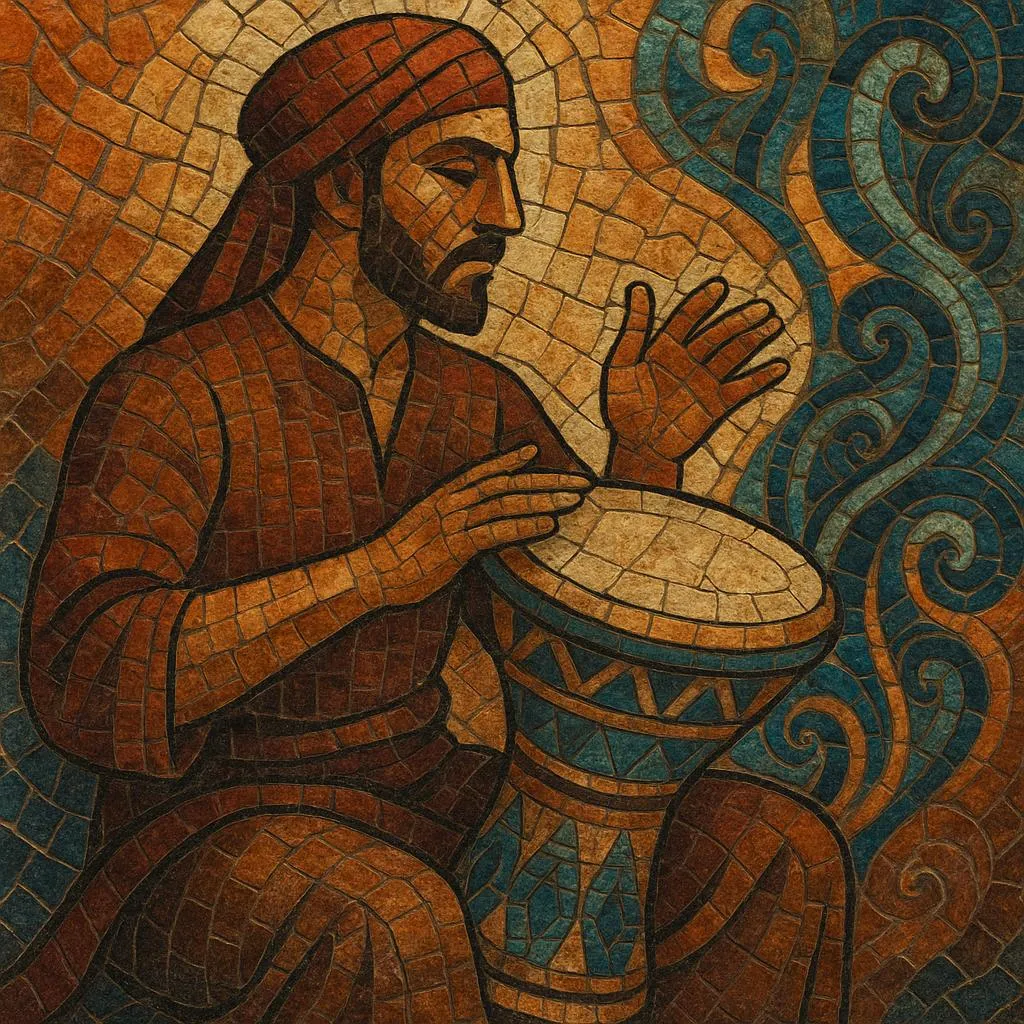
Darbuka (also called tabla/doumbek) here denotes a performance‑centered drumming style built around the Middle Eastern/North African goblet drum, whose modern solo/ensemble practice crystallized in mid‑20th‑century Egypt alongside raqs sharqi (belly dance). It features agile fingertip technique, driving iqaʿāt (rhythmic cycles) such as Maqsum, Baladi/Masmudi Saghir, Saʿidi, Malfuf and Ayoub, and call‑and‑response with dancers and melodic ensembles.

The instrument itself is ancient—attested in Mesopotamian and Ancient Egyptian cultures—while contemporary practice distinguishes Egyptian (rounded rim) and Turkish (hard, exposed rim) builds that enable different articulations and ornaments. Recent decades saw a “split‑hand”/“split‑finger” revolution (pioneered by Mısırlı Ahmet) that expanded speed, rolls, and concert‑solo idioms, pushing the darbuka from folk/dance contexts to stages with symphony orchestras and jazz/world‑fusion settings.


Sources: Spotify, Wikipedia, Discogs, RYM, MB, user feedback and other online sources

History

Origins (antiquity)

Goblet drums are documented across the Middle East and North Africa for millennia, with examples in Mesopotamian, Babylonian, and Ancient Egyptian contexts; their goblet form (clay/wood/metal shells with skin/synthetic heads) underpins today’s darbuka timbre and playing posture.

Urban cabarets and the belly‑dance era (1930s–1960s)

In Cairo’s Golden Age of film and nightclubs, raqs sharqi became a codified stage art; the darbuka (Egyptian “tabla”) anchored dance orchestras and drum‑solo interludes, standardizing iqaʿāt like Maqsum/Baladi/Saʿidi and show forms that many players still follow.

Recording artists and global visibility (1970s–1990s)

Egyptian virtuosi such as Hossam Ramzy and Said El Artist popularized Egyptian tabla across recordings, film, and international touring, helping codify teaching repertories and ensemble formats for modern darbuka performance.

The Turkish split‑hand revolution (1990s–2000s)

Turkish master Mısırlı Ahmet developed and disseminated the split‑finger technique—sequential fingertip strokes that enable extreme speed and continuous rolls—reshaping solo language and pedagogy; laboratory studies now describe its finger‑coordination mechanics.

Concert halls and crossover (2000s–present)

Players such as Lebanon’s Rony Barrak carried darbuka into symphonic, jazz, and game‑music settings, writing concertante works and appearing with major orchestras, while online schools and method books spread technique globally.

How to make a track in this genre

Instrumentation and setup
•   Core voice: darbuka (Egyptian rounded‑rim or Turkish exposed‑rim); add larger dohola/sumbati for bass, plus riqq (tambourine), frame drum (duff/bendir), and sagat (finger cymbals). The Turkish rim favors fast snaps/rolls; the Egyptian rim favors flowing rolls and warm bass.
Rhythmic foundations (iqaʿāt)
•   Start from 4/4 Maqsum (D– T – – T D – – T) as the default groove; modulate to Baladi/Masmudi Saghir and Saʿidi; use Malfuf (2/4) or Ayoub (2/4) for intros/transitions; Masmudi Kabir (8/4) for heavier passages. Practice smooth two‑bar modulations (e.g., Baladi→Maqsum) common in Egyptian dance music.
Stroke palette and technique
•   Build tone language around DUM (center bass), TEK/KA (rim highs), PA (slap), and muted ghosts. For modern virtuosity, incorporate Turkish split‑hand patterns for rapid alternating TEKs and continuous rolls; isolate ring/index strokes hands‑separately, then interlock for speed.
Form and arranging
•   Drum‑solo arc for raqs sharqi: short Malfuf or Ayoub pickup → main Maqsum/Baladi body with accents for dancer → breakdown/taqsim‑like rubato textures → climactic Saʿidi or fast Maqsum → coda. Orchestrate call‑and‑response with oud/violin/accordion, leaving space for melodic ornaments between rhythmic sentences.
Sound design & practice
•   Exploit the shell and rim: vary hand position to color TEK brightness; use bell‑hand inside the shell for wah‑like filtering; practice dynamic swells and trills to cue dancers. Record at 90–120 BPM for social‑dance utility; for concert solos, alternate groove choruses with virtuosic split‑hand cadenzas.

Top tracks

Locked
Share your favorite track to unlock other users’ top tracks

Upcoming concerts

in this genre
Influenced by
Has influenced

Download our mobile app

Get the Melodigging app and start digging for new genres on the go
© 2026 Melodigging
Melodding was created as a tribute to Every Noise at Once, which inspired us to help curious minds keep digging into music's ever-evolving genres.
Buy me a coffee for Melodigging