Your digging level
Description
Czech folk is the traditional music of the Czech lands (Bohemia, Moravia, and Czech Silesia), characterized by lively dance tunes, narrative songs, and rich regional instrumentation.
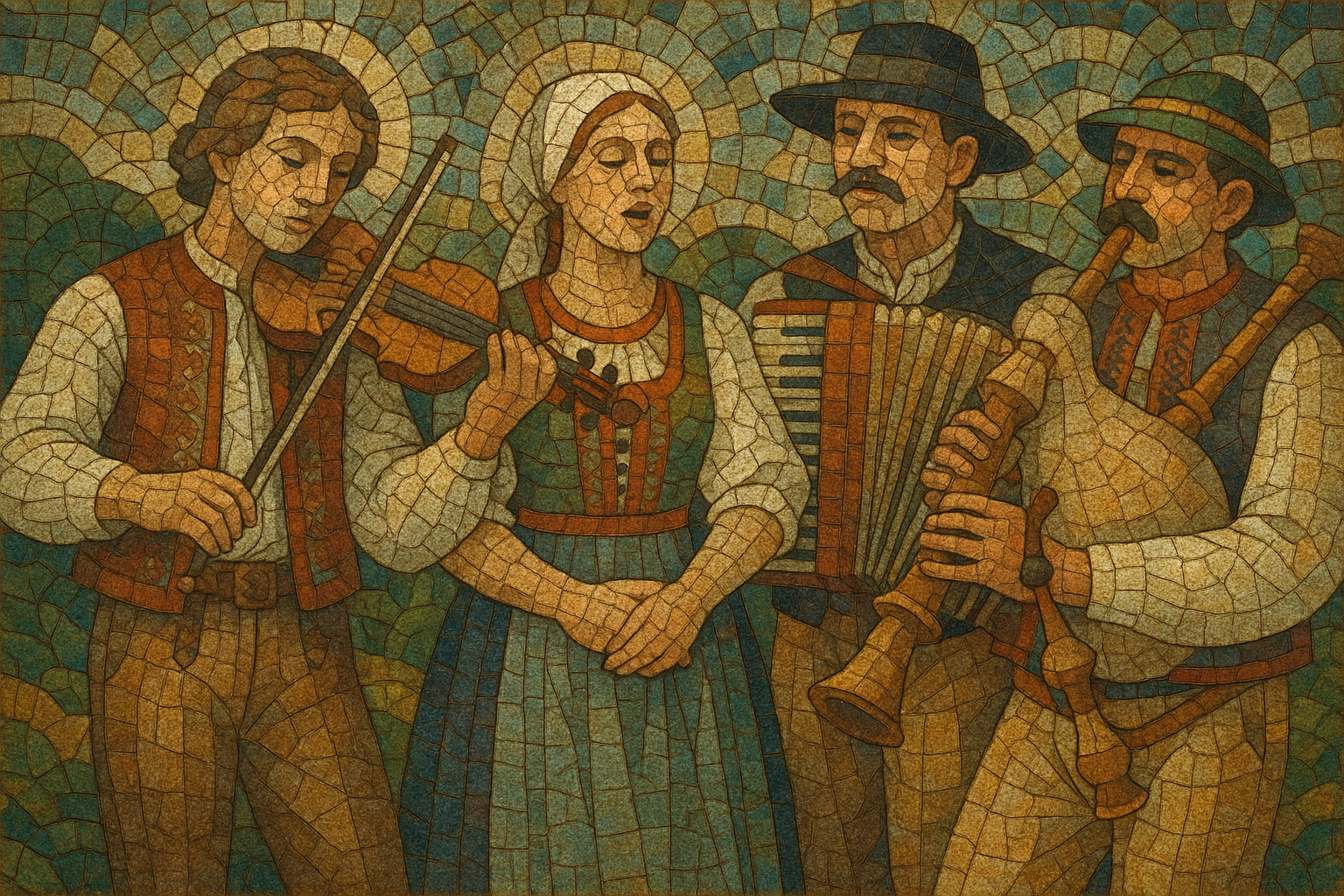
It features village fiddles (housle), cimbalom ensembles in Moravia, Czech bagpipes (dudy) in Bohemia, clarinets, accordions, and later brass bands. Vocal styles range from unison singing to rustic two- and three-part harmonies, with refrains that invite community participation.
Core dance rhythms include the brisk 2/4 polka, the stately 3/4 sousedská, and the hemiola-rich furiant. Melodic language often blends major/minor with modal color (especially Mixolydian) and drone-supported textures. Lyrics celebrate rural life, love, humor, and the yearly calendar of work and festivity.
Sources: Spotify, Wikipedia, Discogs, Rate Your Music, MusicBrainz, and other online sources
History
Traditional song and dance in the Czech lands formed over centuries of rural life, guild traditions, and seasonal rituals. By the 18th century, distinctive local dances and shepherd instruments (notably Bohemian bagpipes) were already embedded in village culture.
During the Czech National Revival in the 1800s, collectors and intellectuals documented folk repertoires, and urban society embraced rural music as a symbol of identity. The polka—born in Bohemia in the 1830s—became a global craze, while furiant and sousedská entered art music through composers like Smetana and Dvořák, cementing folk idioms in the Czech musical imagination.
Regional cimbalom bands in Moravia and brass “dechovka” ensembles popularized folk dances for radio, records, and community festivals. Under the socialist era, state folklore ensembles staged stylized versions for theaters and international tours, which preserved repertoire but sometimes standardized regional nuance.
After 1989, independent labels, festivals, and ensembles reinvigorated field-based performance practices and regional styles. Artists blended authentic instrumentation with contemporary arranging, world-folk fusions, and songwriter traditions, keeping Czech folk vibrant at home and influential abroad.
How to make a track in this genre
Use a mix of regional timbres: Bohemian fiddles (housle), viola and double bass; Moravian cimbalom (hammered dulcimer) with clarinet and violin; accordion for song accompaniment; and, where appropriate, Bohemian bagpipes (dudy) or small flutes. For festive settings, arrange the same melodies for brass band (dechovka) with trumpets, baritones, and tuba.
Center your dance feel on polka (lively 2/4, ~110–130 BPM), waltz/sousedská (graceful 3/4), and furiant (alternating accents creating 2:3 hemiolas). Keep grooves simple, with strong downbeats and buoyant offbeats that invite group dancing.
Write singable, stepwise tunes with periodic phrases (often 4+4 or 8+8 bars). Favor major keys but color them with Mixolydian or Dorian inflections and drones (tonic/dominant) where bagpipe style is implied. Harmonies can be triadic and diatonic; add parallel thirds or sixths in the vocals and occasional secondary dominants for lift.
Craft verses that tell everyday stories—love, work, weddings, harvest, and village humor—using simple, memorable refrains. Alternate solo verses with communal choruses. Repetition with small melodic variations is authentic and dance-friendly.
Ornament melodies with grace notes, turns, and slides on fiddle or cimbalom tremolos. Use call-and-response between lead voice and chorus or between melody instrument and ensemble. For brass-band versions, voice the melody in horns, reinforce bass with tuba, and maintain a crisp, danceable snare or percussion pattern.
Encourage communal singing and dance. Keep tempos steady but flexible enough for dancers. If fusing with contemporary styles, preserve core rhythms and folk scales while tastefully adding modern textures.