

Your digging level
Description
Cururu is a traditional sung-poetry genre from inland Brazil, especially associated with the state of São Paulo and neighboring parts of the Center-South.
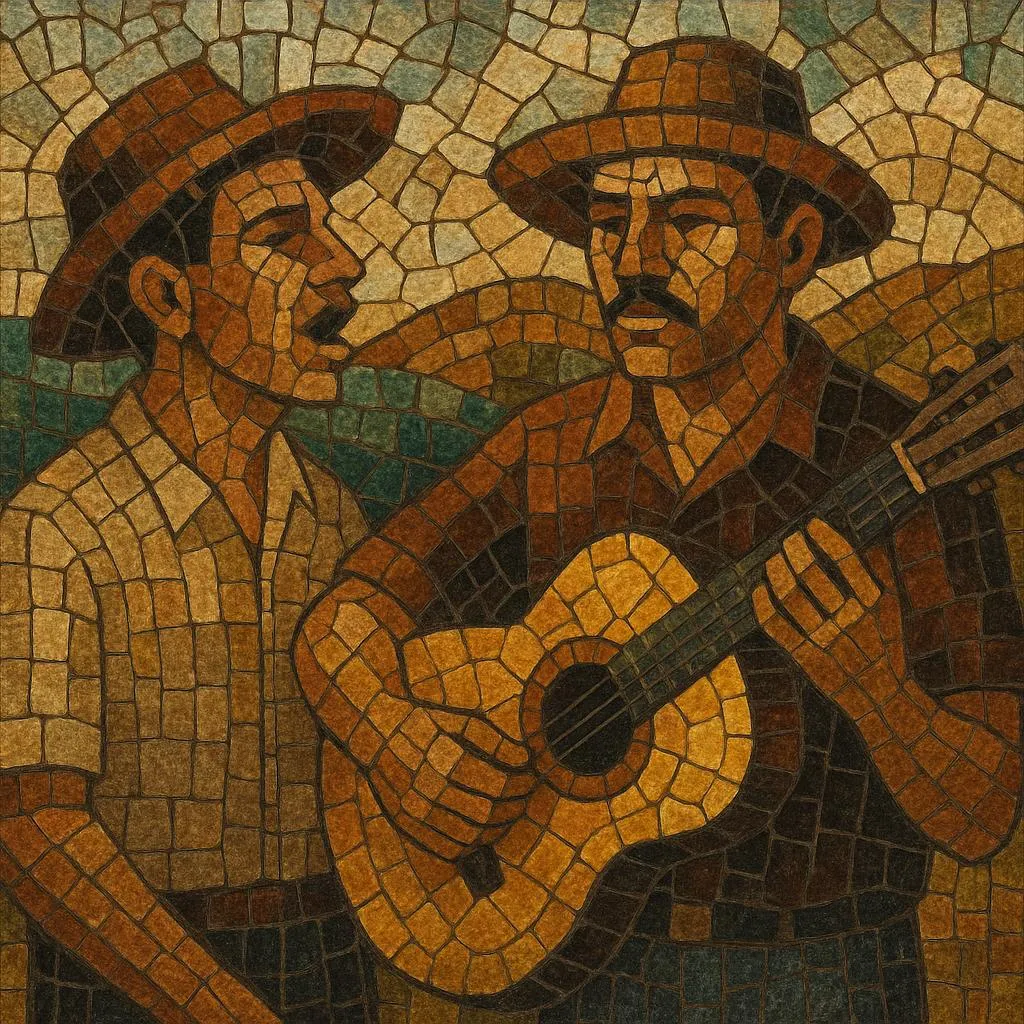
It is typically performed by male singer-improvisers who alternate verses, often in a competitive or dialogic format, accompanied mainly by viola caipira and sometimes other regional string instruments.
The style combines devotional, narrative, and improvised elements. Its texts may address religion, morality, rural life, local events, humor, or verbal challenge between performers.
Musically, cururu is closely linked to the caipira cultural world. The melodic material is generally simple and functional, with strong emphasis on the poetic delivery, the metric flow of the verse, and the interaction between singers.
Historically, cururu has roots in popular Catholic practice and festive community contexts, but it also developed into a secular and semi-competitive rural performance tradition.
History
Cururu emerged in the rural interior of Brazil, especially in the cultural zone of the upper Tietê and Piracicaba river regions in the state of São Paulo. It is generally understood as part of the broader caipira universe and has deep connections to colonial and post-colonial popular Catholic practices.
The genre grew from communal singing traditions tied to saints' festivals, prayer gatherings, and local celebrations. Over time, it developed into a more recognizable form of sung poetic disputation, in which performers demonstrated wit, memory, piety, and verbal agility.
During the nineteenth century and into the early twentieth century, cururu became strongly identified with inland working communities, especially among riverine and agricultural populations. Performances could occur in religious festivities, house gatherings, and social events.
Its structure favored improvisation and verbal exchange. Singers often responded to each other through metrically organized verses, sometimes respectful and devotional, sometimes humorous or competitive. This made cururu both a social ritual and an art of oral expression.
Cururu belongs to the same broad cultural environment as other rural paulista forms centered on viola caipira. Although distinct from modas, cateretê, and other regional song types, it shares with them a strong rural identity, a connection to oral tradition, and a preference for poetic storytelling.
As radio, recording, and urban migration transformed Brazilian music in the twentieth century, cururu became less dominant in mainstream circulation but remained culturally important in regional contexts. Folklorists, regional performers, and cultural institutions helped preserve and document it.
Today, cururu survives primarily as a traditional regional genre and a marker of caipira heritage. It continues to be performed in festivals, heritage events, and local cultural circuits, especially in São Paulo's interior.
Its importance lies not only in its musical features but also in its role as a living form of rural poetic debate, memory, and community identity.
Start with viola caipira as the central accompanying instrument. The accompaniment should be rhythmically supportive rather than harmonically dense, leaving space for the sung verse to remain the focus.
You may add another regional string instrument or light percussion, but traditional cururu usually works best with a sparse texture.
Use a declamatory, projected singing style that prioritizes diction and verbal clarity.
The voice should sound rooted in oral tradition rather than polished pop phrasing. A slightly nasal or rustic timbre can be appropriate if it arises naturally from the performer.
Keep the melodic range relatively moderate and functional. Melodies often serve the text instead of drawing attention to virtuoso ornamentation.
Use simple harmonic movement, often based on tonic and dominant functions, with occasional subdominant support. The harmony should reinforce the verse structure and cadence points.
Build the piece around cyclical accompaniment patterns that support improvised or semi-improvised stanzas.
Cururu often depends on the alternation of verses between singers. If composing in this style, write or improvise multiple strophes with clear metric consistency so that performers can answer each other naturally.
Write in strophic verse with strong attention to meter, rhyme, and rhetorical flow.
Common themes include:
• religious devotion • saints and biblical references • moral reflection • rural life and labor • local history • playful verbal challenge • humor and social commentaryA key stylistic element is the art of response. If writing for two singers, make each verse react to the previous one with intelligence, irony, reverence, or argument.
Perform in a communal environment where audience attention to the text is high. Cururu works best when listeners can follow the poetic exchange.
Encourage singer-improvisers to develop verses in real time. Fluency of language, memory of poetic formulas, and command of rural idiom are essential.
The dramatic core of cururu is the relationship between performers. Even when the tone is devotional, the exchange should feel alive, responsive, and socially grounded.


