Your digging level
Description
Cumbia uruguaya is the Uruguayan branch of the wider cumbia tradition, adapted to the country’s dance‑hall culture and coastal urban life. It blends the classic cumbia beat with local popular “música tropical” aesthetics, drawing on brass‑led dance orchestras, later synthesizers and keyboards, and the Afro‑Uruguayan sense of groove.
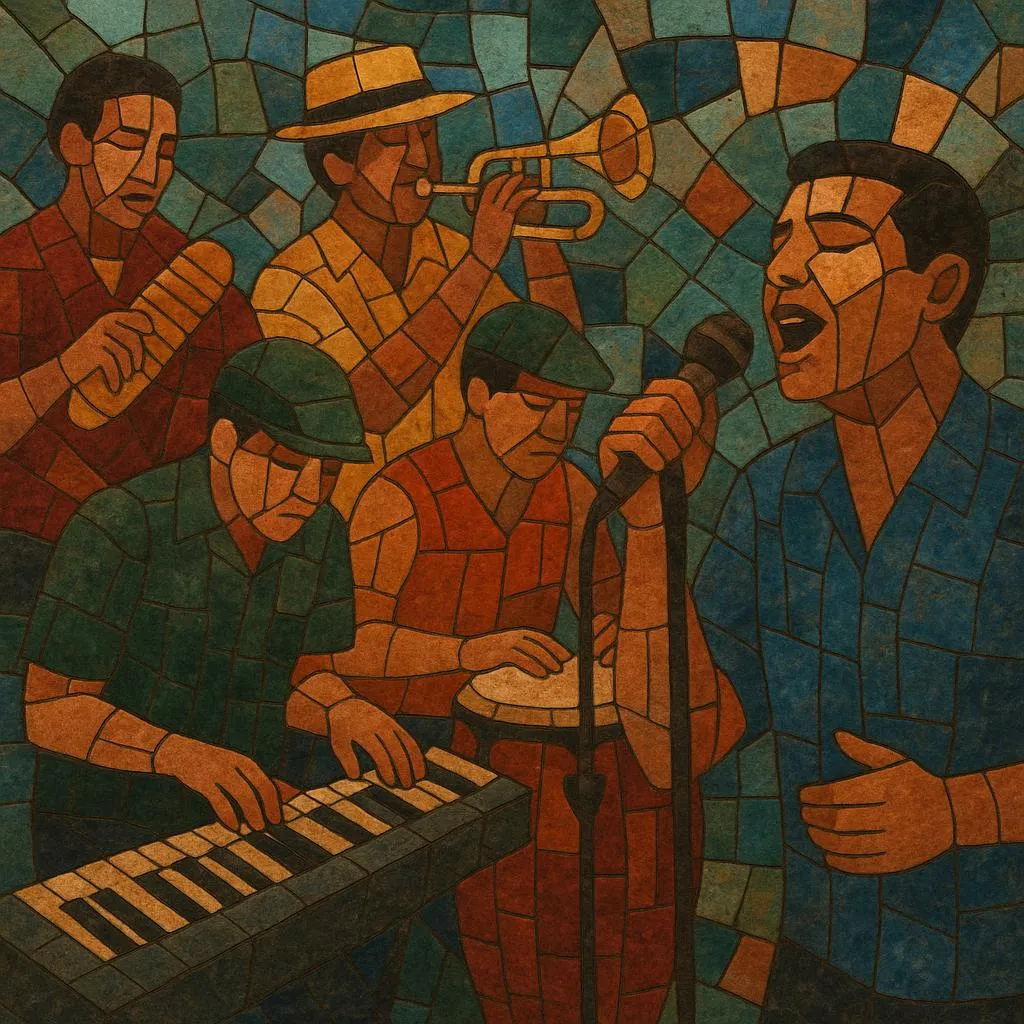
Early bands leaned on Colombian and Peruvian cumbia repertoires, but Uruguayan groups quickly localized the sound: sturdy 4/4 percussion (congas, timbales, güiro), a punchy electric‑bass tumbao, bright keyboard hooks or accordion riffs, and call‑and‑response coros backing a charismatic lead singer. Lyrically it favors romance, partying, neighborhood pride, and feel‑good storytelling, delivered in Rioplatense Spanish.
From the late 1990s onward, crossover with pop and regional urban styles made cumbia uruguaya sleeker and more radio‑friendly, without losing its core function as social dance music.
History
Cumbia entered Uruguay via records and touring bands from Colombia and Peru, and through the regional “música tropical” circuit shared with Argentina and southern Brazil. By the mid‑1970s, Montevideo dancehalls and coastal resorts embraced the style. Local bands adapted the repertoire for ballroom‑style ensembles (sonoras) with brass, percussion, and vocals, establishing a distinctly Uruguayan take on cumbia.
Through the 1980s, cumbia uruguaya became a pillar of weekend bailes and carnival‑season parties. Arrangements favored tight horn lines, güiro‑driven percussion, and melodic bass figures. The scene professionalized around agencies, radio, and TV variety shows that promoted “música tropical uruguaya,” with cumbia as the flagship rhythm.
In the late 1990s, proximity to Buenos Aires brought dialogue with contemporary Argentine currents (including the rougher, street‑level approach from across the river), while Uruguayan bands increasingly adopted keyboards and brighter pop harmonies to suit large venues and media.
The 2000s saw sleek studio production, ear‑catching synth hooks, and choreography‑ready choruses. Acts tailored songs for radio and television while maintaining dancefloor energy. By the 2010s, a youth‑oriented “cumbia‑pop” wave sprang from Montevideo, blending cumbia grooves with glossy pop songwriting and social‑media‑driven promotion, taking the Uruguayan sound across the Southern Cone.
Cumbia uruguaya remains central to the country’s party culture—from neighborhood clubs to coastal festivals—while continuing to fuse with reggaetón, Latin pop, and electronic production. Live percussion, dancing crowds, and sing‑along hooks still define the genre’s social heartbeat.