Your digging level

For this genre
0/8
🏆
Sign in, then listen to this genre to level up

Description

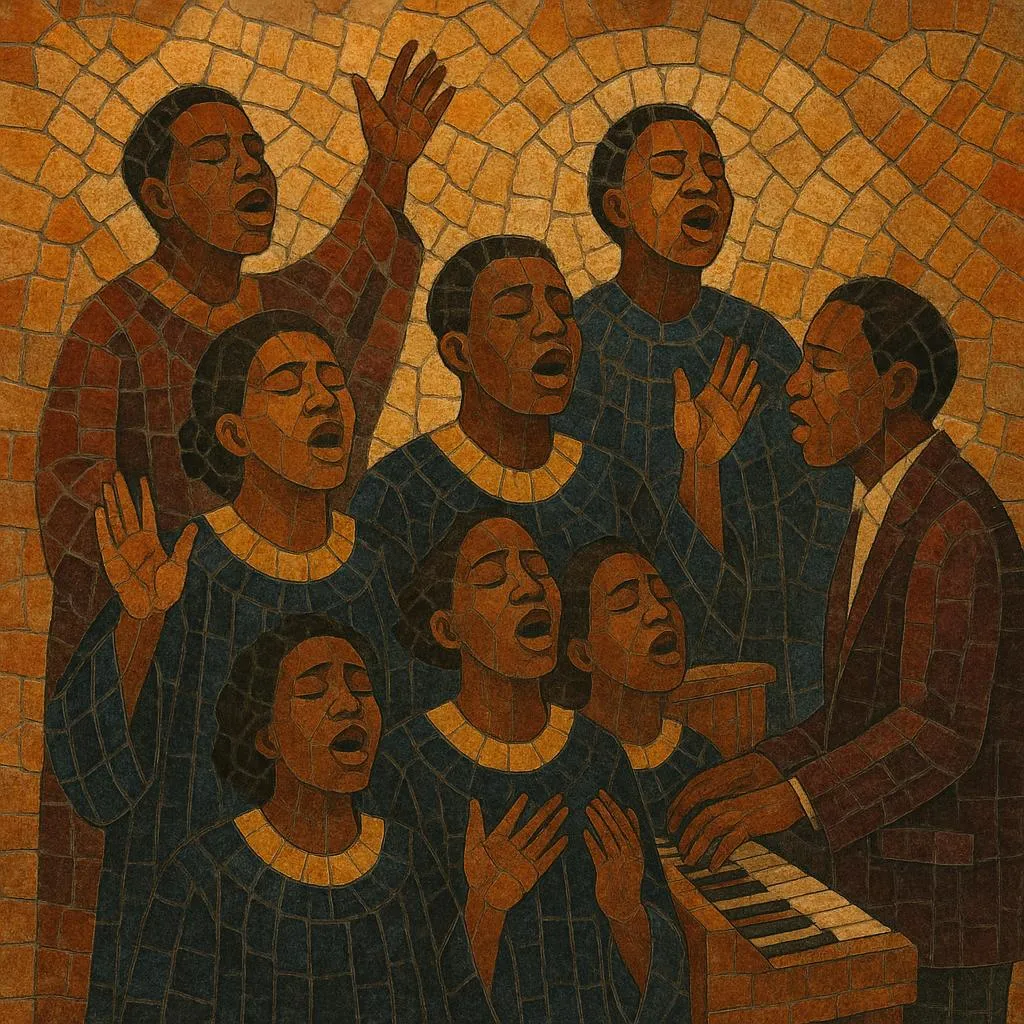
Coral gospel (choral gospel) is the gospel-choir branch of Christian music that sets the fervor of African‑American gospel tradition in multi‑part SATB choral arrangements. It blends call‑and‑response leadership with rich harmonies, handclaps, and a rhythm section drawn from blues, jazz, and soul, yielding both ecstatic uptempo shouts and tender devotional ballads.

In many Lusophone and Hispanic contexts, the term "coral gospel" specifically denotes large church or community choirs performing gospel repertoire in Portuguese or Spanish, often adopting the vocal style and arrangement practices of U.S. mass choirs. The result is a communal, uplifting sound designed for congregational participation, worship services, concerts, and festivals.


Sources: Spotify, Wikipedia, Discogs, RYM, MB, user feedback and other online sources

History

Origins (1930s–1950s)

The roots of coral gospel lie in early 20th‑century African‑American sacred music. Spirituals (often arranged for choirs) and Holiness/Pentecostal hymn singing converged with blues harmony and jazz phrasing. Pioneers like Thomas A. Dorsey helped codify modern gospel while church choirs—guided by directors and dynamic lead singers—established the template of call‑and‑response, handclaps, and powerful SATB voicings.

Expansion and the Mass Choir Era (1960s–1980s)

From the 1960s onward, the rise of the mass choir became a hallmark: large ensembles such as James Cleveland’s Southern California Community Choir, the Edwin Hawkins Singers, and state or city “Mass Choirs” popularized the big, unified sound. Recordings and radio spread the style, while harmonic language absorbed more R&B and jazz colorations (extended chords, chromatic turnarounds), and performances incorporated modulations and extended vamps for congregational participation.

Globalization and Local Adaptations (1990s–2010s)

Gospel choirs proliferated worldwide. In Europe (e.g., London Community Gospel Choir, Oslo Gospel Choir) and Africa (e.g., Soweto Gospel Choir), ensembles adapted local languages and rhythms to the gospel-choir format. In Latin America and the Lusophone world, the descriptor “coral gospel” came to denote choirs embracing the U.S. gospel aesthetic with culturally specific repertoires and liturgical uses.

Contemporary Practice (2010s–present)

Today, coral gospel spans church services, concert halls, and festivals, often intersecting with contemporary worship, urban contemporary gospel, and even pop and house remixes. Large choirs, seasoned band sections (piano/organ, bass, drums, guitar), and charismatic lead vocalists continue to define the genre’s sonic identity, while community building, testimonies, and participatory worship remain central.


How to make a track in this genre

Ensemble and Voicings
•   Write for SATB (or SSA/TTB) with a clear lead vocalist or small lead group. •   Use tight, triadic voicings with frequent 6ths, 7ths, and added‑tone color (add9, sus2/4) for warmth and lift. •   Employ call‑and‑response: the leader introduces a phrase, the choir answers in harmony.
Harmony and Progression
•   Core gospel progressions: I–IV–I–V (with secondary dominants), IV–V–I tag endings, and blues‑inflected turns (bVII or bIII as borrowed color). •   Use chromatic approach chords and walk‑ups; set up key changes (often up a semitone or whole step) before the final chorus (“modulation lift”).
Rhythm and Groove
•   Common feels: 12/8 shuffle ballad; driving 4/4 with backbeat claps; medium‑up “shout” grooves for the vamp. •   Layer handclaps, stomps, and occasional tambourine. Rhythm section: piano or Hammond organ, bass, drums; add electric guitar comping and, when desired, a small horn section.
Form and Dynamics
•   Typical form: Intro → Verse → Chorus → Verse/Bridge → Chorus → Vamp/Tag → Key Change → Final Chorus/Outro. •   Build intensity across sections with thicker voicings, call‑and‑response ad‑libs, and dynamic swells; reserve the loudest, highest tessitura for the last modulated chorus.
Lyrics and Delivery
•   Center texts on testimony, scripture, hope, and communal praise; keep refrains simple and repeatable. •   Encourage expressive melismas and ad‑libs from the lead; maintain choral blend, unified diction, and clear consonants for impact.
Rehearsal Tips
•   Balance sections carefully (no one section overpowering); tune thirds and sevenths meticulously. •   Groove first: lock choir claps with the rhythm section. Isolate vamps and modulations until transitions feel effortless.

Top tracks

Locked
Share your favorite track to unlock other users’ top tracks

Upcoming concerts

in this genre
Influenced by
Has influenced

Download our mobile app

Get the Melodigging app and start digging for new genres on the go
© 2026 Melodigging
Melodding was created as a tribute to Every Noise at Once, which inspired us to help curious minds keep digging into music's ever-evolving genres.
Buy me a coffee for Melodigging