Your digging level
Description
Cleveland punk is a raw, abrasive strain of 1970s American punk rooted in the city’s post‑industrial landscape and art‑damaged underground. It marries the primitive drive of garage rock and proto‑punk with experimental impulses—tape noise, synth burbles, sax skronk, and deliberately jagged guitar tones.
Compared to coastal scenes, Cleveland’s bands were harsher, more sardonic, and less fashion‑oriented: short, confrontational songs, trebly overdrive and feedback, pounding minimalist rhythms, and lyrics full of Rust Belt black humor and urban decay. Groups like electric eels, Rocket from the Tombs, Pere Ubu, the Dead Boys, Mirrors, and the Pagans defined a sound that was both proto–noise rock and a blueprint for later post‑punk and alternative rock.
History
In the early 1970s, Cleveland’s economic decline and cheap rehearsal spaces fostered a fiercely DIY community. Drawing on the Stooges/Velvet Underground lineage of proto‑punk, local garage‑psych histories, and avant‑garde experimentation, bands such as Mirrors and electric eels began crafting abrasive, minimalist songs. Informal venues and bohemian bars (including places later known for hosting Pere Ubu and Rocket from the Tombs) became hubs for a small but tightly knit scene.
Rocket from the Tombs formed a crucial bridge: half demolition‑derby rock ’n’ roll, half art‑noise provocation. From its members sprung two key groups—Pere Ubu (who kept the experimental electronics and urban surrealism) and the Dead Boys (who emphasized speed and menace). Meanwhile, the Pagans, The Styrenes (an offshoot tied to Mirrors), and X_X refined a signature Cleveland mix: raw power‑chord minimalism, jagged guitars, tape/synth noise, and sardonic, street‑level lyrics.
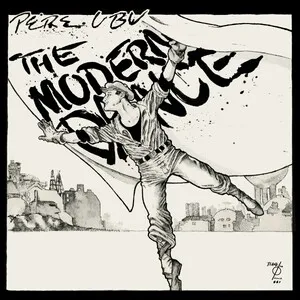
The Dead Boys’ move to New York plugged Cleveland punk directly into the CBGB circuit, spreading its confrontational attitude and repertoire. Pere Ubu’s early singles and The Modern Dance (1978) demonstrated how Cleveland’s punk could expand into avant‑rock without losing urgency, helping seed the post‑punk vocabulary.
Into the 1980s, bands like The Defnics and other local outfits carried the torch while Cleveland’s influence radiated outward: its art‑damaged aggression informed U.S. noise rock, post‑punk, and the broader alternative underground. Subsequent revivals and archival reissues cemented the city’s role as a foundational, singular voice in American punk history—less about fashion or industry, more about uncompromising sound and attitude.