Your digging level

For this genre
0/8
🏆
Sign in, then listen to this genre to level up

Description

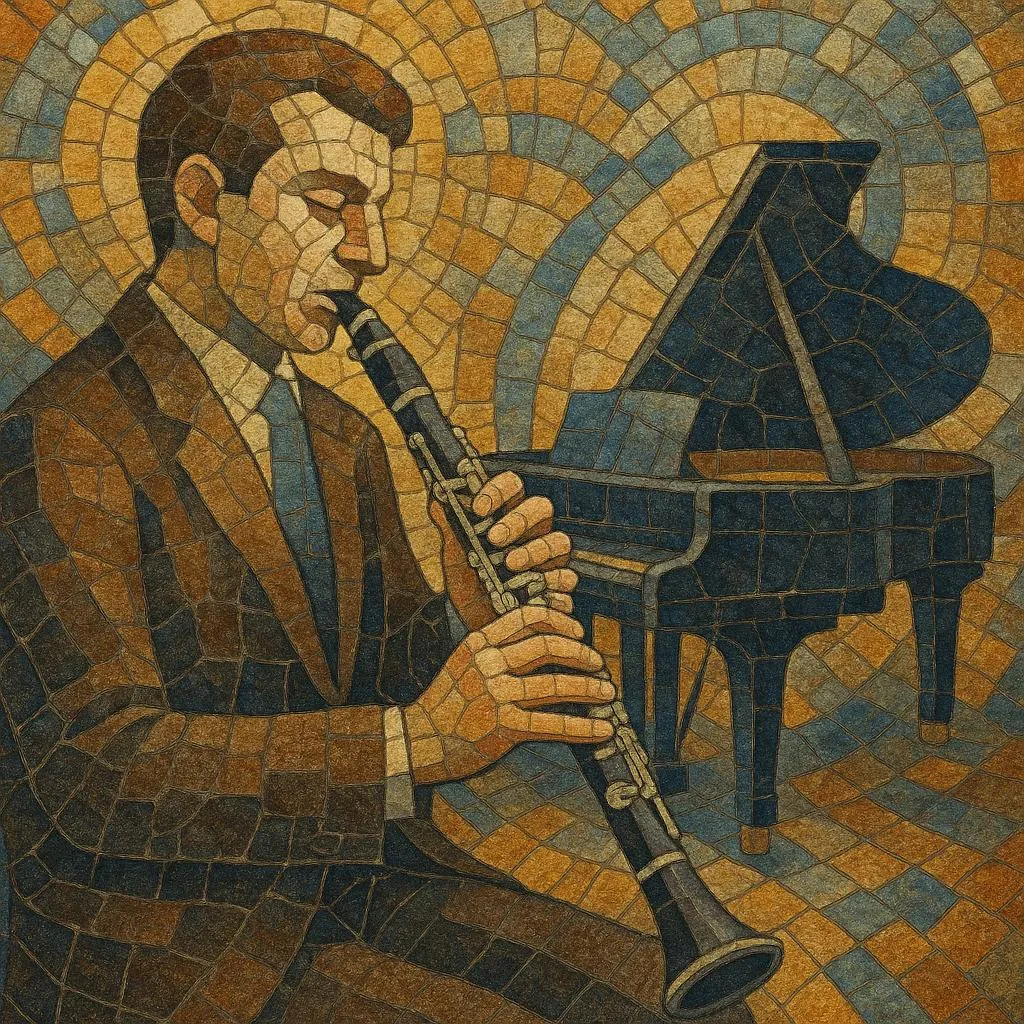
Classical clarinet refers to the body of Western classical music written for the clarinet family (notably the B♭ and A clarinets, as well as E♭, basset, and bass clarinets) from the 18th century to the present.

It encompasses concertos, sonatas, chamber music (e.g., clarinet–piano, clarinet quintets, woodwind quintets), orchestral solos, and modern works that explore extended techniques. Stylistically it is marked by cantabile melodic writing, agile passagework, vivid dynamic contrasts, and expressive use of the instrument’s distinct registers (chalumeau, clarion, and altissimo). Tone production and articulation emphasize clarity, legato flexibility, and nuanced control; vibrato, if used, is typically subtle and style-dependent.

Canonical repertoire spans the Classical era through Romanticism and into the 20th/21st centuries, creating a continuous tradition of performance and pedagogy that shapes how clarinetists learn phrasing, color, and technique across solo, chamber, and orchestral contexts.


Sources: Spotify, Wikipedia, Discogs, RYM, MB, user feedback and other online sources

History

Origins (18th century)

The clarinet evolved in early 18th‑century Germany from the chalumeau, notably through the work of Johann Christoph Denner in Nuremberg. By the mid‑1700s, added keys increased flexibility, allowing composers to explore its warm low (chalumeau) and bright upper (clarion) registers. The Classical era embraced the instrument in orchestras and chamber settings, with specialized basset clarinets extending the low range.

Classical and early Romantic establishment

Late 18th‑century and early 19th‑century composers cemented the clarinet’s place with concertos, sonatas, and chamber works. Orchestral writing began to feature coloristic clarinet solos, while virtuoso clarinetists of the period inspired idiomatic pieces rich in lyrical lines and agile figurations. Treatises and orchestration manuals of the era highlighted the clarinet’s unique timbral palette within the growing symphonic ensemble.

Late Romantic expansion

In the later 19th century the instrument’s mechanism and keywork (influenced by the Boehm system) improved intonation and facility. Composers wrote quintessential late‑Romantic chamber works and orchestral solos that emphasized long‑breathed melody, register contrasts, and a wide dynamic range. Star clarinetists of the period acted as muses, shaping the repertoire’s expressive profile and technical ambitions.

20th century to modernism

The 20th century brought stylistic plurality: impressionistic rhapsodies, neoclassical concertos, and modernist chamber works that pushed color, rhythm, and articulation. Clarinet writing explored greater extremes of register, articulation (including slap‑tongue and flutter‑tongue), mixed meters, and new ensemble combinations; the bass clarinet gained an independent voice in orchestral and chamber music. Post‑war composers further expanded the language with multiphonics, microtones, and experimental solo literature.

Contemporary practice

Today, classical clarinet repertoire spans historical performance on period instruments (including basset clarinet) to cutting‑edge works for clarinet, bass clarinet, electronics, and mixed media. Conservatories, competitions, and specialist ensembles sustain a global performance tradition, while composers continue to add concertos, sonatas, and chamber works that synthesize classical craft with contemporary techniques.

How to make a track in this genre

Instruments and transposition
•   Common instruments: B♭ clarinet (sounds a major second lower), A clarinet (sounds a minor third lower), E♭ clarinet, basset clarinet (extended low range), bass clarinet (often to low C). •   Choose B♭ for flat‑key writing and A for sharp/violin‑friendly keys; specify instrument and transposition in the score and parts.
Range and registers
•   Practical written range (B♭ clarinet): E3 to C7 (concert D3–B♭6), with comfortable writing up to about A6. •   Exploit color contrasts: chalumeau (dark, E3–F♯4), throat tones (G4–B♭4; handle with care), clarion (singing brightness, B4–C6), altissimo (penetrating brilliance, above C6). Avoid excessive rapid crossings over the throat‑tone break unless idiomatic.
Idiomatic writing and articulation
•   Favor lyrical, legato lines and agile scalar/arpeggiated passagework; the instrument excels at rapid tonguing, trills, mordents, and wide intervallic leaps (even twelfths) when fingerings are considered. •   Use slur groupings that respect breathing and register shifts; combine light staccato with expressive legato for classical phrasing. Vibrato is minimal or style‑specific in classical playing. •   For bass clarinet, write idiomatically lyrical lines and resonant low tessitura figures; it speaks slightly slower than B♭/A clarinet.
Harmony, form, and ensemble use
•   Solo/sonata writing: classical ternary or sonata forms suit the clarinet–piano duo; keep piano textures transparent around throat‑tone passages. •   Concertos: balance orchestration to avoid masking the clarinet; double winds lightly, thin brass during solos, and use strings for supportive harmonies. •   Chamber: classic pairings include clarinet quintet (with strings), trio (clarinet–viola–piano or clarinet–cello–piano), and woodwind quintet. Write conversational lines and exploit color contrasts with strings and winds.
Orchestration tips
•   Clarinet solos project well; support with soft strings or sustained woodwinds. Avoid dense tutti in the same register. For E♭ clarinet, reserve brilliant, high‑color lines; for bass clarinet, use low doubling, counter‑melodies, or solo lines with dark timbre.
Extended techniques (when stylistically appropriate)
•   Slap‑tongue, flutter‑tongue, key clicks, breath/air sounds, microtones, quarter‑tone fingerings, pitch bends/glissandi, and multiphonics (provide fingering suggestions or appendix). Clearly notate effects and rehearsal marks for complex passages.
Notation and practicalities
•   Always label the instrument (in B♭, in A, etc.) and supply transposed parts. Indicate breathing marks, phrase lengths, and sensible rests. •   Write trills to idiomatic pitch pairs; avoid awkward throat‑tone trills unless verified. Articulation clarity (staccato vs. tenuto vs. accents) is essential for classical style.

Top tracks

Locked
Share your favorite track to unlock other users’ top tracks

Upcoming concerts

in this genre
Influenced by
Has influenced

Download our mobile app

Get the Melodigging app and start digging for new genres on the go
© 2026 Melodigging
Melodding was created as a tribute to Every Noise at Once, which inspired us to help curious minds keep digging into music's ever-evolving genres.
Buy me a coffee for Melodigging