Your digging level
Description
Classic ragtime is a composed, syncopated style of American popular piano music that crystallized in the late 1890s and flourished through the 1910s. It pairs a steady, march-like left hand (bass note plus chord—“oom–pah”) with a highly syncopated right-hand melody that "rags" the beat.
Unlike later jazz, classic ragtime is not primarily improvised; it was disseminated as notated sheet music and intended to be played at a moderate, even tempo without swing. Most rags follow a multi-strain march form (often AABBACCDD), with 16-bar sections and a trio that commonly modulates to the subdominant. Its harmonic language centers on diatonic progressions colored by secondary dominants, chromatic approach tones, and occasional diminished passing chords.
The style is rooted in African American musical aesthetics and social dance (e.g., cakewalk), while drawing structural cues from European marches and ballroom dances. Though quintessentially a solo piano idiom, classic ragtime was also arranged for small ensembles and bands.
History
Classic ragtime emerged in African American communities of the Mississippi Valley and Midwest—particularly Missouri—where syncopated dance music like the cakewalk intersected with European-derived marches and ballroom forms. Early rags circulated informally before publication; by the late 1890s, composers were codifying the style on sheet music, emphasizing composed (rather than improvised) multi-strain forms.
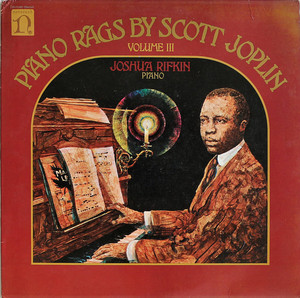
Scott Joplin’s "Maple Leaf Rag" (1899) defined the genre’s commercial and stylistic blueprint, selling hundreds of thousands of copies and establishing the four- (or five-) strain, 16-bar sectional layout with a trio in the subdominant key. Publishers such as John Stark (St. Louis) promoted the music and the "Big Three" composers—Scott Joplin, James Scott, and Joseph Lamb—who expanded the idiom’s lyricism, counterpoint, and architectural balance. Other important figures (Tom Turpin, Louis Chauvin, Artie Matthews, Charles L. Johnson, Arthur Marshall, Eubie Blake) enriched the repertoire across hubs like Sedalia, St. Louis, and New York.
As jazz and blues performance styles rose in the 1910s–1920s, ragtime’s composed aesthetic ceded the popular spotlight to improvisation-forward idioms. Keyboard practice evolved toward Harlem stride and boogie-woogie, inheriting ragtime’s left-hand power but loosening tempo and introducing swing. Printed rags waned in commercial profile, though the music continued in teaching studios and regional circuits.
Mid-20th-century collectors and scholars (e.g., Rudi Blesh) and veteran performers (e.g., Eubie Blake) spurred a revival. The 1970s brought a major resurgence when Scott Joplin’s rags featured in the film "The Sting" (1973), igniting new recordings, festivals, and scholarly editions. Since then, classic ragtime has been preserved by dedicated performers, competitions, and academic work, recognized as a cornerstone of American popular piano literature and a precursor to early jazz.