Your digging level

For this genre
0/8
🏆
Sign in, then listen to this genre to level up

Description

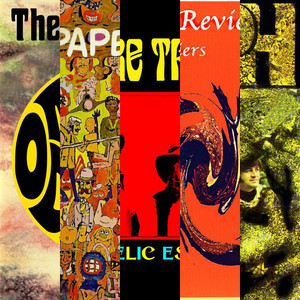
Classic psychedelic rock is the mid-to-late 1960s strain of rock that sought to mirror and magnify altered states of consciousness through sound. It favored saturated guitar tones, feedback, drones, and studio trickery (reverse tape, tape echo, flanging) alongside non‑Western timbres such as sitar and tambura.

Emerging on the U.S. West Coast and rapidly flowering in both San Francisco and London, the style became the soundtrack to the counterculture—expansive, exploratory, and often modal, with extended jams, surreal imagery, and high volume. It encompassed both the harder "acid rock" club sound and the more whimsical, pop‑structured British variant.


Sources: Spotify, Wikipedia, Discogs, RYM, MB, user feedback and other online sources

History

Origins (1965–1966)
•   Psychedelic rock coalesced in 1966, drawing on garage rock’s rawness, blues/folk rock harmony, and Indian classical/raga influences. On the U.S. West Coast, Ken Kesey’s Acid Tests and ballrooms like the Fillmore incubated loud, exploratory house bands (e.g., the Grateful Dead, Jefferson Airplane). In January 1966, Austin’s 13th Floor Elevators used the term “psychedelic rock” on their business card and soon issued The Psychedelic Sounds of the 13th Floor Elevators—the first rock LP to put “psychedelic” in its title.
Breakthrough and Peaks (1967–1969)
•   By 1967 the style dominated rock: the San Francisco acid‑jam approach and the UK’s more pop‑structured, arty variant both reached mass audiences. Landmark venues (UFO, Middle Earth) and artists (early Pink Floyd with Syd Barrett) defined the London underground, while U.S. radio and festivals amplified the West Coast sound. Established acts—The Beatles, Beach Boys, Yardbirds—folded psychedelic elements into charting records.
Aesthetics and Techniques
•   Classic psych pursued feedback, electronics, modal drones, and extreme volume; it freely adopted Eastern instruments (sitar), tape manipulation, and extended improvisation as sonic metaphors for altered consciousness.
Diffusion, Fragmentation, and Legacy
•   After its late‑’60s crest, psychedelic rock splintered into progressive/art rock, hard rock/heavy metal, space rock, and German experimental “Krautrock,” while its jam ethos fed the American jam‑band tradition. Its footprints persist into neo‑psychedelia and later underground revivals documented in retrospectives like Love Is the Song We Sing: San Francisco Nuggets 1965–1970; pioneers such as Roky Erickson became enduring cult figures.

How to make a track in this genre

Sound palette and instruments
•   Start with electric guitars using fuzz, wah‑wah, and feedback; add organ (Farfisa/Hammond), Mellotron, and occasional non‑Western colors (sitar, tambura) for drones. •   Use studio/FX as instruments: tape echo, ADT, reverse tape, flanging/phase, and rotary (Leslie) textures to create a swirling field. Keep overall levels loud and saturated for impact.
Harmony and melody
•   Favor modal vamps (Mixolydian, Dorian) and pedal‑point drones; alternate I–bVII or I–IV progressions with added 7ths/9ths. •   Weave raga‑like scalar figures and bends; sustain notes over static bass for trance‑like sections.
Rhythm and form
•   Combine steady backbeats with tom‑heavy tribal patterns; open sections for improvisation. •   Stretch forms: extended intros, middle improvisations, and codas; allow songs to evolve organically from groove to noise and back.
Lyrics and themes
•   Write surreal, visionary, or nature/mind‑expansion imagery; juxtapose everyday scenes with cosmic/metaphysical language.
Arrangement workflow
    •   

    Build a hypnotic vamp and bass drone.

    •   

    Layer primary riff and vocal hook.

    •   

    Open a mid‑section for modal soloing and sound‑processing “events.”

    •   

    Reintroduce the hook with thicker textures or call‑and‑response vocals.

    •   

    Print characterful tape/room effects and commit to bold mixes.

Practice tips
•   Jam live as a band to discover motifs, then sculpt in the studio; let experimentation guide form while keeping a memorable hook to anchor the trip.

Top tracks

Locked
Share your favorite track to unlock other users’ top tracks

Upcoming concerts

in this genre
Influenced by
Has influenced

Download our mobile app

Get the Melodigging app and start digging for new genres on the go
© 2026 Melodigging
Melodding was created as a tribute to Every Noise at Once, which inspired us to help curious minds keep digging into music's ever-evolving genres.
Buy me a coffee for Melodigging