Your digging level
Description
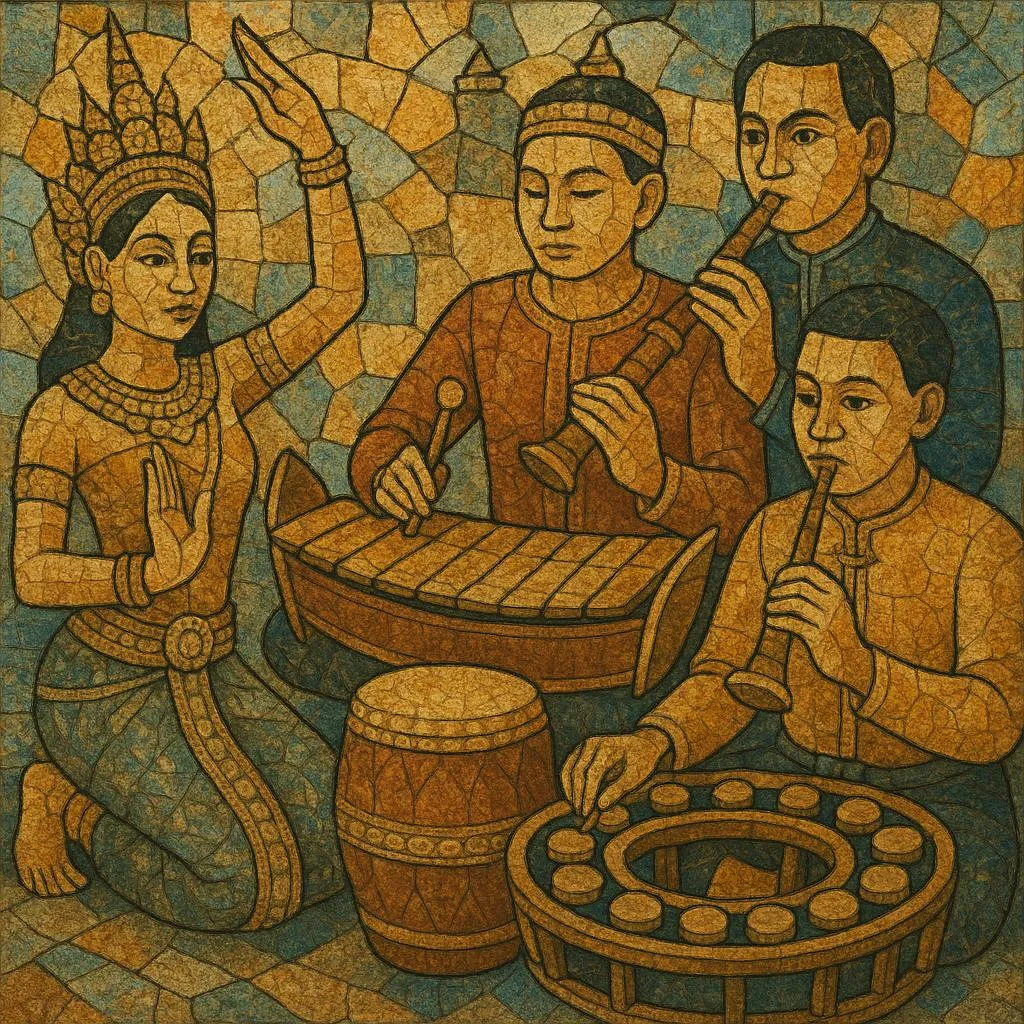
Cambodian classical music (often called Khmer classical music) is the courtly and ceremonial art music of Cambodia. It centers on refined dance-dramas and ritual contexts, performed by pinpeat and mohori ensembles, and sacred smot chant.
The sound world is heterophonic: multiple instruments elaborate the same melody at different densities and registers. Core timbres include roneat (xylophones), kong vong (gong-circles), the nasal sralai oboe, sampho and skor thom drums, and chhing finger cymbals marking the time cycle. In lighter contexts, bowed tro fiddles, khim hammered dulcimer, and zither join (mohori). Modal pitch systems are non–equal-tempered and ornamented, yielding floating, radiant sonorities that support royal dance, mask theater (lakhon khol), and temple ceremonies.
History
Reliefs and inscriptions from pre‑Angkor sites and the Angkor empire depict ensembles with gongs, oboes, and drums, attesting to a highly developed court tradition. Through centuries of Indianized religion and culture (Hindu‑Buddhist), Cambodia formed ritual repertoires and theater genres in which music was integral to royal ceremony, temple rites, and masked dance.
After Angkor, court centers in Longvek, Oudong, and later Phnom Penh maintained royal troupes. Two archetypal ensembles crystallized: the ceremonial pinpeat (for court/temple, masked theater, processions) and the more intimate mohori (entertainment, lighter dance). A codified movement vocabulary in classical dance (Royal Ballet of Cambodia) coevolved with musical cycles, colotomic timekeeping, and melodic frameworks.
French colonial administration documented and occasionally staged Khmer classical music, while court and monastery training systems continued master‑apprentice transmission. Radio and early recordings carried pinpeat and smot to wider publics, even as urban popular styles emerged alongside.
The Khmer Rouge era devastated Cambodia’s cultural life; many master artists were killed and ensembles disbanded. Instruments and repertoires were lost or scattered.
From the 1990s, surviving masters, the Royal Ballet, monasteries, and NGOs (e.g., Cambodian Living Arts) rebuilt ensembles, repertoires, and pedagogy. UNESCO inscriptions for the Royal Ballet and related practices helped re-anchor classical arts. Today, pinpeat, mohori, and smot thrive in court, temple, and stage contexts, and inform modern compositions and intercultural collaborations.
-
•
Define the ritual or dramatic function (entrance, blessing, lament).
•Choose ensemble (pinpeat vs. mohori) and mode; set a chhing cycle.
•Write a skeletal melody; orchestrate heterophonically per instrument idiom.
•Rehearse tempo waves and dynamic swells with dancers or ritual cues.
•For contemporary fusion, retain chhing cycle and sralai-led melody; tune synths or sampled instruments to non‑equal temperaments and keep heterophonic layering intact.