Your digging level
Description
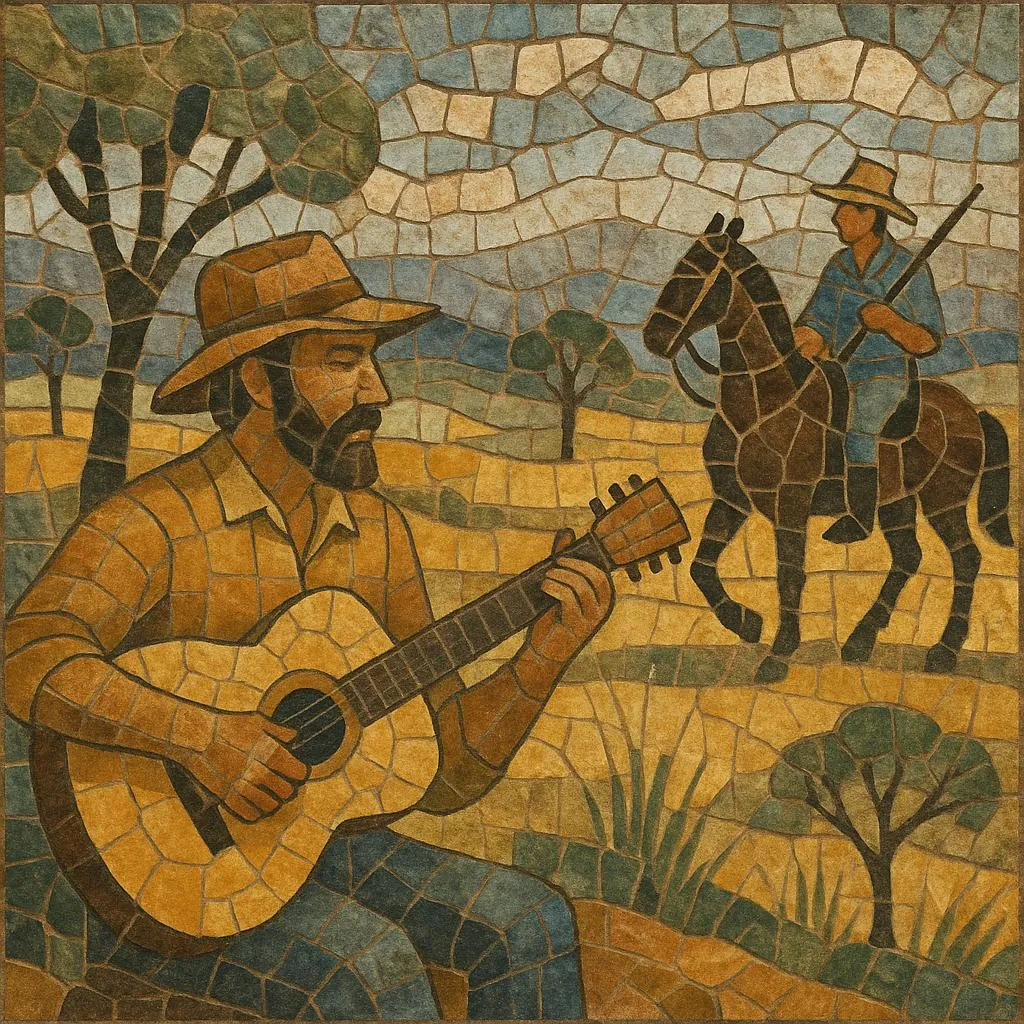
Bush ballad (also called bush song or bush poem) is an Australian narrative folk style that portrays life in the bush—its people, landscapes, work and hardships.
It uses plainspoken, idiomatic Australian English and colourful slang to tell stories of drovers, shearers, bushrangers, droughts and floods, frontier life, and the city–country divide.
Musically and poetically it draws on British and Irish ballad traditions: stanzas in ballad metre, strong end-rhymes, memorable refrains, and melodies suited to communal singing. Performances range from humorous yarns to elegiac laments, often accompanied by acoustic instruments (guitar, fiddle, accordion, banjo, harmonica, lagerphone, tea‑chest bass).
Across time the bush ballad has served as both entertainment and cultural memory, shaping Australia’s sense of place and identity.
History
Bush ballads crystallised in colonial Australia during the 1800s as settlers, convicts, drovers and shearers adapted British and Irish broadside and border ballads to local conditions. Sung in shearers’ sheds, camps and pubs, the songs used familiar ballad metres and sturdy melodies, but replaced Old World imagery with gum trees, billabongs and station life. The form also absorbed influences from sea shanties and parlour song as itinerant workers and sailors moved through ports and inland routes.
By the late 19th century, bush poetry flourished in newspapers and magazines. Poets such as A.B. "Banjo" Paterson and Henry Lawson helped codify themes—mateship, hardship, humour, and the moral ambiguities of bushranging—giving the tradition a literary prestige that fed back into sung performance. Many poems were sung to known airs, maintaining a porous boundary between printed verse and oral song.
From the 1930s–1950s, commercial recording and radio carried bush ballads nationwide. Singers aligned with emerging Australian country music adapted the idiom with guitars, fiddles and later pedal steel, while retaining narrative lyrics and bush imagery. The repertoire expanded to include topical songs about war service, rural economies and outback travel, keeping the tradition contemporary without abandoning its core storytelling.
The 1960s–1980s folk revival saw collectors and performers document oral variants and revive dances; bush bands popularised the idiom in festivals and schools with lively sets for polkas, schottisches and waltzes. Archivists and scholars compiled extensive collections, ensuring continuity between historical sources and modern performance.
The bush ballad remains a living tradition: solo singer‑guitarists, folk ensembles and country artists continue to write new narratives about rural work, land care, climate pressures and community life. Its plain style and story-first ethos still function as a vehicle for Australian social memory.