Your digging level
Description
Burmese Stereo is a Burmese pop‑rock style that took shape in the mid‑1960s, when stereo recording and Western band instrumentation became common in Myanmar’s urban popular music.
It blends beat‑era rock and roll, garage and surf guitar textures, and early psychedelic pop with Burmese melodic sensibilities and Burmese‑language vocals. Typical records feature jangling or reverb‑laden electric guitars, walking bass, compact drum grooves, and organ lines, wrapped in concise song forms aimed at radio play. While harmonies follow Western pop conventions, melodies and prosody retain a distinctly Burmese flavor, yielding a sound that is both cosmopolitan and local.
The name “Stereo” reflects the industry and technological shift from mono to stereo production as well as the modern, youth‑oriented orientation of this period’s releases.
History
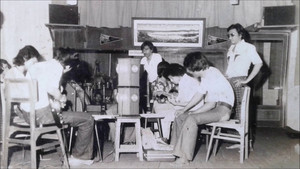
Burmese Stereo emerged in the mid‑1960s as Myanmar’s popular music industry began adopting stereo recording and modern studio practices. Local bands, inspired by the British Invasion and American rock and roll, translated beat‑group energy into Burmese‑language songs. Electric guitars, combo organs, bass, and drum kits became standard, supporting catchy vocal melodies and harmony vocals suitable for radio and dance halls.
As stereo LPs and 45s spread, urban audiences embraced the new sound. Producers experimented with panning, reverb, and layered arrangements, while bands folded in surf riffs, garage grit, and light psychedelic colors. Despite periodic constraints on media and imports, local musicians adapted global pop trends to Burmese taste, creating a self‑reliant studio culture and a repertoire of beloved singles.
The core pop‑rock vocabulary of Burmese Stereo underpinned later mainstream Burmese pop. Singer‑songwriters and bands modernized arrangements (cleaner production, power ballad formats) while preserving the melodic directness and Burmese lyrical cadence that defined the 1960s–70s sound. Veterans from the era became reference points for younger artists entering a more professionalized studio environment.
While contemporary Myanmar music spans hip hop, rock, indie, and devotional pop, the Burmese Stereo template—guitar‑led arrangements, radio‑friendly structures, and Burmese melodic phrasing—remains foundational. Reissue labels and collectors have renewed interest in the original stereo‑era recordings, highlighting their role in Southeast Asian beat and pop‑rock history.