Your digging level
Description
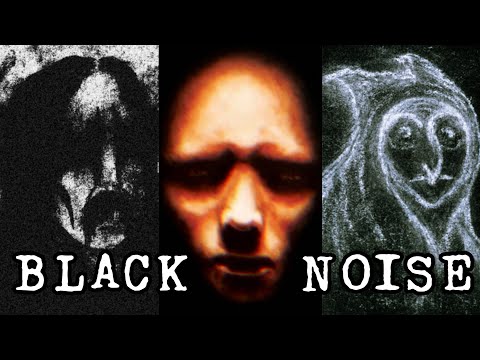
Black noise is an extreme, experimental offshoot that fuses the atmosphere and aesthetics of black metal with the timbral violence and abstraction of noise and power electronics.
It prioritizes texture, density, and dread over melody or conventional song form, often engulfing guitars, vocals, and percussion in walls of feedback, saturation, and low‑fidelity grit.
The mood typically leans toward occult, nihilistic, or ritualistic themes, with compositions ranging from claustrophobic, blast‑ridden storms to near‑static, throttled drones that feel physically oppressive.
Production is intentionally abrasive and entropic, blurring the boundary between musical performance and hostile sound design.
History
The roots of black noise coalesced in the early 1990s when certain black metal artists began abandoning riff‑centric writing in favor of free‑form, hostile soundscapes. Sweden’s Abruptum became a touchstone, replacing conventional songcraft with extended, improvised sessions of screams, percussion, feedback, and droning filth. At the same time, Finnish pioneers like Beherit moved from bestial black metal into ritualistic, industrial/noise and dark ambient records, demonstrating a pathway from metal into pure textural menace.
Throughout the late 1990s and 2000s, the language of power electronics, death industrial, and harsh noise increasingly intermingled with the aesthetics of black metal. The term “black noise” gained currency to describe artists who foregrounded noise as the primary compositional element while retaining black metal’s atmosphere and thematics. Canadian project Wold explicitly branded its approach as “black noise,” while acts such as Gnaw Their Tongues and Sutekh Hexen forged grim hybrids of black metal timbre, ritual drones, and punitive distortion.
By the 2010s, black noise was less a tightly bounded style and more a porous continuum between scenes: raw/orthodox black metal, industrial/noise, and ritual ambient. Projects pursued varying balances—some leaning toward blown‑out, near‑abstract harsh noise walls with traces of blastbeats and tremolo; others sculpting cavernous, dread‑filled drones with buried chants and metal‑derived textures. The approach influenced the presentation of “war” and bestial black metal, pushed experimental black metal further into anti‑musical territory, and fed back into noise scenes via collaboration and shared aesthetics.
Black noise remains a niche yet influential methodology. Its legacy lies in proving that the affective core of black metal—terror, emptiness, transcendence—can be expressed with almost no reliance on riffs or harmony, using instead the overwhelming physicality of noise, saturation, and negative space.
Begin with the goal of evoking dread, ritual intensity, and spiritual negation. Treat texture and pressure (not melody) as the core of the piece.
Use heavily overdriven guitars, contact mics, feedback loops, pedal chains, tape machines, and modular or cheap noise boxes. Layer hiss, hum, sub‑bass rumbles, and mid‑high feedback so that instruments bleed into a single mass.
Employ unstable or deliberately obscured rhythms. You can bury blastbeats beneath distortion, let tempos lurch, or omit percussion entirely for static, suffocating drones. Favor long forms that develop by timbral mutation rather than verse/chorus.
Keep harmony minimal, dissonant, or absent. Hold single‑note tremolos against shifting noise beds, detune oscillators, or use microtonal bends that smear pitch identity. Let clipping and saturation create incidental harmonics.
Use screams, chants, or whispered invocations as another texture rather than a narrative center. Lyrical themes may be occult, apophatic, or anti‑human; printing them is optional—illegibility is part of the effect.
Record hot and degrade on purpose: cassette, saturated preamps, bit reduction, and re‑amping through amps or speakers. Shape space with cavernous reverbs, but allow them to collapse into noise. Master quietly to preserve headroom for low‑frequency weight while retaining abrasive highs.