Your digging level
Description
Basque music encompasses the musical practices of the Basque Country (Euskal Herria) and the Basque people, spanning repertoire in the Basque language (Euskara), instrumental folk traditions, choral practices, and contemporary popular styles.
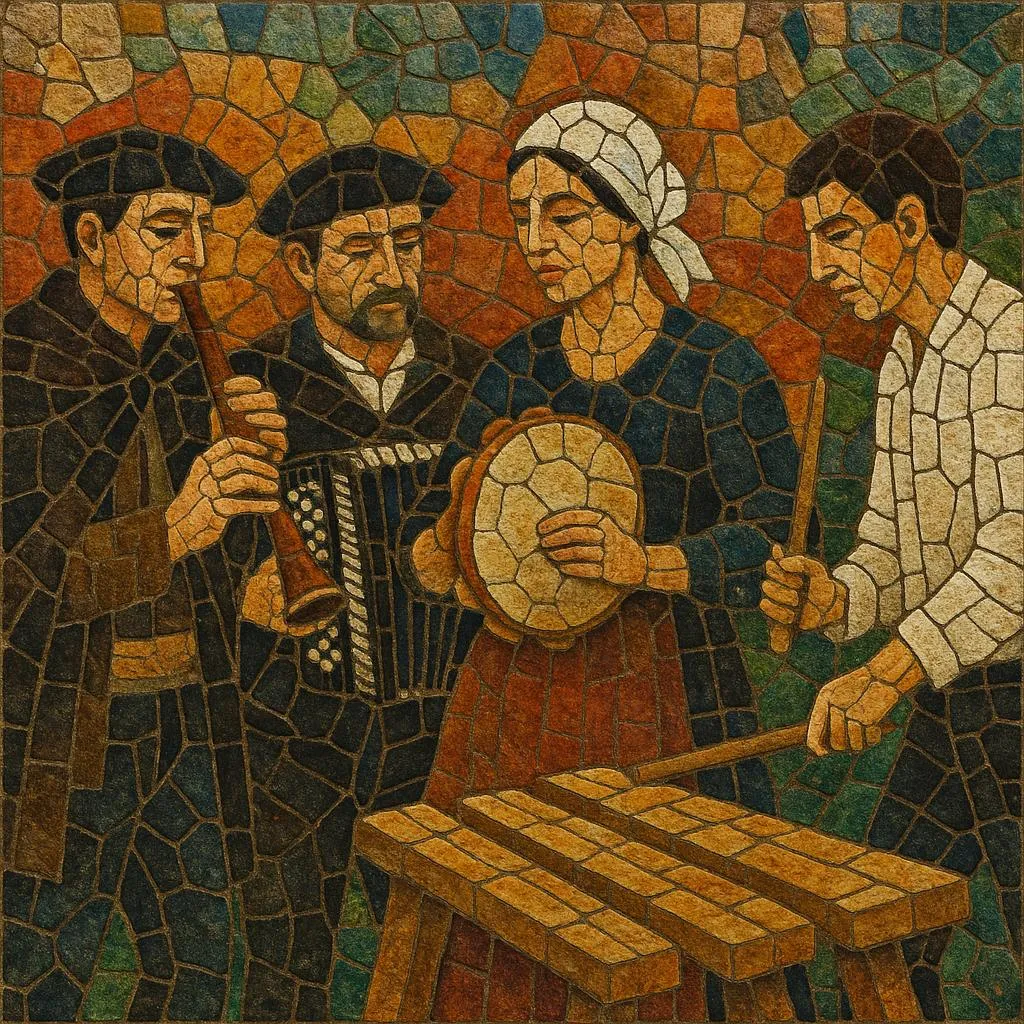
Rooted in rural dances and communal singing, it features distinctive instruments such as the txalaparta (paired wooden percussion), trikitixa (diatonic button accordion with tambourine), alboka (double-reed hornpipe), and txistu (three‑hole flute with tamboril). Characteristic dance forms include zortziko (often asymmetrical 5 or 10-beat groupings), fandango, and arin-arin.
Since the late 20th century, Basque music has diversified to include singer‑songwriter currents, folk-revival ensembles, radical Basque rock, jazz, reggae, electronic fusions, and indie scenes—while maintaining strong ties to tradition, community ritual, and the Basque language.
History
Basque musical practice predates the recording era, embedded in agrarian life, seasonal festivals, and communal rituals. Core idioms include bertsolaritza (improvised sung poetry), choral singing in churches and civic societies, and instrumental dance music for zortziko, fandango, and arin‑arin. Unique timbres arise from the txalaparta (two players alternating interlocking patterns on wooden boards), the nasal drones of the alboka, and the bright pulse of trikitixa with tambourine.
The consolidation of choral societies and civic bands helped preserve repertoire, while urbanization and radio spread both local and pan‑Iberian influences. Despite periods of political repression, community ensembles and oral transmission sustained Basque language song and dance.
A modern folk revival crystallized around Basque‑language singer‑songwriters and ensembles (e.g., Mikel Laboa, Benito Lertxundi, Oskorri), who collected, reinterpreted, and composed new material in dialogue with traditional forms. The trikitixa duet tradition resurged, and experimental artists began to modernize txalaparta technique and staging.
The 1980s saw the rise of "Euskal Rock Radikal," politicized punk, rock, and ska that foregrounded Euskara and regional identity (Kortatu, Hertzainak, later Negu Gorriak/Fermin Muguruza). Parallel currents integrated jazz, prog, and fusion (Itoiz), expanding Basque music beyond folk into amplified and global idioms.
Artists such as Kepa Junkera internationalized trikitixa; Oreka TX reimagined txalaparta for contemporary stages; indie, metal, reggae, hip‑hop, and electronic producers fostered vibrant scenes (Berri Txarrak and newer indie/reggae collectives). Today, "Basque music" denotes a broad ecosystem—from ritual and choral traditions to experimental, pop, and club contexts—unified by language, place, and community practice.