Your digging level
Description
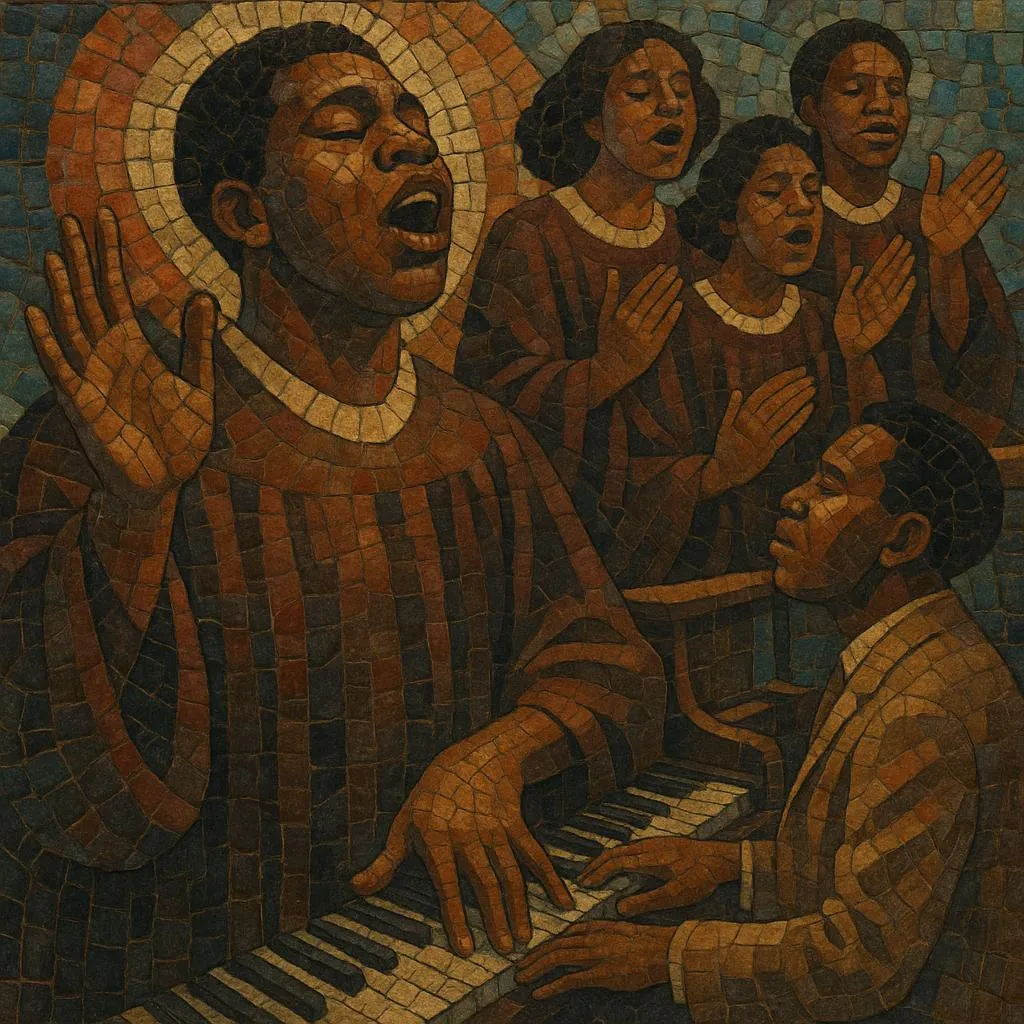
Baptist gospel refers to the stream of African American gospel music that coalesced in Baptist congregations—especially those affiliated with the National Baptist Convention—where blues and jazz inflections transformed 19th‑century spirituals and lined‑out hymnody into a modern, highly expressive worship music. The style features call‑and‑response between a lead singer and choir or congregation, handclapping on 2 and 4, melismatic improvisation, and a strong focus on testimony and exhortation.
Its modern emergence is closely tied to Chicago in the early 20th century, when Thomas A. Dorsey fused blues harmony and rhythm with church songs, helped organize the National Convention of Gospel Choirs and Choruses, and popularized a new performance practice that Baptist churches gradually embraced—especially after the National Baptist Convention publicly endorsed the new gospel music in 1930.
History
Baptist worship in Black communities conserved spirituals, camp‑meeting/revival songs, and “Dr. Watts” long‑meter hymns delivered through the lined‑out practice (a leader chants the line, the congregation answers). These practices shaped the timbre, antiphony, ornamentation, and communal drive that would mark Baptist gospel.
During the Great Migration, Chicago’s Ebenezer and Pilgrim Baptist Churches became epicenters. Thomas A. Dorsey—later called the “Father of Gospel Music”—combined blues and jazz devices with sacred texts, trained choirs, and in 1932 co‑founded what became the National Convention of Gospel Choirs and Choruses to spread the style. Crucially, the National Baptist Convention’s 1930 gathering helped legitimize the music within Baptist life, accelerating adoption across congregations.
Entrepreneurs and church musicians such as Sallie Martin, Theodore Frye, and Kenneth Morris professionalized gospel through publishing houses and choir training. Chicago’s First Church of Deliverance popularized the Hammond organ in gospel under Morris, while radio broadcasts carried Baptist gospel choirs to mass audiences.
Baptist choirs and soloists—including Mahalia Jackson, the Roberta Martin Singers, James Cleveland and his mass‑choir model, and groups like The Caravans and the Staple Singers—defined the sound and exported it nationwide via recordings, tours, and convention networks. These church‑honed techniques directly influenced soul, R&B, and rock vocal styles.
The Baptist gospel aesthetic remains audible today: lined‑out hymns persist in some prayer meetings; Hammond‑led choirs and testimony‑driven solos animate services and recordings; and the NCGCC and Baptist networks continue to train musicians and choir leaders.