

Your digging level
Description
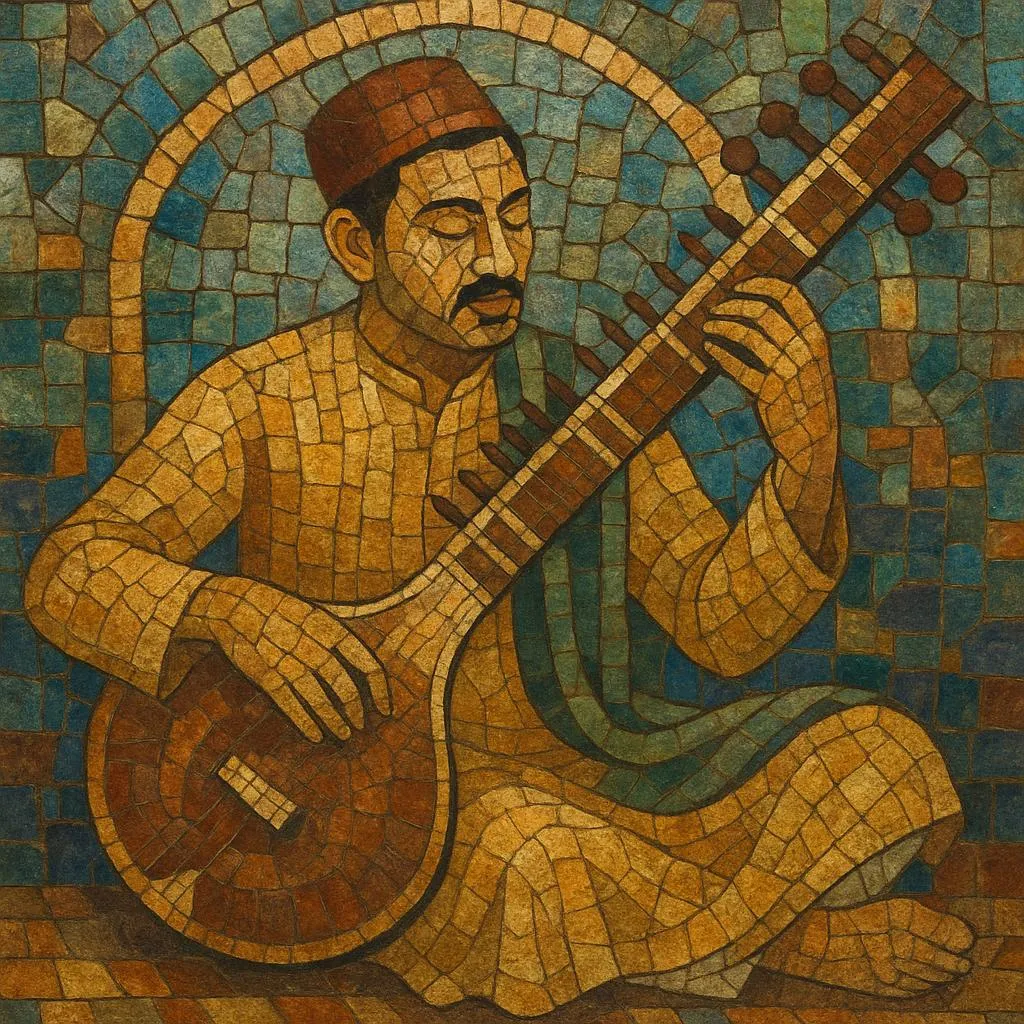
Bangladeshi classical music refers primarily to the Hindustani (North Indian) classical tradition as practiced in the Bengal delta—today’s Bangladesh—alongside locally rooted, semi-classical Bengali art-song lineages.
It is centered on raga (melodic framework) and tala (rhythmic cycle), with performance aesthetics that emphasize improvisation, nuanced ornamentation, and a long-form unfolding of mood (rasa).
While structurally aligned with wider Hindustani classical practice, Bangladeshi classical music is shaped by Bengal’s linguistic, devotional, and courtly histories, and by a strong culture of radio, academies, and stage performance in Dhaka and other cities.
History
Pick a tala cycle (e.g., teentaal, ektaal, jhaptal) and decide on a tempo trajectory:
•Vilambit (slow) for depth and microtonal ornamentation.
•Madhya (medium) for clearer rhythmic play.
•Drut (fast) for virtuosity and climax.
•Compose around the sam (cycle’s first beat) as a structural anchor.
Core textures commonly use tanpura (drone) plus either:
•Vocal + harmonium/sarangi + tabla, or
•Melodic instrument (sitar/sarod/violin/flute) + tabla.
•Keep harmony minimal: the drone and implied modal function replace Western chord progressions.
•Prioritize intonation (shruti nuance), controlled ornamentation, and a clear relationship to the tala cycle.

