Your digging level

For this genre
0/8
🏆
Sign in, then listen to this genre to level up

Description

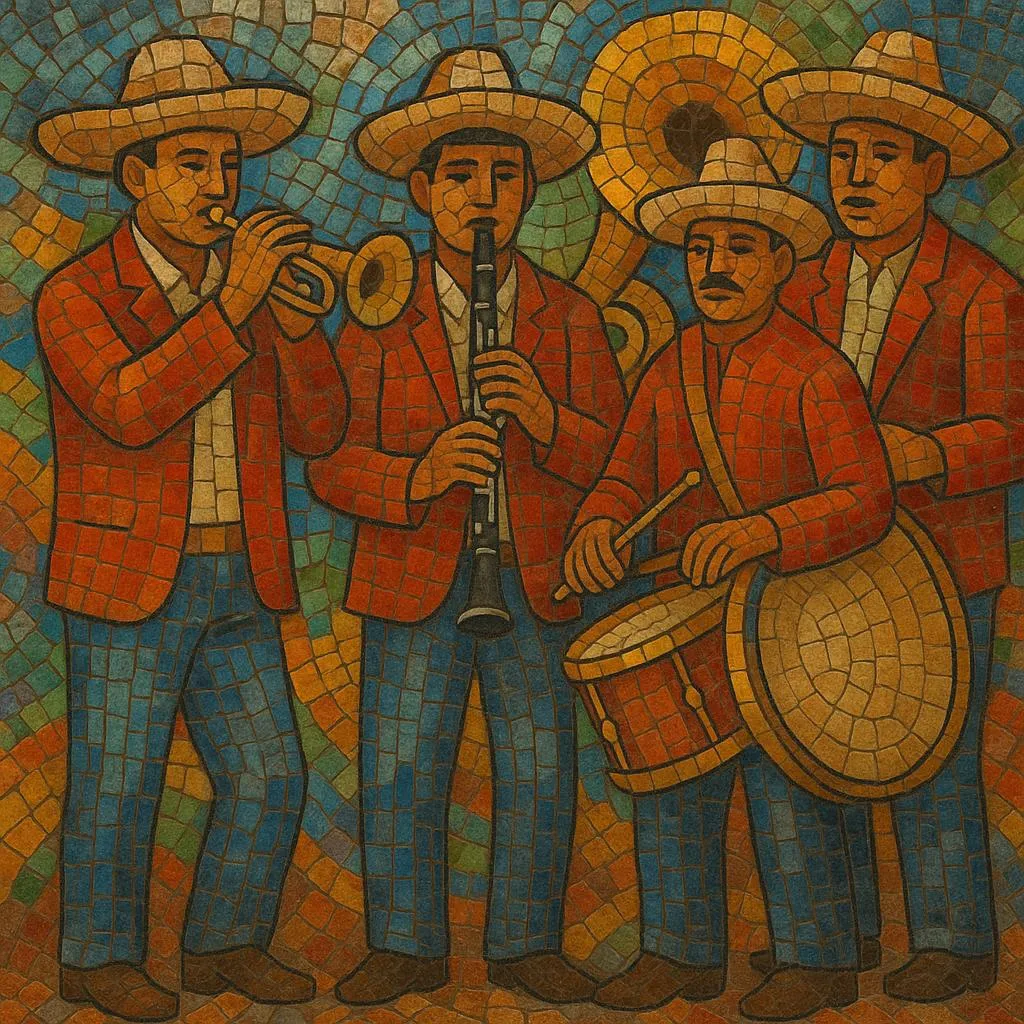
Banda guanajuatense is a regional Mexican brass-band style rooted in the state of Guanajuato, Mexico. It adapts the classic banda de viento format—trumpets, trombones, clarinets or saxophones, tuba/sousaphone, tarola (snare), and tambora (bass drum)—to local repertoires and dance traditions.

Compared with the Sinaloan prototype, bands from Guanajuato often favor brisk polkas and ornamented waltzes alongside rancheras, cumbias, and corridos. The sound tends to be bright and festive, with unison brass fanfares, punchy two-step rhythms, and vocal deliveries that carry the Bajío region’s storytelling and romantic themes. The result is a dance-forward, community-driven banda variant that thrives at patron-saint festivities, weddings, rodeos (jaripeos), and town plazas across the state.


Sources: Spotify, Wikipedia, Discogs, RYM, MB, user feedback and other online sources

History

Origins in the Bajío

Guanajuato belongs to Mexico’s Bajío region, a corridor long associated with brass ensembles playing European-derived dance forms (polkas, waltzes, schottisches) that took root in the 19th and early 20th centuries. As commercial “banda” from Sinaloa spread nationally in the late 20th century, Guanajuato ensembles absorbed its instrumentation and stage format while preserving local repertoires and dance practices.

Consolidation in the 1990s and 2000s

By the 1990s, the label “banda guanajuatense” informally distinguished Bajío-based bandas from their coastal counterparts. Repertoire emphasized rancheras and corridos familiar to central Mexico, as well as cumbias for social dancing and polished, brass-led versions of regional sones and waltzes. Community fiestas, jaripeos, and radio programs helped the style cohere and circulate.

Today’s Practice

Contemporary groups balance tradition and modernity: classic two-step polkas, romantic waltzes, and rancheras coexist with contemporary covers and medleys arranged for full brass sections. Many ensembles remain locally focused—serving municipal festivities and family events—yet recordings and social platforms have given banda guanajuatense broader visibility within the diverse umbrella of Regional Mexicano.

How to make a track in this genre

Instrumentation and Ensemble
•   Core section: trumpets, trombones, clarinets or saxophones (many Bajío bands feature saxes), tuba or sousaphone, tarola (snare), and tambora (bass drum). •   Optional additions: güiro or congas for cumbia numbers; lead and backing vocalists with prominent unison shout-ins (gritos).
Rhythm and Groove
•   Polka (2/4) with driving tarola backbeat and off-beat brass stabs—keeps dancers in a tight two-step. •   Waltz (3/4) with lyrical, legato brass melodies and a gentle “oom-pah-pah” tuba foundation. •   Ranchera (typically 4/4 or 2/4) with medium tempos and space for emotive vocals. •   Cumbia (4/4) with syncopated percussion and bass/tuba patterns; brass riffs answer vocal lines.
Harmony and Melody
•   Functional harmony centered on I–IV–V (with occasional ii and vi), suited to quick modulations between medley segments. •   Melodies feature parallel trumpet/trombone lines, octave doubling, and ornamental turns evocative of central Mexican dance tunes.
Form and Arrangement
•   Open with a short brass fanfare, move into verse/chorus, and interleave instrumental shout choruses. •   Use call-and-response between vocals and brass riffs; modulate up a whole step for the final chorus to heighten energy.
Lyrics and Performance Practice
•   Themes: romance, local pride, fiesta culture, and narrative corridos with clear diction. •   Keep the arrangement dance-forward; prioritize tight rhythmic unison and bright articulations.
Production Tips
•   Close-mic brass (but tame harshness with gentle saturation), give the tuba a defined low-mid presence, and let tarola/tambora lead the groove. •   Capture room ambience (short plate or chamber) to emulate plaza and salon spaces typical of Bajío festivities.

Top tracks

Locked
Share your favorite track to unlock other users’ top tracks

Upcoming concerts

in this genre
Influenced by

Download our mobile app

Get the Melodigging app and start digging for new genres on the go
© 2026 Melodigging
Melodding was created as a tribute to Every Noise at Once, which inspired us to help curious minds keep digging into music's ever-evolving genres.
Buy me a coffee for Melodigging