Your digging level
Description
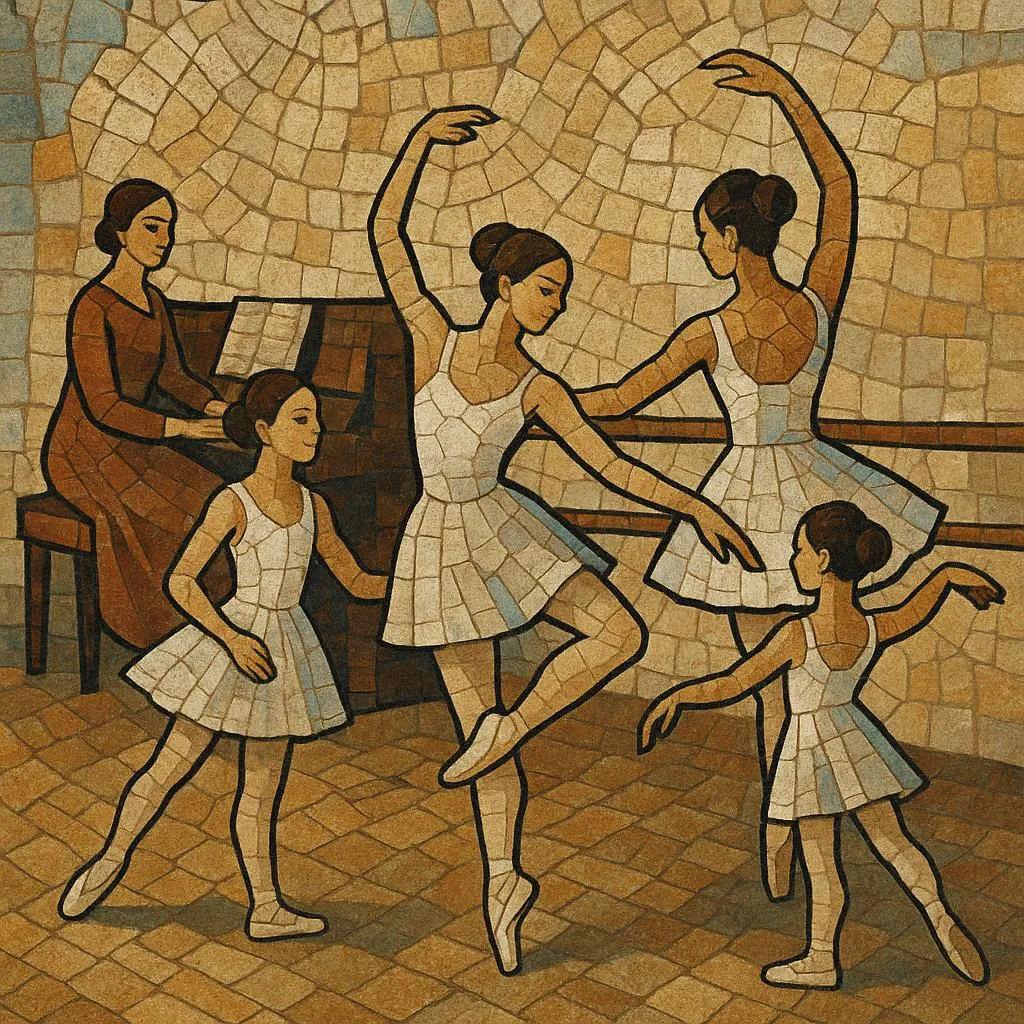
Ballet class music is functional accompaniment written or arranged specifically to support the daily technique class of classical ballet. It is designed to match the mechanics, phrasing, and counts of codified exercises at the barre and in the centre (e.g., pliés, tendus, rond de jambe, adagio, petit allegro, grand allegro, révérence).
Most pieces are short, metrically clear, and grouped in regular 8- or 16-bar phrases to suit combinations taught by the teacher. Meters typically include 2/4 for tendu and battement, 3/4 waltz or mazurka styles for adagio and port de bras, and 6/8 or lively 2/4 for allegro. Harmonies are diatonic and immediately intelligible, cadencing cleanly at phrase ends for precise cues. Repertoire often adapts or paraphrases well-known ballet and classical themes, musical theatre songs, or original pastiche in suitable dance rhythms.
While solo piano is the norm (for responsiveness and dynamic nuance), some studios employ small ensembles or add light percussion for character work. The result is not concert music but a highly responsive craft whose success is measured by how well it enables dancers to coordinate movement, musicality, and technique.
History
Ballet class as a daily, codified practice developed alongside the institutionalization of ballet at the Paris Opera and other European courts and theatres. By the 1800s, purpose-played class accompaniment had become common, with in‑house musicians adapting popular dances (waltz, polka, mazurka, march) and straightforward classical idioms to match the needs of barre and centre work.
As national schools and methods coalesced—French, Italian (Cecchetti), Russian/Imperial (later Vaganova)—the musical outlines for each exercise type also standardized. Pianists working in major academies and companies learned to read a teacher’s counts, set tempi precisely, and provide square, clearly cadenced phrases to support épaulement, port de bras, and batterie.
With the global spread of ballet training (RAD syllabi, company schools in Europe and the Americas), the accompanist’s craft became a recognized specialization. The piano took precedence for its timbral clarity, range, and immediate responsiveness to corrections, while character classes retained folk-dance meters and stylings.
From the 1980s onward, dedicated albums of "music for ballet class" emerged, offering complete barre and centre sequences for studios without live pianists. Today, streaming platforms host thousands of tracks organized by exercise, meter, and tempo. Many accompanists mix new pastiche with paraphrases of Delibes, Minkus, Tchaikovsky, Strauss, Chopin, and musical-theatre tunes—always reshaped into square danceable phrases—while preserving the core functional aim: clarity, support, and musicality for dancers.