

Your digging level
Description
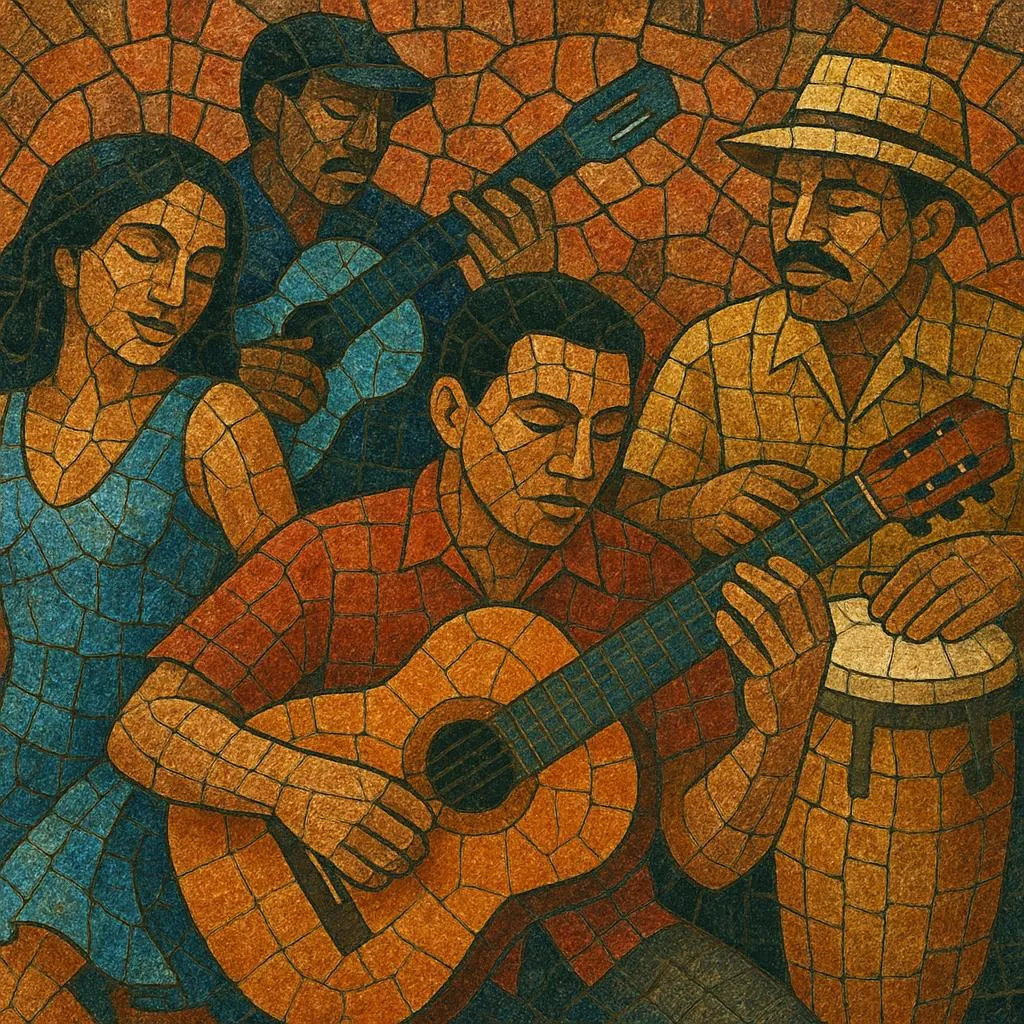
Bachata dominicana is the original Dominican guitar‑driven style of bachata: a bittersweet, romantic dance music built on bolero harmony, a steady güira, and the playful “martillo” (hammer) patterns of the bongó. Typically in 4/4 at a medium tempo, it features a bright lead (requinto) guitar weaving hooks, slides, tremolos, and ornamental runs over strummed rhythm guitar and walking/anticipating bass lines.
Born in working‑class barrios and rural bars (cabarets and colmadones), the genre earned the nickname música de amargue ("music of bitterness") for its lyrics of heartbreak, longing, jealousy, and the complexities of love. Over time, its sound broadened from purely acoustic trios to amplified groups with electric lead guitar, while preserving the cadences and sensual sway that define the Dominican style.
History
Bachata dominicana emerged in the Dominican Republic in the early 1960s as a local, guitar‑based reinterpretation of bolero, colored by son cubano phrasing and Dominican rhythmic sensibilities. Early recordings—often made on modest equipment—circulated through jukeboxes and neighborhood bars, where the style’s intimate vocals and lyrical amargue (bitterness) resonated with everyday stories of love and loss.
Despite its popularity among working‑class audiences, bachata carried social stigma and limited media exposure. Artists nonetheless refined the vocabulary of the requinto (lead) guitar—arpeggios, tremolo melodies, and expressive slides—over bolero‑derived progressions, while bongó and maracas/güira cemented the groove for dancers.
The mid‑1980s saw electrified lead guitars and cleaner studio production, sharpening hooks and expanding radio reach. In the 1990s, star bandleaders modernized arrangements (clear güira, punchy bongó fills, tighter bass movement), lifted the genre’s profile at home and abroad, and standardized the danceable, verse–chorus format that club audiences embraced.
Dominican communities in New York and beyond helped globalize bachata, but the classic Dominican approach—bolero harmony, requinto leads, bongó “martillo,” and güira drive—remains the reference. Contemporary artists blend polished vocals and studio sheen with the core guitar idiom, while crossover fusions (e.g., bachatón) testify to the genre’s influence across tropical and urbano scenes.



