Your digging level
Description
Aguinaldo is a folk genre of Christmas music rooted in the Spanish villancico tradition and developed prominently in Puerto Rico and Venezuela. It is performed during the Advent–Epiphany season by parrandas: informal groups of family, friends, or neighbors who go house to house singing, sharing food and drink, and building community.
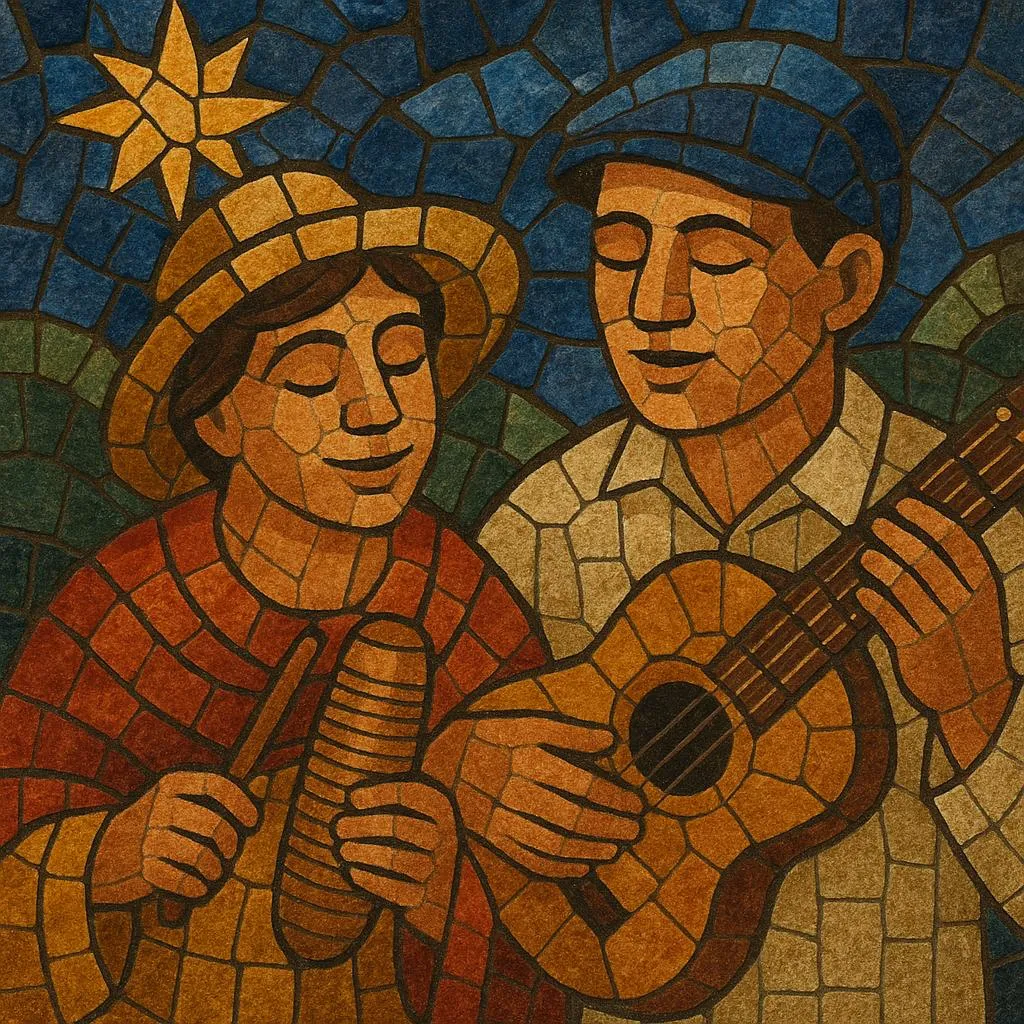
Musically, aguinaldos are typically in major keys with warm, singable melodies, call‑and‑response coros, and straightforward diatonic harmony. Instruments vary by region but often include the Puerto Rican or Venezuelan cuatro, guitar, maracas, güiro, hand drums/panderetas, and sometimes bandola or mandolin. Texts blend sacred Nativity imagery with festive, humorous, or nostalgic verses, making aguinaldos both devotional and social in character.
History
Aguinaldo emerged from the Spanish villancico and related Christmas song traditions brought to the Caribbean and northern South America during the colonial period. By the 1600s–1700s, local communities adapted these sacred and para‑liturgical carols into vernacular repertoires with regional instruments, danceable rhythms, and strophic poetic forms (coplas and décimas).
In Puerto Rico, aguinaldos became the musical backbone of the parranda or asalto navideño: late‑night rounds of caroling that “assault” a household with music and cheer until the hosts let everyone in. The Puerto Rican cuatro, guitar, güiro, maracas, and panderetas provide a bright, percussive texture. Melodies are often in major keys with refrain‑based coros encouraging communal singing. Lyrics mix Nativity themes with playful, neighborly humor and invitations to hospitality.
In Venezuela, aguinaldos form part of a broader seasonal repertoire alongside gaitas and parranda traditions. Venezuelan versions feature the cuatro and maracas, with regional additions such as bandola or mandolin. Classic pieces like “El Burrito Sabanero” (Hugo Blanco/La Rondallita) gave the genre global visibility while preserving its simple melodic charm and spiritual warmth.
Recording and radio from the mid‑20th century amplified aguinaldos across Latin America and the diaspora. Choirs, folk ensembles, and popular singers recorded Christmas albums, and television specials institutionalized the sound of aguinaldo during the holidays. Crossovers such as José Feliciano’s “Feliz Navidad” (though pop) sit comfortably alongside traditional repertoires in seasonal playlists.
Today, aguinaldos remain a living, community‑based tradition. School choirs and folk groups teach canonical songs; contemporary artists create new aguinaldos; and parrandas continue as intergenerational, participatory events. The style’s blend of sacred story, conviviality, and accessible musicianship keeps it central to Christmas soundscapes in Puerto Rico, Venezuela, and Latin American communities worldwide.