Your digging level

For this genre
0/8
🏆
Sign in, then listen to this genre to level up

Description

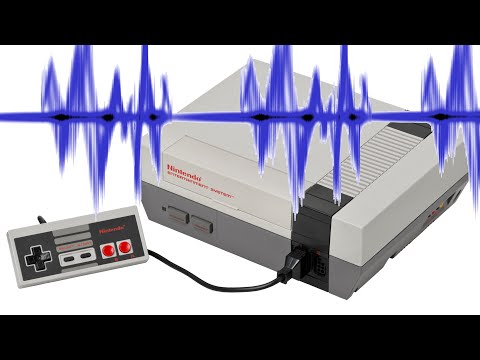
8-bit music is a style of electronic music built from or emulating the sound chips of early 8-bit video game consoles and home computers (e.g., Nintendo Entertainment System/Famicom, Game Boy, Commodore 64, ZX Spectrum).

It is characterized by simple waveforms (pulse/square, triangle, noise), strict polyphony limits (typically 3–4 melodic/noise channels), rapid arpeggios to imply chords, and crisp, loop-friendly melodies. While born from hardware constraints, 8-bit music has matured into a deliberate aesthetic—celebrated for its bright timbres, catchy hooks, and nostalgic association with classic games and computing.

Sources: Spotify, Wikipedia, Discogs, RYM, MB, user feedback and other online sources

History

Origins (late 1970s–1980s)

The roots of 8-bit music lie in the earliest arcade boards and home systems, where composers wrote directly to sound chips with severe memory and polyphony constraints. On the NES (Ricoh 2A03 APU) and Game Boy, as well as on the Commodore 64’s SID chip, musicians pioneered techniques—fast arpeggiation, duty-cycle modulation, vibrato, and noise percussion—to create convincing melodies, harmony illusions, and rhythmic backbones.

Demoscene and Tracker Culture (late 1980s–1990s)

Parallel to game composition, the European demoscene and tracker communities (on Amiga and PCs) formalized chip-oriented writing approaches and distribution. Trackers and tools like Soundmonitor, Music Construction Set, and later FastTracker/ProTracker cemented a pattern-based workflow that shaped how 8-bit music (and broader chiptune practice) was written and shared.

Revival and Modern Chiptune (2000s–present)

From the 2000s onward, artists began using original hardware (LSDJ on Game Boy, MML/FamiTracker on NES, SID tools) and software emulations to produce new works. The style spread into indie games, club music, and pop/rock hybrids, inspiring subgenres (e.g., nintendocore, bitpop, gamewave) and seeding a nostalgia-fueled renaissance in live performance, netlabels, and festivals.

A Lasting Aesthetic

Today, 8-bit music functions both as a historical practice—keeping classic hardware composition alive—and as an electronic aesthetic that integrates with contemporary genres, film/game scoring, and internet culture.

How to make a track in this genre

Core Sound and Tools
•   Choose a target chip or accurate emulator: NES/Famicom (2A03), Game Boy (DMG), C64 (SID). Use tools like LSDJ (Game Boy), FamiTracker/0CC-FamiTracker (NES), GoatTracker/SID tools (C64), or precise VST emulations. •   Embrace channel limits: plan for 3–4 voices (e.g., NES: two pulse channels for melody/countermelody, triangle for bass, noise for drums, optional DPCM for samples).
Timbre and Voice Design
•   Pulse waves: exploit duty-cycle changes (12.5%, 25%, 50%, 75%) for color and movement. •   Triangle (or wave) channel: steady bass lines and simple ostinati. •   Noise channel: hi-hats, snares, and tom-like bursts via stepped noise. •   SID specifics: blend waveforms (pulse/triangle/saw/noise), leverage filter, ring modulation, and envelopes for richer textures.
Harmony and Writing Tricks
•   Simulate chords via fast arpeggios (e.g., 1–3–5 cycles at 1/32–1/16 note rates) and note-stacked patterns in trackers. •   Use counterpoint: a countermelody on Pulse 2 can create perceived harmonic motion. •   Common tonalities: natural minor, dorian, mixolydian, and bright major keys; frequent key pivots to refresh loops.
Rhythm, Form, and Groove
•   Program drums on the noise channel: closed/open hats (short/long noise), snare (filtered noise burst), and kicks (pitched noise or short triangle dips). •   Favor loopable forms (AABA, ABAC) with 4–8 bar patterns; write strong, singable hooks. •   Employ tracker effects: vibrato, portamento, volume slides, duty-cycle sweeps, and tempo changes for expression.
Production and Performance
•   Keep dynamics tight (limited headroom) to retain the crisp, game-era punch; light compression if using DAWs. •   For live sets, sequence patterns and perform mutes, duty swaps, and effect triggers in real time (e.g., with LSDJ or MIDI-fied chip synths).

Top tracks

Locked
Share your favorite track to unlock other users’ top tracks

Related labels

Upcoming concerts

in this genre
Influenced by
Has influenced

Download our mobile app

Get the Melodigging app and start digging for new genres on the go
© 2026 Melodigging
Melodding was created as a tribute to Every Noise at Once, which inspired us to help curious minds keep digging into music's ever-evolving genres.
Buy me a coffee for Melodigging