Genres
Artists
Albums
Make Music
Sign in
Sign in
Artists
Polka
Artists
Polka
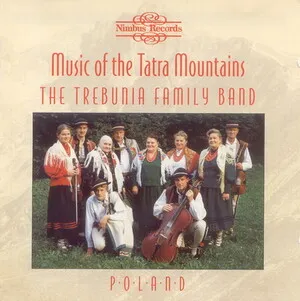
Trebunia Family Band
1994
·
1 album
Listen
1
/5
Genres
Traditional Music
Traditional music is an umbrella term used in the mid–20th century by folklorists and ethnomusicologists to denote community-rooted, orally transmitted repertoires tied to social ritual, work, celebration, and storytelling. Unlike commercial pop or art-music traditions, traditional music is typically learned by ear, varies regionally, and evolves slowly through communal participation. It often features modal melodies, cyclic rhythms, heterophony or unison singing, and indigenous instruments whose timbres are integral to local identity. Lyrics tend to preserve language, history, and collective memory. While the musical practices themselves can be ancient, the phrase “traditional music” emerged to replace earlier, narrower or colonial framings like “folk” or “ethnic” music, foregrounding continuity, locality, and living practice rather than exoticism.
Discover
Listen
Polka
Polka is a lively Central European couple dance and musical style in a brisk 2/4 meter, characterized by its buoyant “oom‑pah” bass-chord accompaniment and bright, diatonic melodies. Originating in Bohemia (today’s Czech Republic) in the early 19th century, it quickly became a pan-European craze before taking root across immigrant communities in the Americas. Ensembles typically feature accordion or button box/concertina, clarinet or saxophone, trumpets/trombone, tuba or string bass, and drum kit, with regional variants highlighting different lead voices and rhythmic feels. While the classical ballroom tradition codified polka into formal strains (often AABB with a contrasting trio), folk and popular styles favor singable tunes, simple I–IV–V harmonies, and tempos commonly around 115–135 BPM, inviting upbeat social dancing and communal celebration.
Discover
Listen
Goral Music
Goral music is the traditional folk music of the Polish highlanders (Górale) from the Podhale region in the Tatra Mountains, with close kinship to highland traditions across northern Slovakia and parts of southern Poland. It is typically performed by a góralska kapela (highlander string band) centered on an intensely ornamented lead fiddle (prym), a rhythm fiddle (sekund) playing strong double-stops and open fifths, and a bass (basy) providing a droning I–V foundation. The sound is raw, penetrating, and highly rhythmic, often accompanied by shepherd’s flutes (fujarka), regional bagpipes (koza), and the long wooden alpine horn (trombita). Melodically, Goral tunes use modal collections characteristic of Podhale, frequently mixing major with a raised fourth (Lydian color) and a lowered seventh (Mixolydian color), and rely on heterophonic textures in which multiple instruments ornament the same tune differently. The repertoire includes vigorous dance forms (krzesany, obyrtka, zbójnicki) and expressive solo songs (zaśpiew) on themes of mountains, love, shepherd life, and brigand lore.
Discover
Listen
Polish Goral Music
Polish Goral music (Muzyka góralska) is the traditional music of the Górale (Highlanders) from the Podhale and adjacent Carpathian regions of southern Poland. It is characterized by a lead violin (prym) supported by one or two accompanying violins (sekund) and a three‑string bass (basy), producing a muscular, droning sound built on open fifths and driving rhythms. The idiom revolves around dance-suites (góralski) and tune types such as ozwodna (free, rubato opening), zwyrtana (a fast, spinning dance), krzesany (heavily accented, “chopping” rhythm), and drobny. Melodies are modal—often mixolydian or lydian‑inflected—with a distinctive raised fourth and lowered seventh that create the recognizable “Podhalean” color. Ornamented, improvised violin lines sit over pedal drones, while singers employ an open-throated, high-carrying “white voice.” Beyond the core string band, timbres of local shepherd instruments—Podhale bagpipes (dudy), wooden flutes (piszczałki, fujarki, dwojnice), and the long wooden trumpet (trombita)—enrich the palette. The repertoire ranges from exuberant dance tunes and wedding music to pastoral and outlaw ballads, expressing highlander pride, mountainous landscapes, and communal celebration.
Discover
Listen
Albums
1994
1
/5
Music of the Tatra Mountains
The Trebunia Family Band
Polish Goral Music
Goral Music
Similar artists
2
/5
Kapela Harnasie
Folk
Goral Music
Polish Goral Music
1
/5
Jan Karpiel Bułecka
Folk
Traditional Music
Goral Music
1
/5
Gienek Wilczek's Bukowina Band
Traditional Music
Goral Music
Polish Goral Music
2
/5
Oscar Pérez con la Alegre Fórmula Nueva
Chamamé
Polka
Traditional Music
2
/5
Luis Alberto Del Paraná
Chamamé
Folclor Andino
Latin Folk
2
/5
Dúo Pérez - Peralta y Su Conjunto Paraguayo
Chamamé
Folklore Argentino
Polka
2
/5
Los Alfonso
Chamamé
Polka
Traditional Music
2
/5
Dúo Méndez - López
Chamamé
Polka
Traditional Music
2
/5
Dúo: Quiroga - Ferreira
Chamamé
Polka
Traditional Music
2
/5
Trío Los Paraguayos
Bolero
Chamamé
Folclor Andino
Download our mobile app
Get the Melodigging app and start digging for new genres on the go
Download on the App Store
Get it on Google Play
© 2026 Melodigging
Give feedback
Legal
Melodding was created as a tribute to
Every Noise at Once
, which inspired us to help curious minds keep digging into music's ever-evolving genres.