Genres
Artists
Albums
Make Music
Sign in
Sign in
Artists
Baroque Singing
Artists
Baroque Singing
Purcell Choir
2017–2019
·
2 albums
Listen
2
/5
Genres
Baroque Singing
Baroque singing is the vocal practice of the Baroque era (c. 1600–1750), centered on expressive text delivery, rhetorical phrasing, and codified ornamentation. It grew from the shift toward solo song with continuo (monody) and the burgeoning of opera, cantata, and oratorio. Stylistically, it balances two complementary worlds: declamatory recitative (to advance text and drama) and highly ornate aria (to display beauty and virtuosity). Singers employ trills, appoggiaturas, mordents, properly prepared cadential trills, messa di voce, passaggi (rapid runs), and extempore diminutions—always guided by the words’ meaning and Baroque “affects.” Performance practice emphasizes clear diction, flexible but discreet vibrato (often a predominantly straight tone with vibrato as ornament), historically-informed tempi and articulation, and continuo-led textures (harpsichord, theorbo, organ, cello/violone). Pitch and temperament are often historical (e.g., A≈415). Treatises by Caccini, Tosi, and Mancini remain core references for technique, style, and ornamentation.
Discover
Listen
Opera
Opera is a large-scale theatrical genre that combines music, drama, and visual spectacle, in which the story is primarily conveyed through singing accompanied by an orchestra. It unites solo voices, ensembles, and chorus with staging, costumes, and often dance to create a total artwork. Emerging in late Renaissance Italy and flourishing in the Baroque era, opera developed signature forms such as recitative (speech-like singing that advances the plot) and aria (lyrical numbers that explore character and emotion). Over the centuries it evolved diverse national styles—Italian bel canto, French grand opéra, German music drama—while continually experimenting with orchestration, harmony, narrative structure, and stagecraft.
Discover
Listen
Requiem
A requiem is a musical setting of the Roman Catholic Mass for the Dead (Missa pro defunctis). Historically rooted in Latin liturgy, it sets movements such as the Introit, Kyrie, (historically) the Sequence Dies irae, Offertory, Sanctus, Agnus Dei, and Communion, and often includes additional responsories like Libera me and In paradisum. While the earliest requiems were monophonic chants, the genre became a showcase for polyphonic and later symphonic choral writing. Renaissance composers wrote austere, modal settings; Classical and Romantic composers expanded the forces and dramatic scope; and 20th–21st century composers reimagined the form with new languages, from neo-modal and impressionistic harmonies to avant‑garde sonorities. Today, requiems appear both in liturgy and as concert works, symbolizing collective mourning, remembrance, and spiritual reflection.
Discover
Listen
Gregorian Chant
Gregorian chant is the central Western tradition of plainchant: a monophonic, unaccompanied sacred song in Latin (and occasionally Greek) used in the Roman Catholic liturgy. It employs free rhythm guided by the prosody of the text rather than by strict meter, and is sung in unison by clerics or scholas. Its melodies are organized by the system of eight church modes, with characteristic finalis (final), tenor/reciting tones, and melodic formulas. Repertoires include the Proper and Ordinary of the Mass (e.g., Introit, Gradual, Alleluia, Offertory, Communion, Kyrie, Gloria, Credo, Sanctus, Agnus Dei) and the Divine Office (e.g., Antiphons, Responsories, Hymns, Psalms). Although legend credits Pope Gregory I, modern scholarship sees Gregorian chant as a Carolingian synthesis of Old Roman and Gallican chants, standardized across Frankish realms and later the broader Latin West.
Discover
Listen
Choral
Choral refers to music written for and performed by a choir—an ensemble of voices organized into sections such as soprano, alto, tenor, and bass (SATB), or same-voice groupings (SSA, TTBB). It encompasses both sacred and secular repertoire and may be sung a cappella or with accompaniment by organ, piano, or full orchestra. Stylistically, choral music ranges from chant-like monophony to intricate polyphony and rich homophonic textures. Texts are drawn from liturgy, scripture, poetry, and vernacular sources, and are set in many languages. Performance contexts include church services, concert halls, and community events, making choral one of the most socially embedded and widely practiced forms of ensemble music. Across history, choral music has served as a laboratory for vocal counterpoint, word painting, and text-driven form, while functioning as a cultural bridge among religious rites, national traditions, and contemporary concert practice.
Discover
Listen
Albums
2019
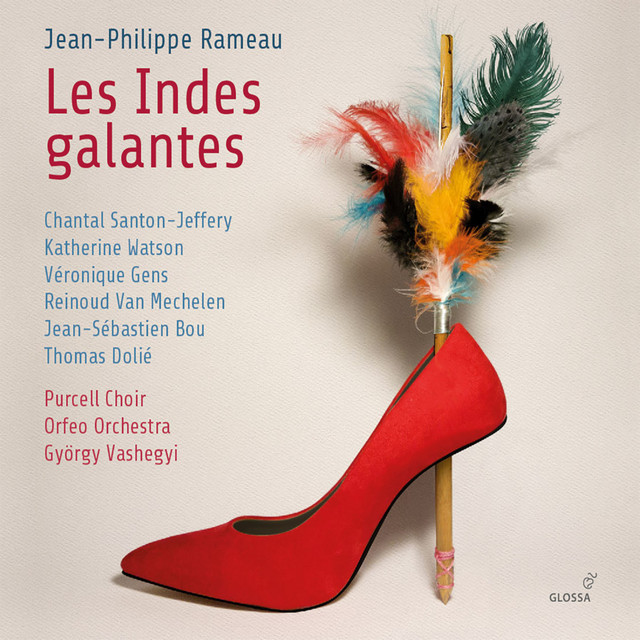
Les Indes Galantes
Jean-Philippe Rameau, Chantal Santon Jeffery, Katherine Watson, Véronique Gens,…
Baroque Singing
2017
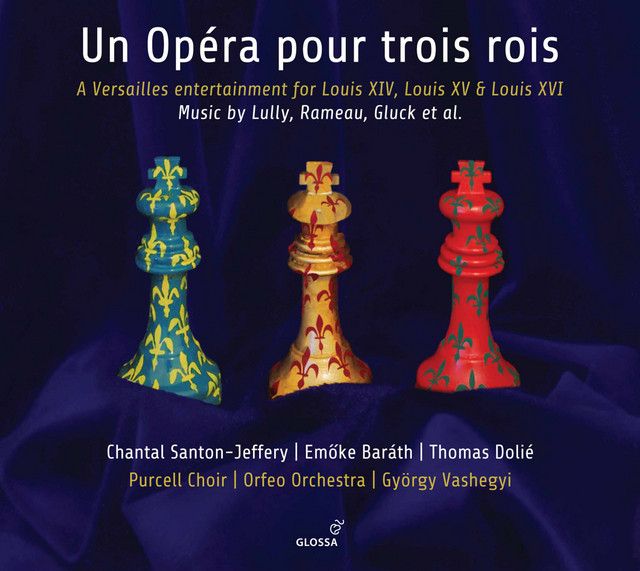
Un opéra pour trois rois
Purcell Choir, Orfeo Orchestra, Gyorgy Vashegyi
Baroque Singing
Similar artists
2
/5
Gyorgy Vashegyi
Opera
Baroque Singing
Choral
2
/5
Orfeo Orchestra
Baroque
Opera
Baroque Singing
2
/5
Le Concert Spirituel
Baroque
Classical
Opera
2
/5
Christopher Purves
Classical
Choral
Contemporary Classical
3
/5
John Eliot Gardiner
Baroque
Classical
Choral
3
/5
English Baroque Soloists
Baroque
Classical
Choral
3
/5
Akademie für Alte Musik Berlin
Baroque
Classical
Opera
3
/5
Raphael Pichon
Baroque
Classical
Choral
2
/5
Ensemble Pygmalion
Baroque
Classical
Choral
2
/5
Emma Kirkby
Choral
Classical
Baroque
Download our mobile app
Get the Melodigging app and start digging for new genres on the go
Download on the App Store
Get it on Google Play
© 2026 Melodigging
Give feedback
Legal
Melodding was created as a tribute to
Every Noise at Once
, which inspired us to help curious minds keep digging into music's ever-evolving genres.