Genres
Artists
Albums
Make Music
Sign in
Sign in
Artists
Electronic
Artists
Electronic
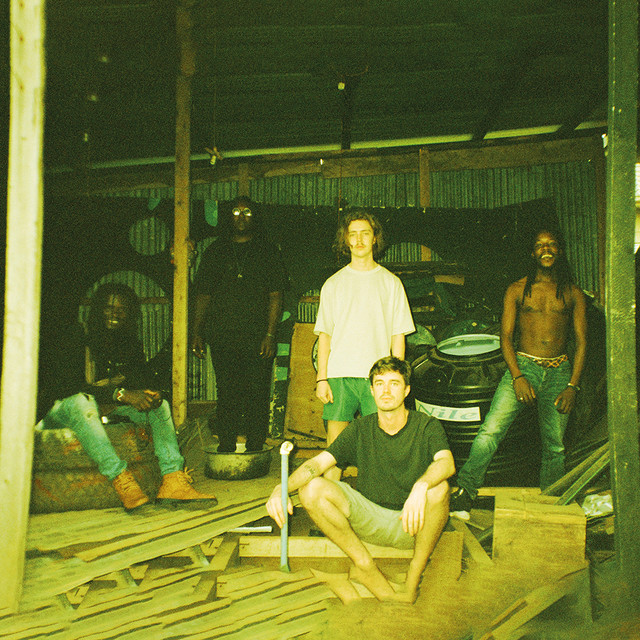
Nihiloxica
2020–2023
·
2 albums
Listen
1
/5
Genres
Singeli
Singeli is a hyper-accelerated Tanzanian dance music and MC tradition that emerged in Dar es Salaam’s working-class neighborhoods in the mid‑2000s. Built on blisteringly fast drum programming—often between 180 and 300 BPM—it features shouted or rapped vocals in Swahili and street slang, rapid-fire call‑and‑response, and looped keyboard riffs or chopped samples. While it draws from local ngoma rhythms, mchiriku street styles, and the broader tarab/taarab lineage, singeli is its own distinctly Tanzanian sound rather than soukous or classical taarab. Performances are intensely kinetic: DJs trigger barrages of claps, toms, and snares while MCs hype the crowd, and dancers drive the energy with footwork and shoulder moves. The overall aesthetic is raw, DIY, and maximal, but also playful and community‑focused.
Discover
Listen
Industrial Techno
Industrial techno is a hard-edged strain of techno that merges the genre’s four-on-the-floor pulse with the abrasive textures, mechanical timbres, and confrontational aesthetics of industrial and post-industrial music. Characterized by heavily distorted kick drums, metallic percussion, feedback, and noise layers, it often favors sparse melodies in favor of rhythmic severity and textural movement. The result is a stark, warehouse-ready sound that feels cold, machine-like, and physical—designed as much for bodily impact as for atmosphere. Labels like Downwards, Sonic Groove, and Perc Trax helped codify its vocabulary, while artists from Birmingham, Berlin, and North America shaped a transatlantic scene that remains influential in contemporary peak-time club music.
Discover
Listen
Bass Music
Bass music is an umbrella category that emphasizes heavy, foregrounded low‑frequency content—whether a booming kick drum, a sub‑bassline, or both. It spans electronic dance music and hip hop lineages from the 1980s onward and is less about one fixed rhythm than about putting the bass spectrum at the center of the mix. Producers typically sculpt the bass using synthesizers, samplers, and drum machines—famously the Roland TR‑808—along with modern soft synths and sub‑enhancement tools. Because it is a broad label, bass music can range from half‑time hip hop swing to four‑on‑the‑floor house pulses and breakbeat frameworks, but in every case the arrangement, sound design, and mix are built to make the low end the driving force.
Discover
Listen
Metal
Metal (often used to mean heavy metal in its broad, umbrella sense) is a loud, guitar-driven style of rock defined by high-gain distortion, emphatic and often martial rhythms, and a dense, powerful low end. It foregrounds riff-based songwriting, dramatic dynamics, virtuosic guitar solos, and commanding vocals that range from melodic wails to aggressive snarls and growls. Harmonically, metal favors minor modes, modal color (Aeolian, Phrygian), chromaticism, and tritone-inflected tension, while thematically it explores power, mythology, the occult, social critique, fantasy, and existential subjects. While adjacent to hard rock, metal typically pushes amplification, distortion, precision, and thematic intensity further, forming a foundation for many specialized subgenres.
Discover
Listen
Experimental
Experimental music is an umbrella term for practices that prioritize exploration, process, and discovery over adherence to established genre norms. It embraces new sound sources, nonstandard tuning systems, indeterminacy and chance operations, graphic and open-form scores, extended techniques, and technology-led sound design (tape, electronics, computers, and live processing). Rather than a single style, it is a methodology and ethos: testing hypotheses about sound, structure, and performance, often blurring boundaries between composition, improvisation, sound art, and performance art. Listeners can expect unfamiliar timbres, unusual forms, and an emphasis on how music is made as much as the resulting sound.
Discover
Listen
Electronic
Electronic is a broad umbrella genre defined by the primary use of electronically generated or electronically processed sound. It encompasses music made with synthesizers, drum machines, samplers, computers, and studio/tape techniques, as well as electroacoustic manipulation of recorded or synthetic sources. The genre ranges from academic and experimental traditions to popular and dance-oriented forms. While its sonic palette is rooted in electricity and circuitry, its aesthetics span minimal and textural explorations, structured song forms, and beat-driven club permutations. Electronic emphasizes sound design, timbre, and studio-as-instrument practices as much as melody and harmony.
Discover
Listen
East African Music
East African music is a broad regional umbrella that encompasses the musical traditions and modern styles of countries along and around the Swahili Coast and the Horn of Africa. It blends indigenous rhythmic practices and vocal traditions with centuries of Indian Ocean exchange, notably Arabic maqam-based aesthetics and instrumentation that shaped coastal forms like taarab. Across the interior and highlands, interlocking guitar lines, polyrhythmic percussion, and call-and-response vocals inform genres such as Kenyan benga and Ugandan kadongo kamu, while Ethiopia and Eritrea contribute distinctive modal systems (qenet) that underpin ethio-jazz and popular song. Languages such as Kiswahili, Amharic, Oromo, Tigrinya, Luganda, Luo, Somali, and others frame lyric poetry ranging from praise and protest to love and social commentary. Since the mid-20th century, Congolese rumba/soukous dance-band idioms mixed with local rhythms to shape dance musics like muziki wa dansi and modern Tanzanian pop forms. In the 21st century, ultra-fast electronic scenes (singeli) and Swahili hip-hop/pop (bongo flava) testify to the region’s continual reinvention, while traditional forms like taarab and lyre-based repertories (nyatiti, krar, endongo) remain foundational.
Discover
Listen
Baganda Music
Baganda music refers to the traditional and court-derived music of the Ganda (Baganda) people of the Buganda kingdom in central Uganda. It features richly layered polyrhythms, interlocking xylophone patterns, and powerful drum ensembles used for dance, praise, and royal ceremony. Core instruments include the amadinda/akadinda xylophones (played with tightly interlocking parts), the royal entenga tuned-drum set, various hand and long drums such as engalabi and empuunyi for dance rhythms (baakisimba, nankasa, mwayo), the ennanga arched harp, the endingidi one-string tube fiddle, the endere flute, and vocal call-and-response. Melodies often sit within modal pentatonic or heptatonic frameworks, while ensemble textures emphasize cyclical ostinatos that drive dance and communal participation. Historically, the repertoire functioned in courtly contexts honoring the Kabaka (king), in social dances, and in storytelling. Today it remains a living tradition taught in ensembles, schools, and cultural troupes, and it continues to inform contemporary Ugandan styles.
Discover
Listen
Show all 8 genres
Albums
2023
1
/5
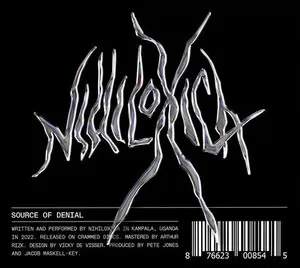
Source of Denial
Nihiloxica
Baganda Music
East African Music
Industrial Techno
2020
1
/5
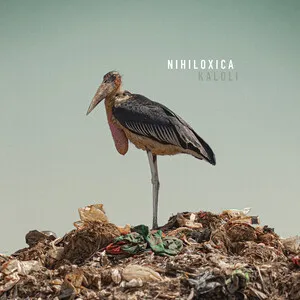
Kaloli
Nihiloxica
Baganda Music
East African Music
Electronic
Similar artists
1
/5
Various Artists
Afro-Funk
Alternative Rock
Ambient
2
/5
DJ Plead
Breakbeat
Singeli
Uk Funky
1
/5
Nídia
Batida
Kuduro
Deep Big Room
1
/5
WULFFLUW XCIV
Hard Drum
Gqom
Singeli
1
/5
Jay Mitta
Singeli
Gqom
Kuduro
1
/5
Bamba Pana
Singeli
Kuduro
East African Music
1
/5
Afrorack
Acid Techno
Experimental
Singeli
1
/5
Ocen James
Experimental
Idm
Singeli
1
/5
Duke
Singeli
Moroccan Chaabi
East African Music
1
/5
Judgitzu
Singeli
Afrobeat
East African Music
Download our mobile app
Get the Melodigging app and start digging for new genres on the go
Download on the App Store
Get it on Google Play
© 2026 Melodigging
Give feedback
Legal
Melodding was created as a tribute to
Every Noise at Once
, which inspired us to help curious minds keep digging into music's ever-evolving genres.