Genres
Artists
Albums
Make Music
Sign in
Sign in
Artists
Disco Polo
Artists
Disco Polo
Kapela Stanisława Ogórka
2001
·
1 album
Listen
1
/5
Genres
Disco Polo
Disco polo is a Polish strand of catchy, synth-driven dance-pop that blends Euro-disco and Italo-disco aesthetics with local folk-party sensibilities. It is characterized by simple, memorable melodies, a steady four-on-the-floor beat, and uncomplicated major-key harmonies. Lyrically, disco polo centers on love, flirtation, nostalgia, and celebration, aiming for maximum sing-along appeal at weddings, festivals, and club nights. Production typically features bright leads, punchy drum-machine patterns, and smooth bass lines, often delivered with a sense of kitsch and cheerful exuberance.
Discover
Listen
Traditional Music
Traditional music is an umbrella term used in the mid–20th century by folklorists and ethnomusicologists to denote community-rooted, orally transmitted repertoires tied to social ritual, work, celebration, and storytelling. Unlike commercial pop or art-music traditions, traditional music is typically learned by ear, varies regionally, and evolves slowly through communal participation. It often features modal melodies, cyclic rhythms, heterophony or unison singing, and indigenous instruments whose timbres are integral to local identity. Lyrics tend to preserve language, history, and collective memory. While the musical practices themselves can be ancient, the phrase “traditional music” emerged to replace earlier, narrower or colonial framings like “folk” or “ethnic” music, foregrounding continuity, locality, and living practice rather than exoticism.
Discover
Listen
Goralski
Góralski is the signature couple‑dance music of the Polish Highlanders (Górale) from the Podhale region at the foot of the Tatra Mountains. One man leads a single dance “suite” for his chosen partner: he first intones a short tune (nuta) in a high, tense voice; the string band immediately picks it up and drives a sequence of contrasting sections. The partners dance around one another and touch only at the climactic turning figure (zwyrtanie). The underlying meter is duple (2/4), but the opening can be freer, moving from rubato into a firm pulse. The band (kapela) centers on a lead fiddle (prym), one or more rhythm/secondary fiddles (sekundy) bowing strong double‑stops and open fifths, and a small three‑string bass (basy); pastoral colors such as Podhale bagpipes (koza), shepherd flutes (fujarka), and the long wooden horn (trombita) are traditional options. The result is a raw, penetrating, highly rhythmic sonority supporting athletic, show‑off male steps and the partner’s fast spins. Musically, góralski cycles through named tune‑types: a slower, freely intoned ozwodna gives way to faster, accent‑heavy krzesana or tiny‑stepped drobna, among others (zielona, etc.). Melodic language often uses the “Podhalean/Wallachian” modal collection—mixing a raised fourth (Lydian color) and lowered seventh (Mixolydian color)—realized heterophonically as players vary the same tune. The nuta is conceived as a tune‑family realized anew in performance rather than a fixed melody.
Discover
Listen
Albums
2001
Góralskie Śpiywanie. . .
Kapela Stanisława Ogórka
Goralski
Similar artists
2
/5
Bajeranci
Disco Polo
Goralski
Vixa
2
/5
Bajeranty
Disco Polo
Goralski
2
/5
Sykowni
Disco Polo
Goralski
2
/5
Kapela Świst
Disco Polo
Goralski
2
/5
Gronicki
Disco Polo
Goralski
1
/5
Kapela Hulanka
Disco Polo
Goralski
1
/5
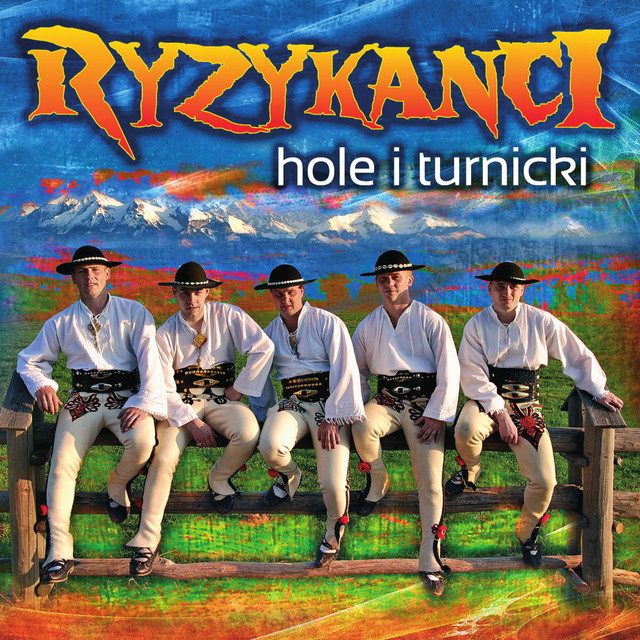
Ryzykanci
Disco Polo
Goralski
1
/5
Kapela Staszka Maśniaka
Disco Polo
Goralski
1
/5
Muzyka Karpieli z Koscieliska
Traditional Music
Goralski
4
/5
Kizo
Disco Polo
Viral Trap
Rap Motywacja
Download our mobile app
Get the Melodigging app and start digging for new genres on the go
Download on the App Store
Get it on Google Play
© 2026 Melodigging
Give feedback
Legal
Melodding was created as a tribute to
Every Noise at Once
, which inspired us to help curious minds keep digging into music's ever-evolving genres.