Genres
Artists
Albums
Make Music
Sign in
Sign in
Artists
Chinese Indie
Artists
Chinese Indie
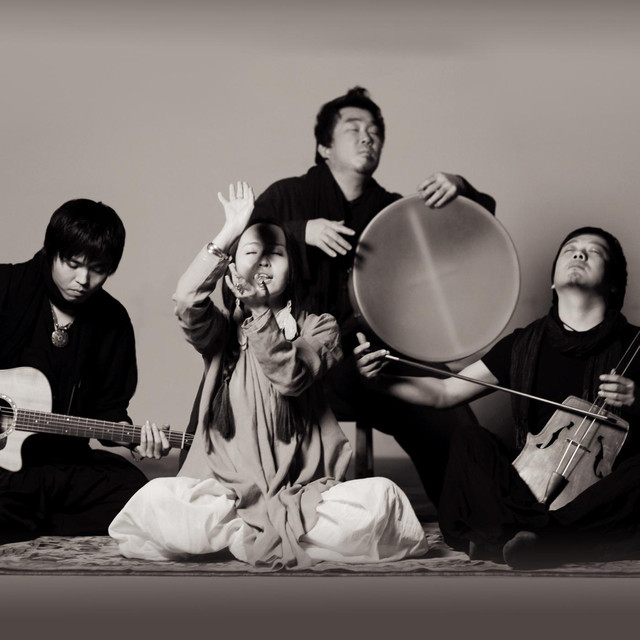
HAYA樂團
2009
·
1 album
Listen
2
/5
Genres
Chinese Indie
Chinese indie is a broad umbrella for independent rock and pop made in Mainland China outside the mainstream Mandopop industry. It ranges from jangly guitar pop and lo‑fi singer‑songwriter to post‑punk, shoegaze, and experimental rock. Formed around DIY venues, small labels, and online communities, the scene emphasizes artistic autonomy, local identity, and lyrics in Mandarin (and regional languages) that reflect urban life, youth alienation, social change, and tender nostalgia. Sonic markers include guitar-driven textures (from clean jangle to fuzz walls), steady post‑punk grooves, dreamy reverb, and occasional use of Chinese modal inflections within Western song forms. Beijing and later Shanghai, Chengdu, Wuhan, and Xi’an became hubs, with labels like Modern Sky and Maybe Mars, and livehouses such as D‑22 and School Bar anchoring a culture of self‑released records, zines, and festivals.
Discover
Listen
Chinese Rock
Chinese rock is the umbrella term for rock music created by bands and solo artists from Mainland China. It emerged in the 1980s during the era often called the New Enlightenment, when intellectual and cultural life reopened after the Cultural Revolution. Defined by an anti-traditional, dissenting stance, Chinese rock has long been associated with challenging mainstream ideology, the commercial establishment, and cultural hegemony. Musically, it fuses Western rock idioms (from classic rock to punk, new wave, and post-punk) with Chinese melodic sensibilities, language, and—at times—traditional instruments and pentatonic inflections.
Discover
Listen
East Asian Folk Music
East Asian folk music is an umbrella term for the traditional, community-rooted musics of China, Japan, Korea, Mongolia, and related cultures in the region. While the practices themselves are ancient, the category coalesced in the 1900s as folklorists, broadcasters, and state ensembles began documenting, standardizing, and reviving rural and ritual repertoires. Typical features include pentatonic-based melodies, flexible rhythm and meter, and heterophonic textures in which multiple performers ornament the same tune simultaneously. Vocal styles range from narrative epics and work songs to lyrical art-folk ballads, often delivered with regional timbres and rich ornamentation. Signature instruments include the Chinese erhu, pipa, dizi, and guzheng; the Japanese shamisen, shakuhachi, and koto; the Korean gayageum, haegeum, piri, and janggu; and Mongolian morin khuur and tovshuur, alongside various frame drums and gongs. Beyond village and ritual contexts, East Asian folk music today thrives on stage and in media, influencing popular genres and fusions that retain traditional scales, storytelling, and timbral aesthetics.
Discover
Listen
Mongolian Music
Mongolian music encompasses the traditional vocal and instrumental practices of the Mongolian steppe, centered on the morin khuur (horsehead fiddle), long song (urtyn duu), short song (bogino duu), epic song (tuuli), and the overtone-rich vocal art of khöömii (throat singing). Its melodic language is largely pentatonic, with expansive, arching phrases that evoke open landscapes, horses, and nomadic life. Textures range from solo voice with a sustained drone to heterophonic ensemble playing, and rhythms move fluidly between free, rubato narrative delivery and lively dance meters for bielgee (seated dance) and festive pieces. Ritual and religious strands—especially Buddhist chant and older shamanic practices—intertwine with courtly and folk repertories shaped during and after the Mongol Empire, yielding a music that is at once intimate, contemplative, and epic in scale.
Discover
Listen
Turkic-Mongolic Music
Turkic-Mongolic music is a broad family of Inner Asian musical traditions shaped by nomadic lifeways across the steppe, taiga, and desert zones from Mongolia and Siberia to Xinjiang and Central Asia. It emphasizes timbre, overtone color, and modal melody over dense harmony, often centering a drone or open fifths with anhemitonic pentatonic contour. Characteristic practices include overtone (throat) singing, epic chant, long-song with free rhythm, and dance songs with “galloping” rhythms that mimic horse movement. Common instruments include horse-head fiddles (morin khuur), two-string lutes (igil, topshuur, dombra, komuz), frame and shaman drums, and jaw harps (khomus/temir komuz). Texts frequently recount genealogies, heroic epics, pastoral imagery, and spiritual cosmologies linked to Tengrism, Buddhism, and Islam. Across Turkic- and Mongolic-speaking communities, local styles vary—Uyghur muqam cycles are long-form modal suites, Kazakh and Kyrgyz traditions foreground plucked lutes and instrumental toqs/kyuis, and Tuvan and Mongolian repertoires foreground throat singing and long-song aesthetics—yet all share a preference for modal melody, flexible rhythm, and timbre-focused expression.
Discover
Listen
Central Asian Music
Central Asian music is a broad family of traditions shared across the Silk Road heartlands—today’s Uzbekistan, Tajikistan, Kazakhstan, Kyrgyzstan, and Turkmenistan, with strong ties to Uyghur, Pamiri, and other regional cultures. It blends Turkic nomadic song and epic recitation with Persianate courtly repertoire and Islamic modal theory, producing rich vocal melismas, intricate modal (maqom/maqam) systems, and cyclical rhythms (usul). Instrumentation centers on long‑necked lutes (dutar, tanbur, komuz, dombra), bowed fiddles (ghijak/kamancheh, qobyz), frame drums (doira/doyra), reed and woodwind instruments (surnay, nai), and zither or harp relatives (chang). Stylistically, it spans refined urban suites such as Shashmaqam to nomadic epic performance (akyn/jyrau/manaschi), wedding dance music driven by doira patterns, and intimate lyrical songs. Its timbral palette favors resonant plucked strings, bright double‑reed leads, and expressive, ornamented vocals.
Discover
Listen
Albums
2009
2
/5
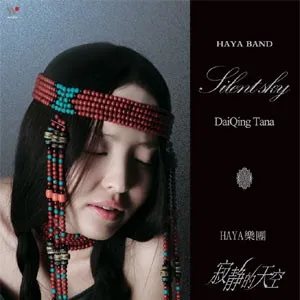
Silent Sky 寂靜的天空
Daiqing Tana 黛青塔娜 & Haya Band HAYA樂團
Mongolian Music
East Asian Folk Music
Turkic-Mongolic Music
Similar artists
2
/5
Hanggai
Chinese Indie
Chinese Rock
Folk Metal
1
/5
Various Artists
Afro-Funk
Alternative Rock
Ambient
4
/5
Zhang Zhen Yue
C-Pop
Chinese Indie
Chinese Rock
4
/5
告五人
Chinese Rock
Chinese Indie
Taiwanese Indie
3
/5
Amazing Show
Chinese Indie
Chinese Rock
Mandopop
3
/5
EggPlantEgg
Chinese Rock
Taiwanese Indie
Chinese Indie
3
/5
Wu Bai
C-Pop
Chinese Indie
Chinese Rock
3
/5
陳粒
C-Pop
Chinese Indie
Chinese Rock
3
/5
my little airport
Twee Pop
Cantopop
Chinese Indie
3
/5
No Party For Cao Dong
Chinese Indie
Chinese Rock
Mandopop
Download our mobile app
Get the Melodigging app and start digging for new genres on the go
Download on the App Store
Get it on Google Play
© 2026 Melodigging
Give feedback
Legal
Melodding was created as a tribute to
Every Noise at Once
, which inspired us to help curious minds keep digging into music's ever-evolving genres.