Genres
Artists
Albums
Make Music
Sign in
Sign in
Artists
Banda
Artists
Banda
El Movimiento Alterado
2010
·
1 album
Listen
3
/5
Genres
Corridos Bélicos
Corridos bélicos are a contemporary, hard-hitting branch of the Mexican corrido that foregrounds militaristic imagery, aggressive bravado, and street-informed swagger. The sound keeps the acoustic backbone of regional mexicano—sierreño trios, norteño/banda textures—while adopting the lyrical posture, ad‑libs, and urgency of trap and hip hop. Typical arrangements feature requinto and harmony guitars, tololoche or electric bass, snare-driven grooves, and sometimes tuba for low-end punch. Melodies skew minor or modal, with rapid ornamental runs, call‑and‑response riffs, and terse, talk‑sung vocal cadences. Thematically, songs chronicle power, risk, and status symbols, often coded in “bélico” (war-like) aesthetics—tactical gear, convoys, radios—delivered with taut, forward momentum.
Discover
Listen
Corridos Alternativos
Corridos alternativos is a contemporary wave of Mexican corridos that blends the narrative ballad tradition with Gen‑Z indie, pop, and hip‑hop sensibilities. Instead of the brisk polka/two‑step feel of classic corridos, it often slows the groove toward mid‑tempo, mixing sierreño trio guitars and tololoche/tuba with 808s, trap hi‑hats, light synth pads, and Auto‑Tune. Lyrically it keeps the corrido’s storytelling DNA, but shifts focus from outlaw exploits to intimate themes: heartbreak, friendships, coming‑of‑age, online life, and aspirational street style. The vocal delivery favors melodic hooks and confessional tone while preserving regional turns of phrase and corrido structures. The style is natively digital—born on YouTube, SoundCloud, and TikTok—where short, hook‑forward refrains and guitar motifs travel easily between Mexico and the Mexican‑American diaspora.
Discover
Listen
Movimiento Alterado
Movimiento alterado is a contemporary offshoot of the Mexican corrido tradition that foregrounds hyper-violent, adrenaline-charged storytelling and hard-hitting, brass- or guitar-led arrangements. It is closely tied to the "corridos alterados" wave, in which first‑person narratives, military jargon, and explicit depictions of cartel life are delivered with swaggering vocals and propulsive rhythms. Musically, the style draws on banda sinaloense and norteño/sierreño instrumentations: blasting tambora and tarola (snare), tuba bass lines, and tight trumpet/trombone/clarinet riffs on the banda side; or rapid 12‑string guitar (requinto), accordion, and bass/tuba on the sierreño/norteño side. Harmonies are typically bright and functional (I–IV–V), while the feel is often polka‑like two‑step. Production emphasizes loud, saturated brass and percussion, catchy unison riffs, and breakneck fills that amplify the lyrical bravado. Culturally, movimiento alterado was propelled by labels and promoters who packaged and marketed the sound and image—dark attire, tactical aesthetics, and viral videos—toward Mexican and Mexican‑American audiences, especially across Sinaloa, Sonora, and the Los Angeles diaspora.
Discover
Listen
Banda
Banda is the traditional music of the Banda peoples of the Central African Republic and adjacent regions of the central Sudano–Congolese belt. It centers on communal performance—singers, dancers, and instrumentalists creating interlocking parts that are woven together through call-and-response and polyrhythm. Characteristic timbres include ensembles of natural horns (notably among Banda-Linda groups) that perform single-note hocketing to build complex melodic textures, wooden slit-drums used for rhythm and communication, frame and barrel drums, rattles, handclaps, transverse and end-blown flutes, and lamellophones (sanza/likembe). Vocal music ranges from antiphonal work and dance songs to ceremonial chants, often supporting life-cycle rituals, healing, hunting, and communal celebrations. Melodically, Banda repertoires commonly employ pentatonic and heptatonic pitch collections, while rhythmically they favor layered ostinati in compound meters (e.g., 12/8) and additive patterns. The music functions as living social practice, binding community, marking identity, and conveying oral history.
Discover
Listen
Corrido
Corrido is a Mexican narrative ballad tradition that tells real or imagined stories about heroes, outlaws, battles, tragedies, and contemporary events. It is strophic, usually built from octosyllabic lines organized into quatrains with assonant rhyme, and features a declamatory vocal delivery designed to make the storyline clear. Musically, corridos are commonly set to dance-derived rhythms such as polka in 2/4 or waltz in 3/4, reflecting 19th‑century European influences absorbed in northern Mexico. They are performed by different ensembles—most famously norteño groups with accordion and bajo sexto, mariachi with violins and trumpets, or banda with brass and tuba—yet the poetic form and storytelling remain central. Typical corridos open with a saludo (greeting/announcement), present the narrative in chronological episodes rich with names, places, and dates, and close with a despedida (farewell or moral). Modern variants include narcocorridos and, more recently, corridos tumbados that fuse the narrative form with contemporary urban and trap aesthetics.
Discover
Listen
Corridos Adictivos
Corridos adictivos is a name found on Every Noise at Once, a map of genres identified by Spotify, and in the playlist “The Sound of Corridos Adictivos”; little has been written about it. The music tends to be fast, lively and assertive, with a bouncy pulse and Spanish-language singing. Strummed acoustic guitars and accordion are prominent, often supported by a booming tuba or sousaphone bass line. Some arrangements add trumpets, trombones and clarinets, while others use electric or acoustic bass. Drums can give the music extra drive with snare hits, rolls and cymbal crashes; some arrangements rely on strumming and bass for their rhythmic momentum instead. A common rhythm is a waltz-like oom-pah-pah, with a low bass note followed by guitar strums; a brisk polka-like beat also appears. Voices are often strong and slightly nasal, with a second singer joining the lead in close harmony. Between vocal phrases, accordion and other melodic instruments play quick runs and harmonized fills. The production is generally bright and direct, with vocals up front and some room sound or reverb. The music sits especially close to corrido, the narrative ballad tradition, and some of its artists are also associated with the guitar-led norteño style sierreño. Titles such as “Mi Historial / El 090,” “Siglas del Cartel” and “La Vida del Narco” suggest stories about named figures, coded identities and the drug trade. Releases in the playlist span 2014 to 2024.
Discover
Listen
Electro Corridos
Electro corridos is a name that appears in Spotify’s genre labels on artists, and little is written about it. The music ranges from beat-driven hip-hop to acoustic songs with a quick, waltz-like sway. Many tracks have a steady, mid-tempo bounce, with programmed kicks, crisp snares, ticking or rolling hi-hats, deep bass and synthesizer melodies. Others move faster, with offbeat acoustic guitar strums and bass carrying the pulse instead of drums. Some combine acoustic strings with electronic beats. Spanish-language voices are prominent, moving between rhythmic rapping or chanting and more projected, emotive singing. Backing harmonies, doubled vocals and ad-libs add depth; some voices have a nasal or raspy edge, while some use audible pitch correction. The production is generally clean and modern, placing the voice upfront. Beat-led tracks often favor strong low end and punchy drums, while acoustic arrangements give the strings room to ring. Its artists are also associated with corrido, guitar-led sierreño, corrido tumbado and Mexican hip hop. Those connections help explain both the narrative-song tradition and the rhythmic vocal delivery, although the electronic drums and sub-bass in some tracks contrast with the acoustic arrangements in others. Titles such as “Tu Boda” and “YO NO TE OLVIDO” suggest romance and remembrance, while “King of Watches” suggests a flashier side. The tracks and albums listed span 2018 to 2026.
Discover
Listen
Show all 7 genres
Albums
2010
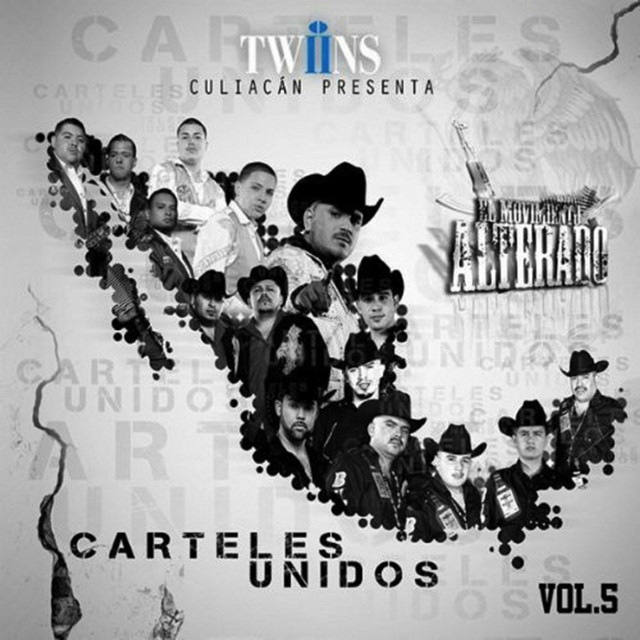
Carteles Unidos
El Movimiento Alterado
Corridos Alternativos
Similar artists
3
/5
Los Buchones de Culiacan
Banda
Corrido
Corridos Alternativos
3
/5
Rogelio Martinez
Banda
Corrido
Corridos Alternativos
3
/5
Los 2 Primos
Banda
Corrido
Corridos Alternativos
3
/5
Erik Estrada
Banda
Corrido
Corridos Alternativos
3
/5
Escolta De Guerra
Banda
Corrido
Corridos Alternativos
3
/5
Los Buitres
Banda
Corrido
Corridos Alternativos
3
/5
Jorge Santacruz Y Su Grupo Quinto Elemento
Corridos Alternativos
Banda
Corrido
2
/5
Banda Culiacancito
Banda
Corrido
Corridos Alternativos
2
/5
Grupo Sexto Sentido
Banda
Corrido
Corridos Alternativos
2
/5
Proyecto X
Banda
Corrido
Corridos Alternativos
Download our mobile app
Get the Melodigging app and start digging for new genres on the go
Download on the App Store
Get it on Google Play
© 2026 Melodigging
Give feedback
Legal
Melodding was created as a tribute to
Every Noise at Once
, which inspired us to help curious minds keep digging into music's ever-evolving genres.