Genres
Artists
Albums
Make Music
Sign in
Sign in
Artists
Electronic
Artists
Electronic
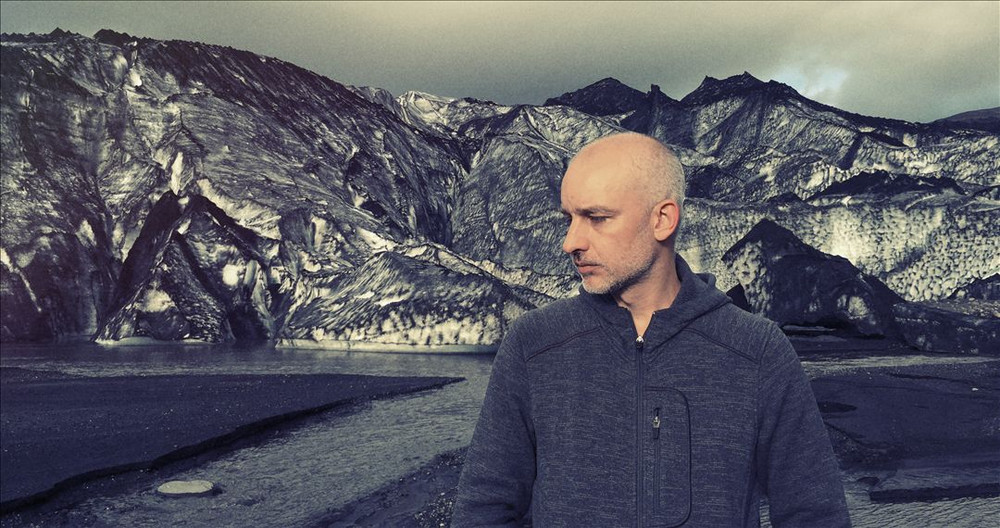
Akira Rabelais
1999–2021
·
11 albums
Listen
Genres
Lowercase
Lowercase is a minimalist strain of experimental ambient music that privileges extremely quiet, often barely-perceptible sound. Instead of melody and rhythm, it focuses on micro-sonic details—hiss, hums, room tone, paper rustle, HVAC drones, cable buzz, and distant environmental traces—presented at very low volumes. Coined by artist Steve Roden in the early 2000s, the term denotes both a sonic aesthetic and a listening practice: attentive, headphone-based, and patient. Releases frequently use long durations, wide dynamic range, and near-silence to pull listeners toward the threshold of audibility. Labels such as 12k, LINE, and Trente Oiseaux, along with galleries and sound-art contexts, helped situate lowercase at the intersection of ambient, electroacoustic composition, and conceptual sound art.
Discover
Listen
Hauntology
Hauntology is a retro-futurist strain of experimental electronic music that evokes the "ghosts" of lost cultural futures. Emerging in the United Kingdom in the mid‑2000s, it draws on half-remembered media—library music, public information films, children’s TV idents, and Radiophonic textures—to produce an atmosphere of eerie nostalgia and cultural memory. Sonically, the style favors degraded media and analogue patina: vinyl crackle, tape hiss, wow and flutter, and dusty archival samples. It often pairs subdued drones and detuned synths with looped fragments, sparse percussion, and unresolved harmonies to create a feeling that is at once comforting and unsettling. The term originates in Jacques Derrida’s philosophy and was popularized in a musical context by critics such as Mark Fisher and Simon Reynolds. In music, it names both a sound palette and a way of listening that foregrounds memory, media archaeology, and the uncanny persistence of the past within the present.
Discover
Listen
Modern Classical
Modern classical is a contemporary strand of instrumental music that applies classical composition techniques to intimate, cinematic settings. It typically foregrounds piano and strings, is sparsely orchestrated, and embraces ambience, repetition, and timbral detail. Rather than the academic modernism of the early 20th century, modern classical as used today refers to accessible, mood-driven works that sit between classical, ambient, and film music. Felt pianos, close‑miked string quartets, tape hiss, drones, soft electronics, and minimal harmonic movement are common, producing a contemplative, emotionally direct sound that translates well to headphones, streaming playlists, and screen media.
Discover
Listen
Ambient
Ambient is a form of electronic and electroacoustic music that prioritizes tone, atmosphere, and texture over conventional song structures and rhythmic drive. It typically features slow-moving harmonies, sustained drones, gentle timbral shifts, and extensive use of space and silence. Rather than drawing attention to itself through hooks or beats, ambient is designed to be as ignorable as it is interesting, rewarding both background listening and focused immersion. Artists often employ synthesizers, samplers, tape loops, field recordings, and subtle acoustic instruments, with reverb and delay creating a sense of place. Substyles range from luminous, consonant soundscapes to darker, more dissonant atmospheres.
Discover
Listen
Noise
Noise is an experimental music genre that uses non-traditional sound sources, distortion, feedback, and extreme dynamics as primary musical materials. Instead of emphasizing melody, harmony, or conventional rhythm, it focuses on texture, density, timbre, and the physical presence of sound. Practitioners sculpt saturated walls of sound, piercing feedback, metallic clatter, contact-mic scrapes, tape hiss, and electronic interference into works that can be confrontational or meditative. Performances often highlight process and immediacy—improvisation, body movement, and site-specific acoustics—while recordings can range from lo-fi cassette overload to meticulously layered studio constructions. Though rooted in early avant-garde ideas, the genre coalesced as a distinct practice in the late 1970s and 1980s, especially through Japan’s ‘Japanoise’ scene, and subsequently influenced numerous styles across industrial, punk-adjacent, and experimental electronic music.
Discover
Listen
Experimental
Experimental music is an umbrella term for practices that prioritize exploration, process, and discovery over adherence to established genre norms. It embraces new sound sources, nonstandard tuning systems, indeterminacy and chance operations, graphic and open-form scores, extended techniques, and technology-led sound design (tape, electronics, computers, and live processing). Rather than a single style, it is a methodology and ethos: testing hypotheses about sound, structure, and performance, often blurring boundaries between composition, improvisation, sound art, and performance art. Listeners can expect unfamiliar timbres, unusual forms, and an emphasis on how music is made as much as the resulting sound.
Discover
Listen
Experimental Electronic
Experimental electronic is an umbrella term for electronic music that foregrounds exploration and innovation over convention. It treats the studio, computer, and synthesizer as laboratories, using techniques such as tape manipulation, modular and software synthesis, feedback systems, granular and spectral processing, algorithmic/generative composition, circuit-bending, and field recording. Rather than regular song forms or dancefloor functionality, it prioritizes timbre, texture, space, and process. Structures may be nonlinear or open-form; harmony is often non-functional or drone-based; rhythm can be free, irregular, or machine-deconstructed. The style overlaps with electroacoustic music, sound art, industrial, ambient, and noise while continually interfacing with club culture and contemporary art contexts.
Discover
Listen
Electronic
Electronic is a broad umbrella genre defined by the primary use of electronically generated or electronically processed sound. It encompasses music made with synthesizers, drum machines, samplers, computers, and studio/tape techniques, as well as electroacoustic manipulation of recorded or synthetic sources. The genre ranges from academic and experimental traditions to popular and dance-oriented forms. While its sonic palette is rooted in electricity and circuitry, its aesthetics span minimal and textural explorations, structured song forms, and beat-driven club permutations. Electronic emphasizes sound design, timbre, and studio-as-instrument practices as much as melody and harmony.
Discover
Listen
Non-Music
Non-music is an umbrella category for recorded audio whose primary purpose is not musical performance. It encompasses spoken word, speeches, interviews, poetry readings, comedy, audio documentaries, instructional recordings, field recordings, sound effects, and other forms of organized sound meant to inform, narrate, document, or entertain without relying on melody or conventional song structure. Rather than emphasizing harmony, rhythm, and instrumentation, non-music foregrounds voice, text, ambient sound, narrative flow, informational content, and sonic texture. Its aesthetics range from raw, unedited actuality to highly produced studio works, and its scope spans archival preservation, education, performance art, and mass entertainment.
Discover
Listen
Field Recording
Field recording is the practice and genre of capturing sounds in situ—outside the studio—using portable recording equipment. It centers on documenting environments, human activities, wildlife, weather, machinery, rituals, and music as they actually occur, often with minimal intervention. As a listening genre, field recording foregrounds place and presence. Releases may present unprocessed, extended takes (e.g., a shoreline at dawn), or carefully edited sequences that map a soundwalk, a village festival, or a factory floor. The results range from documentary-style fidelity to abstract, immersive soundscapes that emphasize texture, spatiality, and the ecology of sound.
Discover
Listen
Show all 10 genres
Albums
2021
À la recherche du temps perdu
Akira Rabelais
Electronic
Hauntology
Lowercase
2021
À la recherche du temps perdu
Akira Rabelais
Electronic
Hauntology
Lowercase
2021
図書館
Akira Rabelais
Ambient
2020
Context in the Moment
Akira Rabelais
Electronic
Hauntology
Lowercase
2019
cxvi
Akira Rabelais
Ambient
Experimental Electronic
2016
Zauberberg
Kassel Jaeger / Stephan Mathieu / Akira Rabelais
Electronic
Experimental
Field Recording
2010
1
/5
Caduceus
Akira Rabelais
Lowercase
Electronic
Experimental
2008
Hollywood
Akira Rabelais
Non-Music
2004
1
/5
Spellewauerynsherde
Akira Rabelais
Hauntology
Lowercase
Electronic
2001
2
/5
Eisoptrophobia
Akira Rabelais
Lowercase
Ambient
Electronic
1999
Elongated Pentagonal Pyramid
Akira Rabelais
Ambient
Electronic
Experimental
Similar artists
1
/5
Various Artists
Soundtrack
Afro-Funk
Alternative Rock
1
/5
Philip Jeck
Experimental
Ambient
Lowercase
4
/5
Arca
Experimental
Electronic
Ai
2
/5
Chris Watson
Field Recording
Lowercase
Ambient
3
/5
Grouper
Ambient
Drone
Ambient Pop
1
/5
Carl Stone
Experimental
Electroacoustic
Electronic
3
/5
Bibio
Electronic
Folktronica
Downtempo
2
/5
Taylor Deupree
Lowercase
Tape Music
Ambient
2
/5
James Ferraro
Hypnagogic Pop
Drone
Electronic
2
/5
Oren Ambarchi
Lowercase
Ambient
Electronic
Download our mobile app
Get the Melodigging app and start digging for new genres on the go
Download on the App Store
Get it on Google Play
© 2026 Melodigging
Give feedback
Legal
Melodding was created as a tribute to
Every Noise at Once
, which inspired us to help curious minds keep digging into music's ever-evolving genres.