Genres
Make Music
Artists
Albums
Challenges
Sign in
Sign in
Albums
By L. Shankar
Albums
By L. Shankar
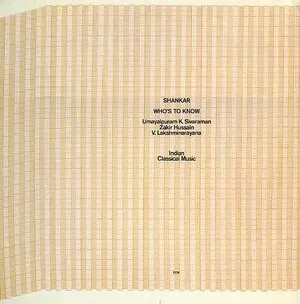
Who's to Know
May 25, 1981
Listen
1
/5
Genres
Carnatic Classical
Carnatic classical (Karnāṭaka saṅgīta) is the South Indian tradition of art music, centered in the Dravidian cultural regions of Andhra Pradesh, Karnataka, Kerala, Tamil Nadu, and Telangana. It is a raga–tala system: melody is organized by rāga (a melodic framework with characteristic phrases and ornamentation called gamaka) and rhythm is organized by tāla (cyclic meters with intricate subdivisions). The repertoire is strongly devotional, with the vast majority of canonical compositions (kritis/keerthanas and varnams) in Telugu and Sanskrit, alongside important works in Tamil and Kannada. Performance is voice-led (even in instrumental music), with a kutcheri (concert) format that balances composed items and improvisation: ālāpana (unmetered raga exploration), niraval (melodic–lyric expansion), kalpana swaras (solfège improvisation), and the climactic rāgam–tānam–pallavi. Core timbres include tambura (drone), violin or veena for melody, and mridangam, ghatam, kanjira, and morsing for percussion. Compared to North India’s Hindustani music, Carnatic music retained a more continuous temple and bhakti (devotional) lineage and less Persian/Islamicate influence, yielding dense gamaka, brisk development, and highly codified rhythmic arithmetic.
Discover
Listen
South Asian Classical Music
South Asian classical music is the art-music tradition of the Indian subcontinent built around raga (melodic frameworks) and tala (cyclical rhythmic structures). It emphasizes microtonal nuance, ornamentation (gamaka), and a continuous drone, producing a highly expressive, meditative, and often devotional soundworld. The tradition cohered from ancient liturgical and courtly practices and later diverged into two major streams: Hindustani (North Indian) and Carnatic (South Indian). Both systems share the raga–tala grammar but differ in repertoire, performance format, instrumentation, and stylistic emphasis. Improvisation is central in both, balancing formal compositions with spontaneous exploration.
Discover
Listen
Indian Classical
Indian classical music (Shastriya Sangeet / Mārga Sangeet) is the art-music tradition of the Indian subcontinent, organized around melodic frameworks called raga and cyclical meters called tala. It has two major streams: Hindustani music in the North, which foregrounds extended improvisation and raga exploration, and Carnatic music in the South, which is composition-centric with structured but highly sophisticated improvisation. A related eastern tradition is Odissi (from present-day Odisha), whose classical lineage spans roughly two millennia. Despite regional distinctions, these systems share common theoretical roots, performance aesthetics, and a spiritual-philosophical view of music as a vehicle for rasa (embodied aesthetic emotion).
Discover
Listen
Similar albums
2011
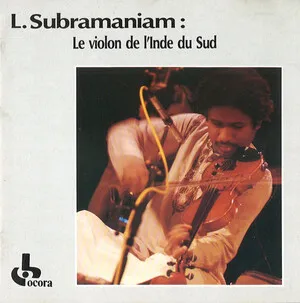
Le violon de l'Inde du Sud
L. Subramaniam
2007
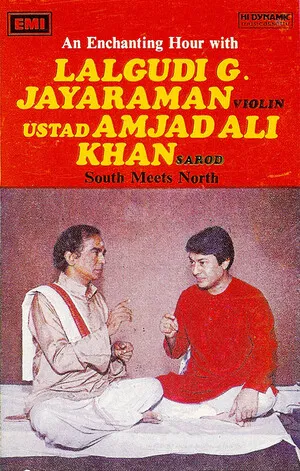
South Meets North
Lalgudi Jayaraman லால்குடி ஜயராம & Amjad Ali Khan
2011
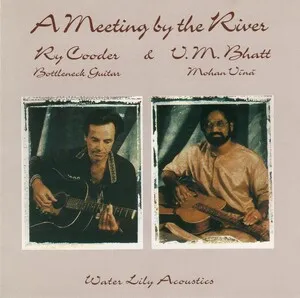
A Meeting by the River
Ry Cooder & Vishwa Mohan Bhatt
1998
Portrait of Genius
Ravi Shankar
1968
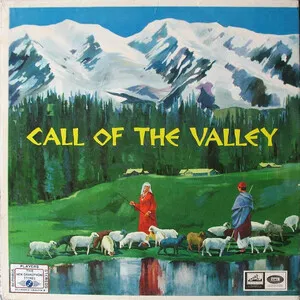
Call of the Valley
Shivkumar Sharma, Brij Bhushan Kabra & Hariprasad Chaurasia
1990
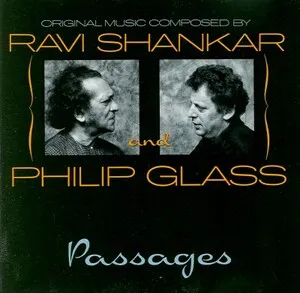
Passages
Philip Glass / Ravi Shankar
1995
Rama Sreerama
U. Srinivas
1993
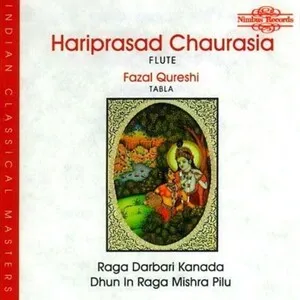
Raga Darbari Kanada / Dhun in Raga Mishra Pilu
Hariprasad Chaurasia
1962
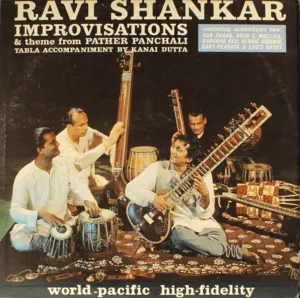
Improvisations
Ravi Shankar
1966
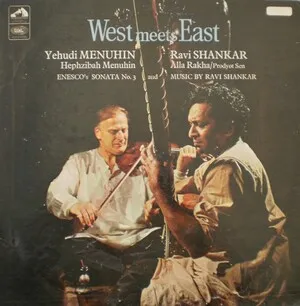
West Meets East
George Enescu
Download our mobile app
Get the Melodigging app and start digging for new genres on the go
Download on the App Store
Get it on Google Play
© 2026 Melodigging
Give feedback
Legal
Melodding was created as a tribute to
Every Noise at Once
, which inspired us to help curious minds keep digging into music's ever-evolving genres.