Genres
Make Music
Artists
Albums
Challenges
Sign in
Sign in
Albums
By Pierre Boulez
Albums
By Pierre Boulez
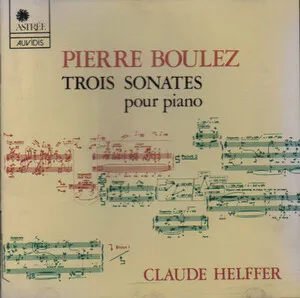
Trois sonates pour piano
January 1, 1986
Listen
1
/5
Genres
Integral Serialism
Integral serialism (also called total serialism) is a post–World War II compositional approach that extends the serial ordering principle beyond pitch to other musical parameters such as duration, dynamics, timbre, articulation, and register. Instead of relying on tonal harmony or freely atonal gestures, the composer constructs one or more ordered sets (series) for each parameter and subjects them to systematic transformations (inversion, retrograde, transposition, permutation) and cross-mappings. The result is highly controlled, pointillistic textures and tightly organized forms whose coherence derives from parametric organization rather than tonal function. Its sound world often features fragmented gestures, rapid contrasts of dynamics and articulation, and intricate rhythmic structures. While perceived as austere or rigorous, it enabled composers to craft micro-detailed musical behaviors and helped forge the postwar European avant-garde’s language.
Discover
Listen
Darmstadt School
The Darmstadt School refers to the post–World War II circle of composers who gathered around the Internationale Ferienkurse für Neue Musik (International Summer Courses for New Music) in Darmstadt, West Germany. Characterized by rigorous serial and post-serial techniques, extreme control of musical parameters (pitch, rhythm, dynamics, timbre), and a rejection of tonal and romantic idioms, the style prized structural clarity, pointillist textures, and an ascetic, laboratory-like approach to sound. While aesthetically diverse, its core ethos was a modernist drive toward formal innovation, often engaging electronic media and advanced notation, and deeply influenced by the Second Viennese School—especially Webern’s concise, atomized writing.
Discover
Listen
Serialism
Serialism is a compositional method in which musical parameters are organized into ordered series that govern a work’s structure. Most famously, twelve‑tone serialism uses an ordered row of the 12 pitch classes, deploying transformations such as prime, inversion, retrograde, and retrograde inversion to avoid traditional tonal hierarchy. While Schoenberg’s twelve‑tone technique focuses on pitch, post‑war composers expanded the idea to "total" or "integral" serialism, applying series to rhythm, dynamics, articulation, timbre, and register. The results often emphasize clarity of event over tonal center, pointillistic textures, and rigorous formal control. Aesthetic outcomes range from Berg’s expressive lyricism to Webern’s ultra‑condensed, crystalline writing, and later to the highly systematized post‑war European avant‑garde. Serialism remains a cornerstone of 20th‑century modernist practice, whether embraced, extended, or reacted against by subsequent movements.
Discover
Listen
Similar albums
1962
Gesang der Jünglinge; Kontakte
Karlheinz Stockhausen / Studio für elektronische Musik des Westdeutschen Rundfu…
2004
The Three Piano Sonatas
Pierre Boulez / Paavali Jumppanen
1960
Studie I; Studie II; Gesang der Jünglinge
Karlheinz Stockhausen / Studio für elektronische Musik des Westdeutschen Rundfu…
1958
Le marteau sans maître / Nr. 5 Zeitmasse
Pierre Boulez / Karlheinz Stockhausen
2000
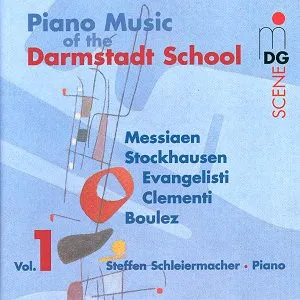
Piano Music of the Darmstadt School Vol. 1
Olivier Messiaen / Steffen Schleiermacher
1978
Complete Works Opp 1-31
Anton Webern / Pierre Boulez
1975
Piano Music
Arnold Schoenberg / Paul Jacobs
2013
A Young Person's Guide to the Avant-Garde
Karlheinz Stockhausen
2018
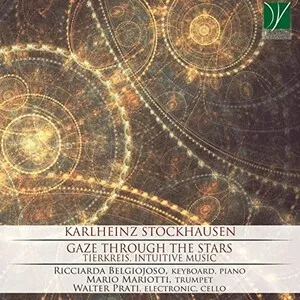
Gaze Through the Stars (Tierkreis, Intuitive Music)
Karlheinz Stockhausen
1998
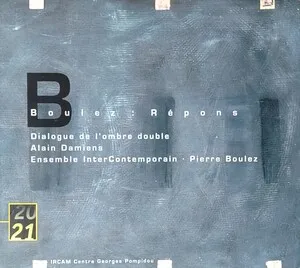
Répons; Dialogue de l'ombre double
Pierre Boulez
Download our mobile app
Get the Melodigging app and start digging for new genres on the go
Download on the App Store
Get it on Google Play
© 2026 Melodigging
Give feedback
Legal
Melodding was created as a tribute to
Every Noise at Once
, which inspired us to help curious minds keep digging into music's ever-evolving genres.