Genres
Make Music
Artists
Albums
Challenges
Sign in
Sign in
Albums
By London Symphony Orchestra
Albums
By London Symphony Orchestra
Complete Works Opp 1-31
1978
Listen
2
/5
Genres
Modern Classical
Modern classical is a contemporary strand of instrumental music that applies classical composition techniques to intimate, cinematic settings. It typically foregrounds piano and strings, is sparsely orchestrated, and embraces ambience, repetition, and timbral detail. Rather than the academic modernism of the early 20th century, modern classical as used today refers to accessible, mood-driven works that sit between classical, ambient, and film music. Felt pianos, close‑miked string quartets, tape hiss, drones, soft electronics, and minimal harmonic movement are common, producing a contemplative, emotionally direct sound that translates well to headphones, streaming playlists, and screen media.
Discover
Listen
Serialism
Serialism is a compositional method in which musical parameters are organized into ordered series that govern a work’s structure. Most famously, twelve‑tone serialism uses an ordered row of the 12 pitch classes, deploying transformations such as prime, inversion, retrograde, and retrograde inversion to avoid traditional tonal hierarchy. While Schoenberg’s twelve‑tone technique focuses on pitch, post‑war composers expanded the idea to "total" or "integral" serialism, applying series to rhythm, dynamics, articulation, timbre, and register. The results often emphasize clarity of event over tonal center, pointillistic textures, and rigorous formal control. Aesthetic outcomes range from Berg’s expressive lyricism to Webern’s ultra‑condensed, crystalline writing, and later to the highly systematized post‑war European avant‑garde. Serialism remains a cornerstone of 20th‑century modernist practice, whether embraced, extended, or reacted against by subsequent movements.
Discover
Listen
Second Viennese School
The Second Viennese School is an early‑20th‑century circle of Viennese composers led by Arnold Schoenberg, with his pupils Alban Berg and Anton Webern. It marks the decisive move from late‑Romantic chromaticism into atonality and the codification of the twelve‑tone (dodecaphonic) method, reshaping pitch organization, form, and expression in Western art music. Its hallmarks include tight motivic economy, acute attention to timbre (Klangfarbenmelodie), pointillistic textures, extreme dynamics and registral contrasts, and an expressionist intensity that often explores fragmentation and psychological tension. The repertoire spans chamber works, lieder, orchestral pieces, piano music, and operas (notably Berg’s Wozzeck and Lulu). The school’s techniques and aesthetics became a foundational strand of 20th‑century musical modernism.
Discover
Listen
Similar albums
2009
Arnold Schoenberg 2: Streichquartette I-IV
Arnold Schoenberg / Arditti Quartet / Dawn Upshaw
1975
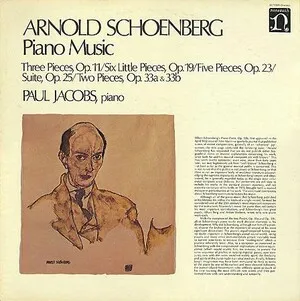
Piano Music
Arnold Schoenberg / Paul Jacobs
1975
Das Klavierwerk (The Piano Music)
Arnold Schoenberg / Maurizio Pollini
2001
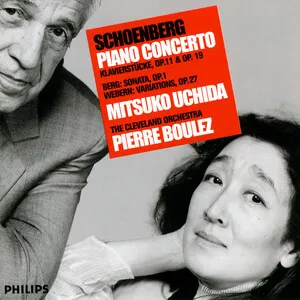
Piano Concerto; Klavierstücke, Op. 11 & Op. 19 / Sonata, Op. 1 / Variations, Op. 27
Arnold Schoenberg
1959
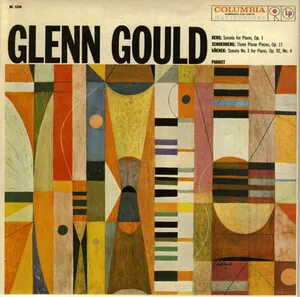
Sonata for Piano, Op. 1 / Three Piano Pieces, Op. 11 / Sonata No. 3 for Piano, Op. 92, No. 4
Alban Berg / Glenn Gould
1996
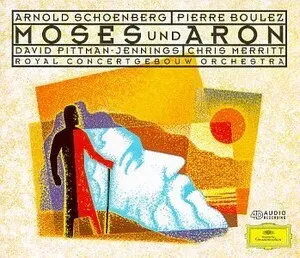
Moses und Aron
Arnold Schoenberg
2000
The Complete String Trios and Quartets
Anton Webern / Arditti Quartet
1971
Neue Wiener Schule: Die Streichquartette
Arnold Schoenberg / LaSalle Quartett
2010
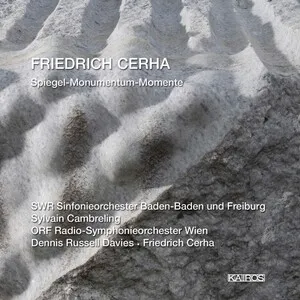
Spiegel; Monumentum; Momente
Friedrich Cerha
2003
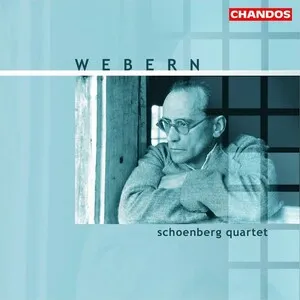
Chamber Music for Strings
Anton Webern / Schoenberg Quartet
Download our mobile app
Get the Melodigging app and start digging for new genres on the go
Download on the App Store
Get it on Google Play
© 2026 Melodigging
Give feedback
Legal
Melodding was created as a tribute to
Every Noise at Once
, which inspired us to help curious minds keep digging into music's ever-evolving genres.