Genres
Make Music
Artists
Albums
Challenges
Sign in
Sign in
Albums
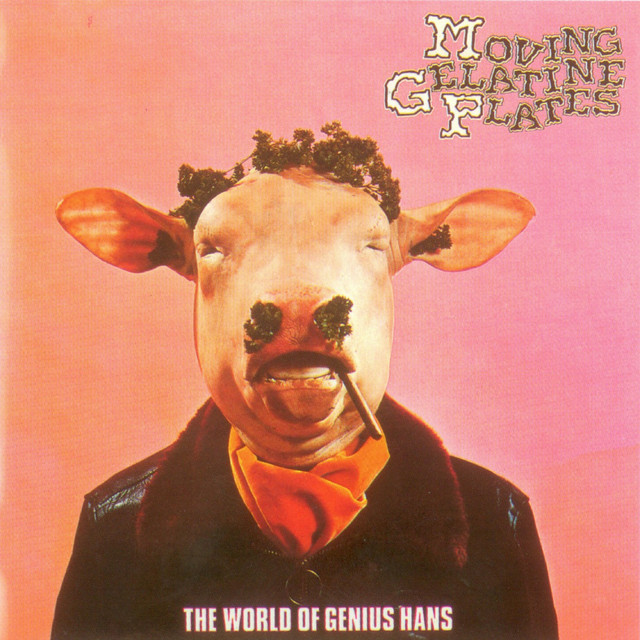
By Moving Gelatine Plates
Albums
By Moving Gelatine Plates
The World of Genius Hans
September 7, 1972
Listen
1
/5
Genres
Avant-Prog
Avant-prog (avant-garde progressive rock) is a branch of progressive rock that emphasizes experimentation, dissonance, and structural innovation. It often blends rock instrumentation with chamber-music timbres (strings, woodwinds, brass) and techniques borrowed from 20th‑century classical music, free jazz, and minimalism. Typical traits include irregular and shifting meters, abrupt contrasts, complex counterpoint, atonal or modal harmony, extended techniques, and through-composed forms that minimize or abandon verse/chorus structures. The mood ranges from stark and austere to playfully surreal, with a frequent penchant for theatricality and sound collage. The movement’s ethos—crystallized by the late‑1970s Rock in Opposition (RIO) collective—was as much cultural as musical, favoring artistic independence, DIY production, and an oppositional stance toward commercial music industry norms.
Discover
Listen
Zeuhl
Zeuhl is a bass‑driven, choir‑inflected strain of progressive rock coined by Christian Vander of Magma; the word is Kobaïan for “celestial.” It marries jazz‑rock and modernist classical impulses with ritualistic choral writing, repetitive ostinati, and militaristic drum patterns, yielding music that feels simultaneously cosmic, ominous, and liturgical. Typical traits include pounding, modal bass riffs; tightly locked, polyrhythmic drums; massed vocals in block chords or antiphony (often in invented languages); and long, through‑composed suites with recurring leitmotifs. The harmony favors minor, modal, and quartal sonorities and dramatic choral/Orff‑like climaxes, while the textures range from spare ostinatos to densely orchestrated, quasi‑operatic sections.
Discover
Listen
Canterbury Scene
The Canterbury scene is a branch of late‑1960s British progressive rock whose musicians clustered around the city of Canterbury in England. It blends psychedelic rock’s exploratory spirit with the harmonic language and improvisational freedom of modern jazz, favoring sophisticated song forms, whimsical English wit, and a warm, organ‑rich timbre. Compared with heavier strands of prog, Canterbury music tends to be lighter in touch, melodically playful, and harmonically adventurous, often moving between odd meters and swung grooves, extended jazz chords, and conversational ensemble interplay. Vocals and lyrics are frequently surreal, self‑aware, and gently humorous, while the arrangements pivot between tightly composed passages and open improvisation.
Discover
Listen
Jazz Rock
Jazz rock is a hybrid style that merges the improvisational language and harmonic richness of jazz with the amplified energy, backbeat, and song forms of rock. It typically features electric guitar, bass, and drums alongside jazz-oriented instruments such as saxophone, trumpet, and keyboards, often arranged in horn sections. Extended chords, syncopation, and improvisation coexist with catchy riffs and driving grooves, yielding music that is both virtuosic and accessible. While closely related to jazz fusion, jazz rock generally keeps a stronger tie to rock songcraft and backbeat-centered rhythms.
Discover
Listen
Rock
Rock is a broad family of popular music centered on amplified instruments, a strong backbeat, and song forms that foreground riffs, choruses, and anthemic hooks. Emerging from mid‑20th‑century American styles like rhythm & blues, country, and gospel-inflected rock and roll, rock quickly expanded in scope—absorbing folk, blues, and psychedelic ideas—while shaping global youth culture. Core sonic markers include electric guitar (often overdriven), electric bass, drum kit emphasizing beats 2 and 4, and emotive lead vocals. Rock songs commonly use verse–chorus structures, blues-derived harmony, and memorable melodic motifs, ranging from intimate ballads to high‑energy, stadium‑sized performances.
Discover
Listen
Jazz
Jazz is an improvisation-centered music tradition that emerged from African American communities in the early 20th century. It blends blues feeling, ragtime syncopation, European harmonic practice, and brass band instrumentation into a flexible, conversational art. Defining features include swing rhythm (a triplet-based pulse), call-and-response phrasing, blue notes, and extended harmonies built on 7ths, 9ths, 11ths, and 13ths. Jazz is as much a way of making music—spontaneous interaction, variation, and personal sound—as it is a set of forms and tunes. Across its history, jazz has continually hybridized, from New Orleans ensembles and big-band swing to bebop, cool and hard bop, modal and free jazz, fusion, and contemporary cross-genre experiments. Its influence permeates global popular and art music.
Discover
Listen
Similar albums
1970
Third
Soft Machine
1976
Üdü Ẁüdü
Magma
1978
Attahk
Magma
1970
Magma [Kobaïa]
Magma
1984
Merci (Remastered)
Magma
2004
K.A
Magma
1975
Live (Remastered)
Magma
2018
Dhorimviskha
Koenjihyakkei
1988
Köhntarkösz
Magma
2022
Kãrtëhl
Magma
Download our mobile app
Get the Melodigging app and start digging for new genres on the go
Download on the App Store
Get it on Google Play
© 2026 Melodigging
Give feedback
Legal
Melodding was created as a tribute to
Every Noise at Once
, which inspired us to help curious minds keep digging into music's ever-evolving genres.