Genres
Make Music
Artists
Albums
Challenges
Sign in
Sign in
Albums
By Anonymous 4
Albums
By Anonymous 4
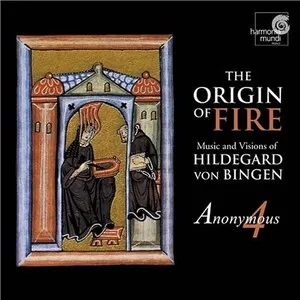
The Origin of Fire: Music and Visions of Hildegard von Bingen
2005
Listen
1
/5
Genres
Gregorian Chant
Gregorian chant is the central Western tradition of plainchant: a monophonic, unaccompanied sacred song in Latin (and occasionally Greek) used in the Roman Catholic liturgy. It employs free rhythm guided by the prosody of the text rather than by strict meter, and is sung in unison by clerics or scholas. Its melodies are organized by the system of eight church modes, with characteristic finalis (final), tenor/reciting tones, and melodic formulas. Repertoires include the Proper and Ordinary of the Mass (e.g., Introit, Gradual, Alleluia, Offertory, Communion, Kyrie, Gloria, Credo, Sanctus, Agnus Dei) and the Divine Office (e.g., Antiphons, Responsories, Hymns, Psalms). Although legend credits Pope Gregory I, modern scholarship sees Gregorian chant as a Carolingian synthesis of Old Roman and Gallican chants, standardized across Frankish realms and later the broader Latin West.
Discover
Listen
Plainchant
Plainchant (cantus planus) is the monophonic, unaccompanied chant of the Western Christian liturgy. Sung in Latin (with occasional Greek), it uses modal scales rather than major–minor tonality and unfolds in flexible, speech-like rhythms shaped by the sacred text. Melodically, plainchant ranges from simple syllabic formulas for reciting psalms to ornate melismatic lines for processional and festal moments. It is performed in unison by a schola or congregation, often organized antiphonally or responsorially across the liturgical actions of the Mass and the Divine Office. Its austere sonority, modal color, and text-centered phrasing give it a contemplative, timeless quality.
Discover
Listen
Medieval Classical Music
Medieval classical music refers to the body of sacred and secular art music created in Europe from roughly the 5th to the late 15th centuries. It encompasses the Christian chant traditions of the early Middle Ages, the emergence of notated polyphony in the High Middle Ages, and the rhythmically and formally sophisticated Ars Nova of the 14th century. At its core are modal melodies (church modes), primarily vocal textures, and a gradual evolution from monophony (single melodic line) to increasingly complex polyphony. Notation develops from adiastematic neumes to staff-based pitch notation and, later, mensural systems that codify rhythm. Characteristic sonorities emphasize perfect consonances (octaves, fifths, and fourths), with triadic harmony only beginning to coalesce near the end of the period. Though rooted in the liturgy (Mass, Office, and Latin song), the era also nurtured rich vernacular traditions—troubadours, trouvères, Minnesänger—and instrumental practices on harp, vielle, recorder, lute, and organ. The period laid the foundational techniques, theories, and repertories that define the entire subsequent Western classical tradition.
Discover
Listen
Similar albums
2006
Le chant des Templiers
Ensemble Organum / Marcel Pérès
1994
Officium
Cristóbal de Morales, Jan Garbarek & The Hilliard Ensemble
1994
Canticles of Ecstasy
Hildegard von Bingen / Sequentia
1985
A Feather on the Breath of God
Hildegard von Bingen
1997
Ordo Virtutum
Hildegard von Bingen / Sequentia
2004
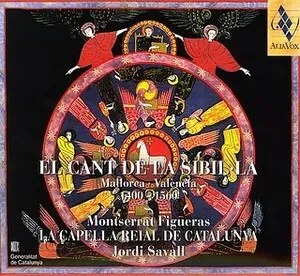
El cant de la Sibil·la: Mallorca/València 1400–1560
[anonymous]
1996
O Jerusalem
Hildegard von Bingen / Sequentia
1995
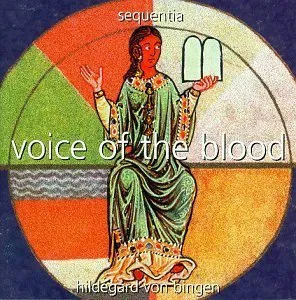
Voice of the Blood
Hildegard von Bingen / Sequentia
2013
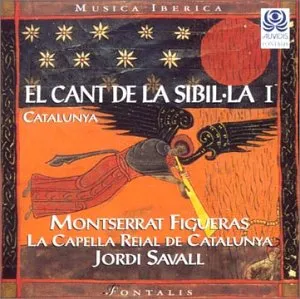
El cant de la Sibil·la I: Catalunya
[anonymous]
2004
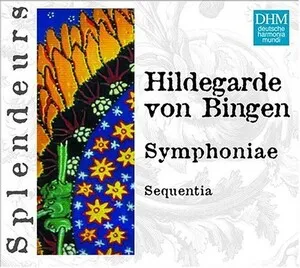
Symphoniae
Hildegard von Bingen / Sequentia
Download our mobile app
Get the Melodigging app and start digging for new genres on the go
Download on the App Store
Get it on Google Play
© 2026 Melodigging
Give feedback
Legal
Melodding was created as a tribute to
Every Noise at Once
, which inspired us to help curious minds keep digging into music's ever-evolving genres.