Genres
Artists
Albums
Make Music
Sign in
Sign in
Albums
By National Philharmonic Orchestra
Albums
By National Philharmonic Orchestra
The Beggar's Opera
Listen
Genres
Verismo
Verismo is a late‑19th‑century Italian operatic movement that champions realism: ordinary people in contemporary or recent settings, intense emotions, and vivid, sometimes violent, conflicts. It favors continuous musical drama with flowing arioso and declamation over display arias, a rich late‑Romantic harmonic palette, and a large, coloristic orchestra that paints psychological and environmental detail (bells, banda, onstage chorus, local dances). Vocally, it spotlights spinto and dramatic voices capable of sudden dynamic surges, urgent parlando, and soaring lyrical lines that erupt at emotional peaks. The result is taut, cinematic storytelling that feels immediate, visceral, and unabashedly human.
Discover
Listen
Classical Baritone
Classical baritone refers to the tradition of composing for and performing with the baritone male voice in Western classical music, spanning opera, art song (Lied), oratorio, and sacred repertoire. The baritone sits between tenor and bass, typically ranging from A2 to F4 (with role- and singer-dependent extensions). Its timbre is prized for warmth, nobility, and dramatic weight, making it ideal for heroes, anti-heroes, fathers, kings, and complex psychological roles in opera, as well as for intimate poetic expression in recital. The category solidified in the early 19th century with bel canto and Romantic opera, and has since developed into subtypes (lyric, Kavalierbariton, Verdi baritone, dramatic, and bass-baritone), each with distinct tessitura, color, and technical demands.
Discover
Listen
Classical
Classical music is the notated art-music tradition of Europe and its global descendants, characterized by durable forms, carefully codified harmony and counterpoint, and a literate score-based practice. The term “classical” can refer broadly to the entire Western art-music lineage from the Medieval era to today, not just the Classical period (c. 1750s–1820s). It privileges long-form structures (such as symphonies, sonatas, concertos, masses, and operas), functional or modal harmony, thematic development, and timbral nuance across ensembles ranging from solo instruments to full orchestras and choirs. Across centuries, the style evolved from chant and modal polyphony to tonal harmony, and later to post-tonal idioms, while maintaining a shared emphasis on written notation, performance practice, and craft.
Discover
Listen
Similar albums
Hide discovered
1974
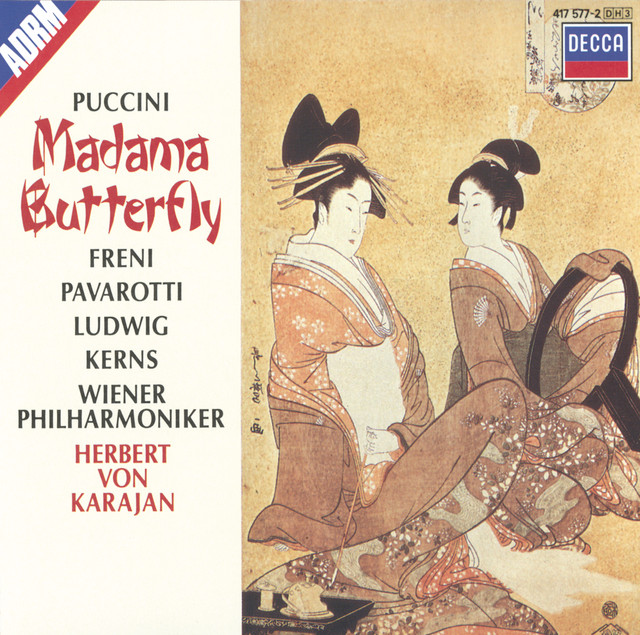
Madama Butterfly
Giacomo Puccini
1994
Johannes Brahms – The Reader's Digest Favourites From The Classics - Brahms
Johannes Brahms, Josef Leo Gruber, Vienna Volksoper Orchestra, Eric Robinson, N…
2013
The Gayaneh Ballet
Khachaturian; National Philharmonic Orchestra, Loris Tjeknavorian
2023
Psycho Suite: The Intended Full Original Score
Bernard Herrmann; The National Philharmonic Orchestra
1978
James Galway Plays Songs for Annie
James Galway, Charles Gerhardt, National Philharmonic Orchestra
1983
Trumpet Concertos
Haydn, Hummel, L. Mozart; Wynton Marsalis, National Philharmonic Orchestra, Ray…
1992
The Magic Flute of James Galway
James Galway, National Philharmonic Orchestra, Charles Gerhardt
1976
Man With the Golden Flute
James Galway, National Philharmonic Orchestra, Charles Gerhardt
1994
Hymns Triumphant
Lee Holdridge, The Amen Choir, London National Philharmonic Orchestra
1985
Weber: Invitation to the Dance / Berlioz: Les Troyens à Carthage / Lecocq: Mam'zelle Angot
Carl Maria von Weber, Hector Berlioz, Charles Lecocq; National Philharmonic Orc…
Download our mobile app
Get the Melodigging app and start digging for new genres on the go
Download on the App Store
Get it on Google Play
© 2026 Melodigging
Give feedback
About & FAQ
Legal
Melodding was created as a tribute to
Every Noise at Once
, which inspired us to help curious minds keep digging into music's ever-evolving genres.