Genres
Make Music
Artists
Albums
Challenges
Sign in
Sign in
Albums
Albums
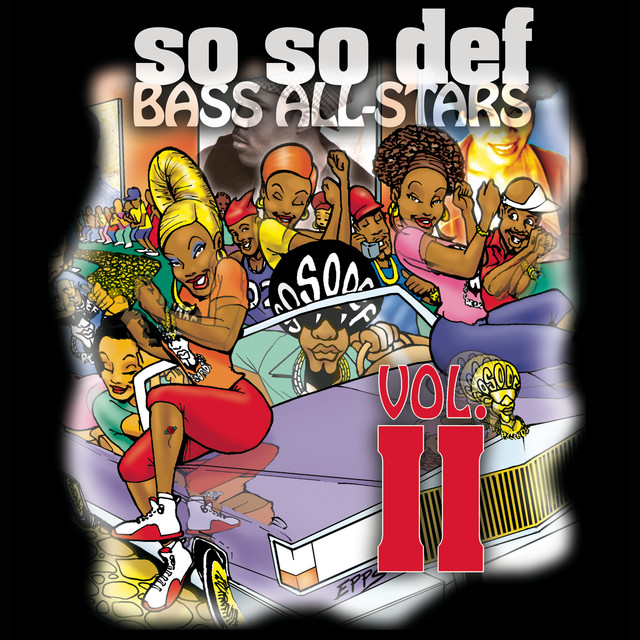
So So Def Bass All Stars II
June 10, 1997
Listen
3
/5
Genres
Deep Freestyle
Deep freestyle is an underground-leaning branch of Latin freestyle that retains the style’s emotive vocals and syncopated electro grooves while emphasizing warmer, deeper bass lines and more atmospheric, late‑night production aesthetics. Where classic freestyle foregrounded bright synth stabs and radio‑ready hooks, deep freestyle leans into minor‑key pads, moody chords, longer breakdowns, and modernized drum programming. The result feels both nostalgic and contemporary: heartfelt, club‑minded songs about love, loss, and longing, carried by soulful leads and echo‑kissed ad‑libs over 110–125 BPM electro/Hi‑NRG‑rooted rhythms.
Discover
Listen
Atlanta Bass
Atlanta bass is a high‑energy Southern hip hop offshoot that took the turbocharged, TR‑808 thump of Miami bass and gave it a distinctly ATL identity. It emphasizes booming sub‑bass, tom/cowbell fills, chantable hooks, and party‑centric or risqué lyrics made for skating rinks, car systems, and strip clubs. Typical tracks run fast and minimal, driven by tuned 808 kicks, snappy claps/snares, and short, catchy synth riffs, with call‑and‑response vocals that hype the crowd. The style acted as a bridge between electro‑rooted bass music and the later crunk, snap, and trap waves that would define Atlanta’s global rap sound.
Discover
Listen
Miami Bass
Miami bass is a high-energy, bass-forward hip hop and electro offshoot that emerged in South Florida during the mid-to-late 1980s. It is defined by booming TR-808 sub-bass, crisp handclaps and snares, uptempo breakbeats, and chant-like vocals that favor call-and-response hooks over dense lyricism. Often nicknamed "booty bass," the style prioritizes dancefloor function and car-audio impact, with many tracks effectively serving as "bass tests" for subwoofers. Melodic and harmonic elements are sparse and repetitive, while the rhythmic programming and low-end power drive the music’s party-centric atmosphere.
Discover
Listen
Electro
Electro is an early 1980s machine-funk style built around drum machines (especially the Roland TR-808), sequenced basslines, and a futuristic, robotic aesthetic. It emphasizes syncopated rhythms, sparse arrangements, and timbres drawn from analog and early digital synthesizers. Vocals, when present, are often delivered via vocoder or rap-style chants, reinforcing a sci‑fi, cyborg persona. Electro’s grooves powered breakdance culture, and its sonic palette—crisp 808 kicks, snappy snares, dry claps, cowbells, and squelchy bass—became foundational to later techno and bass music.
Discover
Listen
Old School Hip Hop
Old school hip hop is the earliest commercially recorded form of hip hop and the original template for the culture’s recorded sound. The term generally refers to music made from the early Bronx party era of 1973 through roughly 1983, before the harder, more sample‑dense “new school” sound took hold. Musically, it centers on extended breakbeats drawn from funk and disco records, live turntable techniques (cutting, backspinning, and early scratching), simple but infectious drum programming (often with the TR‑808), and crowd‑engaging MC routines. Rapping tends to feature clear enunciation, party chants, call‑and‑response, braggadocio, and narrative vignettes, delivered over steady 4/4 grooves in the 95–112 BPM range. Culturally, old school hip hop grew out of DJ‑led block parties, b‑boy/b‑girl dance breaks, and the Jamaican sound‑system tradition, and it codified the core pillars of the hip hop ethos: DJing, MCing, breaking, and graffiti.
Discover
Listen
Rap
Rap is a vocal music style built on the rhythmic, rhymed, and often improvised spoken delivery of lyrics over a beat. It emphasizes flow, cadence, wordplay, and narrative, and is commonly performed over sampled or programmed drum patterns and loops. Emerging from block parties and sound-system culture in the Bronx, New York City, rap became the core vocal expression of hip hop culture alongside DJing, breakdancing, and graffiti. While it is closely linked to hip hop, rap as a technique and genre has also crossed into pop, rock, electronic, and global regional scenes. Musically, rap favors strong drum grooves (breakbeats, 808 patterns), sparse harmony, and loop-based structures that foreground the MC’s voice. Lyrically, it spans party chants and battle brags to intricate internal rhymes, social commentary, reportage, and autobiography.
Discover
Listen
Electronic
Electronic is a broad umbrella genre defined by the primary use of electronically generated or electronically processed sound. It encompasses music made with synthesizers, drum machines, samplers, computers, and studio/tape techniques, as well as electroacoustic manipulation of recorded or synthetic sources. The genre ranges from academic and experimental traditions to popular and dance-oriented forms. While its sonic palette is rooted in electricity and circuitry, its aesthetics span minimal and textural explorations, structured song forms, and beat-driven club permutations. Electronic emphasizes sound design, timbre, and studio-as-instrument practices as much as melody and harmony.
Discover
Listen
Similar albums
1999
Ready for the World
INOJ
1996
Get on Up and Dance
Quad City D.J.'s
2007
Sensual Seduction
Snoop Dogg
1997
Swing My Way
K.P. & Envyi
1990
Banned in the U.S.A.
2 Live Crew
2009
Just Sumthin to Do
MC. A.D.E. and Posse
1998
Sonic Overload
Bass Mekanik
1990
The Album
Dynamix II
1994
Bumpin'
Dis 'n' Dat
2001
Discovery
Daft Punk
Download our mobile app
Get the Melodigging app and start digging for new genres on the go
Download on the App Store
Get it on Google Play
© 2026 Melodigging
Give feedback
Legal
Melodding was created as a tribute to
Every Noise at Once
, which inspired us to help curious minds keep digging into music's ever-evolving genres.