Genres
Make Music
Artists
Albums
Challenges
Sign in
Sign in
Albums
By Philip Braham / Johann Sebastian Bach
Albums
By Philip Braham / Johann Sebastian Bach
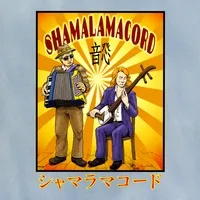
Shamalamacord
April 19, 2009
Listen
1
/5
Genres
Tsugaru-Jamisen
A virtuosic regional shamisen style from the Tsugaru area of Aomori, Japan, tsugaru-jamisen is known for its driving rhythms, percussive bachi (plectrum) strikes, and improvisatory development over folk-song (min'yō) melodic cells. Players typically use a futozao (thick-neck) shamisen with a large bachi, exploiting the instrument’s sawari (sympathetic buzz) and powerful downstrokes to create both pitch and percussion. Core repertoire pieces such as Tsugaru Jongara-bushi, Tsugaru Yosare-bushi, and Tsugaru Aiya-bushi are treated as frameworks for variation, with free-rhythm introductions blossoming into fast, dance-like sections. The style balances raw intensity and lyricism, combining rapid tremolo, slides, pull-offs, and offbeat accents with the Japanese jo–ha–kyū sense of pacing. It is performed solo, in duo call-and-response with singers and flutes, or in ensembles, and today appears in concert halls, festivals, competitions, and cross-genre collaborations.
Discover
Listen
Japanese Folk Music
Japanese folk music (min'yō and related regional traditions) is the collective body of vernacular song and instrumental practices that arose among Japan’s rural and coastal communities. It includes work songs (rice-planting, fishing, sake-brewing), festival and dance songs (Bon-odori), travelers’ and boatmen’s songs, lullabies, and ritual/seasonal chants. Melodies commonly draw on pentatonic collections such as the yo and in scales, and are richly ornamented with kobushi (vocal turns) and flexible timing shaped by ma (intentional silence/space). Textures are largely monophonic or heterophonic, with unison singing doubled by instruments like shamisen, fue (transverse bamboo flutes), shakuhachi, and sometimes koto; taiko and local percussion support dance and procession contexts. Regional styles (e.g., Tsugaru in the north, Amami in the south, Okinawa and Ainu traditions) contribute distinctive timbres, rhythms, and repertories that together define the breadth of Japanese folk expression.
Discover
Listen
Romani Folk Music
Romani folk music is the diverse, diasporic musical tradition of the Romani people, whose ancestors migrated from the Indian subcontinent into the Middle East and Europe during the late medieval period. Carrying core melodic and rhythmic ideas with them, Romani musicians absorbed and reinterpreted local styles, creating a family of related yet regionally distinct musics across Central, Eastern, Southern, and Western Europe. Common features include ornate, highly expressive melodies with melismas and slides; flexible tempo practices (rubato introductions leading into faster dance sections); and modal colors such as harmonic minor and the Phrygian dominant (often called "Gypsy" or freygish in European discourse). Instrumentation varies by region—fiddles and cimbalom in the Carpathian basin; clarinet, accordion, and cimbalom in Romania and Hungary; brass bands in the Balkans; and guitar-based ensembles among Iberian Gitanos. Dance repertoires (e.g., csárdás, hora, kolo, čoček) and the Romani language often feature, alongside local tongues.
Discover
Listen
Similar albums
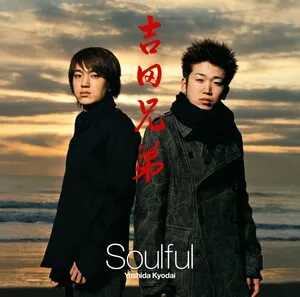
2002
Soulful
Yoshida Brothers 吉田兄弟
2022
Hazama
Mitsune
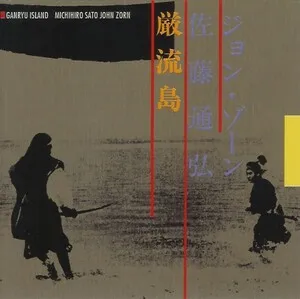
1998
Ganryu Island
Michihiro Sato 佐藤通弘 & John Zorn
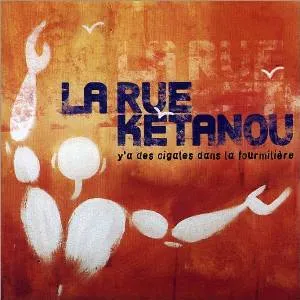
2002
Y'a des cigales dans la fourmilière
La Rue Kétanou
1970
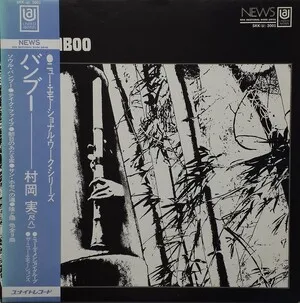
Bamboo
Minoru Muraoka 村岡実
2017
Echoes of Japan (エコーズ・オブ・ジャパン)
Minyo Crusaders
1993
Gitans
Thierry Robin
2007
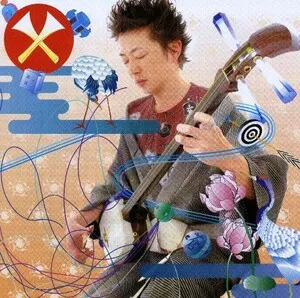
蒼風
Hiromitsu Agatsuma 上妻宏光
1990
Japan: Traditional Vocal & Instrumental Music
Kengyo Mitsuzaki 光崎検校 / Kōtō Minezaki 峰崎勾当
1990
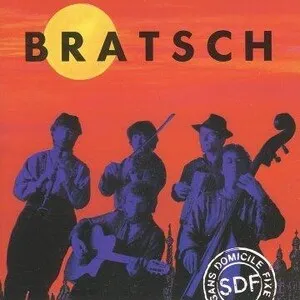
Sans domicile fixe
Bratsch
Download our mobile app
Get the Melodigging app and start digging for new genres on the go
Download on the App Store
Get it on Google Play
© 2026 Melodigging
Give feedback
Legal
Melodding was created as a tribute to
Every Noise at Once
, which inspired us to help curious minds keep digging into music's ever-evolving genres.