Genres
Make Music
Artists
Albums
Challenges
Sign in
Sign in
Albums
By Stimmhorn
Albums
By Stimmhorn
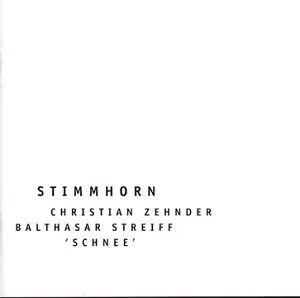
Schnee
August 5, 2011
Listen
2
/5
Genres
Neue Volksmusik
Neue Volksmusik (literally “new folk music”) is a contemporary Alpine/DACH movement that refreshes German‑language folk idioms with rock, pop, hip hop, brass‑band energy, and electronic production. It keeps the timbres and dialects of regional traditions—accordion, brass, yodel inflections, waltz and polka grooves—while adopting modern song forms, backbeats, and festival‑ready arrangements. Unlike volkstümliche Musik (the glossy, Schlager‑leaning TV style), Neue Volksmusik tends to be roots‑aware but adventurous: it mixes dialect lyrics with contemporary topics, embraces stage‑shaking brass riffs, and is comfortable placing a zither or Styrian harmonica alongside drum kits, synthesizers, or rap verses. The result is music that is local in color yet cosmopolitan in palette, equally at home at village fêtes and international festivals.
Discover
Listen
Experimental
Experimental music is an umbrella term for practices that prioritize exploration, process, and discovery over adherence to established genre norms. It embraces new sound sources, nonstandard tuning systems, indeterminacy and chance operations, graphic and open-form scores, extended techniques, and technology-led sound design (tape, electronics, computers, and live processing). Rather than a single style, it is a methodology and ethos: testing hypotheses about sound, structure, and performance, often blurring boundaries between composition, improvisation, sound art, and performance art. Listeners can expect unfamiliar timbres, unusual forms, and an emphasis on how music is made as much as the resulting sound.
Discover
Listen
Avant-Garde
Avant-garde music is an umbrella term for boundary-pushing practices that challenge prevailing norms of harmony, rhythm, timbre, form, and performance. It privileges experimentation, conceptual rigor, and a willingness to reframe what counts as music at all. Historically tied to early 20th‑century artistic modernism, avant-garde music introduced atonality, the emancipation of noise, and new forms of notation and process. It embraces indeterminacy, extended techniques, electronics, spatialization, and multimedia performance, treating sound as material to be sculpted, questioned, and reinvented.
Discover
Listen
Jazz
Jazz is an improvisation-centered music tradition that emerged from African American communities in the early 20th century. It blends blues feeling, ragtime syncopation, European harmonic practice, and brass band instrumentation into a flexible, conversational art. Defining features include swing rhythm (a triplet-based pulse), call-and-response phrasing, blue notes, and extended harmonies built on 7ths, 9ths, 11ths, and 13ths. Jazz is as much a way of making music—spontaneous interaction, variation, and personal sound—as it is a set of forms and tunes. Across its history, jazz has continually hybridized, from New Orleans ensembles and big-band swing to bebop, cool and hard bop, modal and free jazz, fusion, and contemporary cross-genre experiments. Its influence permeates global popular and art music.
Discover
Listen
Alpine Folk Music
Alpine folk music is the traditional rural music of the Alpine region spanning Austria, Switzerland, southern Germany (Bavaria and Swabia), South Tyrol in northern Italy, and parts of Slovenia. It centers on small ensembles (Tanzlmusik) playing dance tunes and strophic songs for village festivities, weddings, and seasonal rituals. Characteristic elements include yodeling (Jodler), lively dance forms such as Ländler (often in 3/4), Polka (2/4), Boarischer, and Zwiefacher (with alternating meters), and distinctive timbres from diatonic button accordion (Steirische Harmonika), zither, hammered dulcimer (Hackbrett), fiddle, clarinet, guitar, and alphorn. Melodies are typically modal or major with triadic outlines, drones, and parallel thirds, while lyrics use local dialects and celebrate landscape, pastoral work, and communal life. The style is closely tied to regional dress (Tracht) and dance customs (e.g., Schuhplattler), and it remains a living tradition that bridges intimate domestic music-making with public festivals and modern stage performance.
Discover
Listen
Yodeling
Yodeling is a vocal technique and repertory defined by rapid and intentional alternation between chest voice and head voice (falsetto), producing audible register breaks on open vowels. Rooted most famously in the rural Alps, it functioned historically as long‑distance herding calls and community signals across mountains and valleys. Closely related practices appear in multiple cultures worldwide (e.g., Central African forest singing, Scandinavian cattle calls), underscoring yodeling’s role as a practical form of vocal communication as much as a musical idiom. Across the 19th and 20th centuries, yodeling moved from pasture and village dances into stage entertainment, commercial folk music, and North American country and western traditions, where it became a signature expressive device (“blue yodels,” cowboy yodels) and a symbol of pastoral nostalgia.
Discover
Listen
Similar albums
1969
Hot Rats
Frank Zappa
2014
Quattro
Herbert Pixner Projekt
2011
Inland
Stimmhorn
2006
Stimmreise.ch
Nadja Räss & Diverse
1991
Mr. Bungle
Mr. Bungle
1997
Sax Pax for a Sax
Moondog & The London Saxophonic
2016
Summer
Herbert Pixner Projekt
2022
Schian!
Herbert Pixner Projekt
2005
La Planète Sauvage (Original Motion Picture Soundtrack)
Alain Goraguer
2022
Gold
Alabaster dePlume
Download our mobile app
Get the Melodigging app and start digging for new genres on the go
Download on the App Store
Get it on Google Play
© 2026 Melodigging
Give feedback
Legal
Melodding was created as a tribute to
Every Noise at Once
, which inspired us to help curious minds keep digging into music's ever-evolving genres.